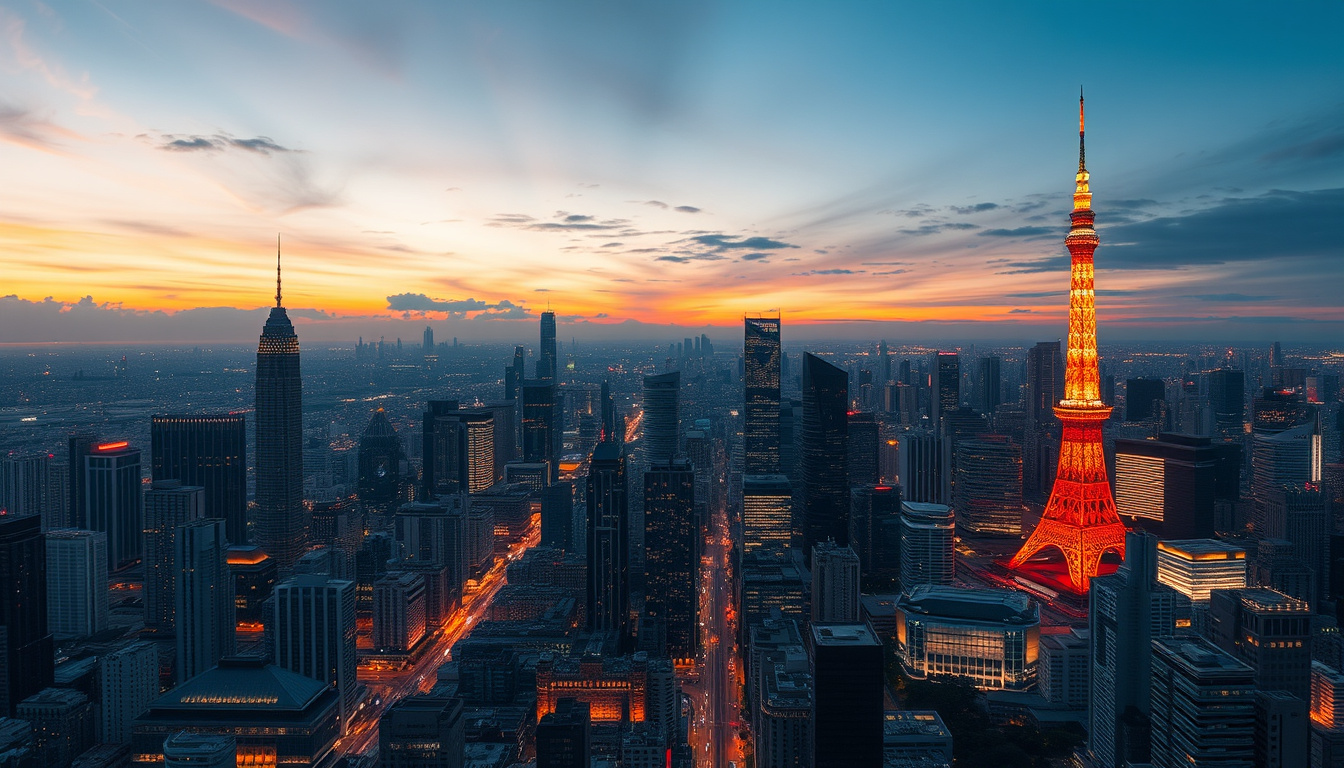
Determining the most populated city in the world requires understanding how different organizations define and measure urban populations. UN projections for 2025 rank Jakarta first among global cities, yet alternative estimates place Tokyo at the top of the list. This discrepancy stems from varying definitions of what constitutes a city’s boundaries and population.
Cities worldwide have experienced unprecedented growth throughout the twenty-first century, with urban areas now housing approximately half of the global population of 8.2 billion. Asian metropolises dominate the rankings of largest cities, reflecting broader demographic shifts toward the continent that are expected to intensify through mid-century.
This article examines the current rankings, explores how population figures vary by measurement methodology, and projects how the landscape of global urban centers may evolve in coming decades.
Top 10 Most Populated Cities in the World
The ranking of the world’s largest cities depends heavily on whether researchers use urban agglomeration data from the United Nations or alternative methodologies employed by universities and research institutions. Two primary sources illustrate this divergence in 2025 population estimates.
2025 Population Rankings: Two Perspectives
| Rank | UN / Destatis (Urban Agglomeration) | Population (millions) | Ontario Tech University | Population (millions) |
|---|---|---|---|---|
| 1 | Jakarta, Indonesia | 41.9 | Tokyo, Japan | 36.4 |
| 2 | Dhaka, Bangladesh | 36.6 | Mumbai, India | 26.4 |
| 3 | Tokyo, Japan | 33.4 | Delhi, India | 22.5 |
| 4 | New Delhi, India | 30.2 | Dhaka, Bangladesh | 22.0 |
| 5 | Shanghai, China | 29.6 | São Paulo, Brazil | 21.4 |
| 6 | Guangzhou, China | 27.6 | Mexico City, Mexico | 21.0 |
| 7 | Cairo, Egypt | 25.6 | New York-Newark, USA | 20.6 |
| 8 | Manila, Philippines | 24.7 | Kolkata, India | 20.6 |
| 9 | Kolkata, India | 22.6 | Shanghai, China | 19.4 |
| 10 | Seoul, South Korea | 22.5 | Karachi, Pakistan | 19.1 |
Key Insights from the Data
- Asian cities occupy nine of the top ten positions in the UN rankings, demonstrating the continent’s urbanization trajectory.
- Tokyo ranks first in Ontario Tech University estimates at 36.4 million, while appearing third in UN data at 33.4 million.
- Jakarta leads according to UN urban agglomeration measurements, reaching approximately 42 million residents.
- Delhi’s population varies significantly between sources, ranging from 22.5 million to 30.2 million.
- Manila ranks eighth in UN data with 24.7 million residents.
- Population figures for Tokyo proper differ substantially from metro estimates, with administrative limits showing approximately 14 million residents.
The variation between rankings stems from different methodologies. UN data emphasizes urban agglomerations, which include a city and its contiguous suburbs as a single continuous built-up area. Alternative sources may use metropolitan area definitions that incorporate commuting zones or administrative boundaries, producing lower figures for the same geographic region.
Most Populated City in the World 2025
According to United Nations World Urbanization Prospects 2025 data, Jakarta emerges as the most populated city when measuring urban agglomerations. The Indonesian capital has experienced rapid expansion that has pushed its boundaries far beyond the original city proper.
Jakarta’s Position
Jakarta’s estimated 41.9 million residents in 2025 reflect its status as the administrative and economic center of Indonesia. The city’s metropolitan area extends across Java island, incorporating satellite cities and suburban regions that function as integrated parts of the urban ecosystem.
However, alternative rankings using different measurement criteria place Tokyo at the summit with approximately 36.4 million residents. This discrepancy highlights the importance of understanding definitional frameworks when comparing urban populations globally.
The Tokyo Metropolitan Picture
Tokyo’s population figure varies dramatically depending on the boundary definition applied. The city proper, comprising only the administrative limits of Tokyo Metropolis, contains roughly 14 million residents. Metropolitan area estimates that include surrounding prefectures reach approximately 36-37 million, while the broader urban agglomeration, combining contiguous built-up areas, approaches similar figures.
These varying measurements demonstrate why different sources may present conflicting rankings. A user examining population data from Britannica may find Tokyo listed first, while Wikipedia sources citing UN data place Jakarta ahead.
UN projections indicate that Dhaka, Bangladesh, will emerge as the world’s largest urban agglomeration by mid-century, reaching approximately 52.1 million residents by 2050. This shift reflects Bangladesh’s rapid urbanization and population concentration in its capital region.
Most Densely Populated City in the World
While rankings of largest cities by population attract considerable attention, population density presents a different picture of urban concentration. Density measurements reveal how many residents occupy a given land area, highlighting pressure on infrastructure and housing.
Density Challenges in Megacities
Specific 2025 density rankings remain limited in available data, but cities like Dhaka, Manila, and Delhi demonstrate extreme density due to rapid population growth against constrained land availability. Dhaka’s surge to 36.6 million residents strains housing supply and municipal services across a relatively limited geographic footprint.
Manila, ranking eighth globally with 24.7 million residents according to UN data, exemplifies the density challenges facing Philippine urban development. The metropolitan region’s archipelago geography restricts outward expansion, concentrating population growth vertically and horizontally within established boundaries.
The Megacity Phenomenon
The United Nations identifies 33 megacities worldwide in 2025, defined as urban agglomerations exceeding 10 million residents. Of these, 19 are located in Asia, reflecting the continent’s dominant position in global urbanization patterns. These massive urban centers face common challenges including housing shortages, traffic congestion, and environmental degradation.
A city can rank among the world’s most populous without appearing among the most densely populated. Tokyo’s extensive metropolitan footprint distributes its large population across a wider area, resulting in lower density figures than more geographically constrained cities like Dhaka or Manila.
Largest City in the World by Area
Population rankings do not necessarily align with land area measurements. Determining the largest city by geographic extent requires examining built-up area data rather than administrative boundaries.
Measuring Urban Footprints
Comprehensive 2025 rankings based on urban land area remain limited in available research. Population data naturally emphasizes residents over territory, as demographic factors typically drive policy and planning decisions. However, understanding urban footprints provides context for density calculations and infrastructure planning.
Tokyo’s metropolitan region demonstrates this principle effectively. While its extensive urban footprint covers considerable territory, the city is not the geographically widest metropolitan area globally. The distinction between population concentration and land area expansion produces different hierarchies depending on the metric selected.
Methodological Considerations
Built-up area measurements require consistent satellite imagery analysis and boundary delineation that varies between research organizations. The UN World Urbanization Prospects 2025 focuses primarily on population dynamics, leaving detailed area comparisons to specialized urban geography research.
Users seeking comprehensive area rankings may consult urban studies publications or geographic information system analyses that systematically map built-up regions using standardized remote sensing methodologies.
Timeline: Shifting Centers of Urban Population
The hierarchy of the world’s largest cities has evolved substantially over recent decades and continues to shift as demographic patterns change. Understanding this trajectory contextualizes current rankings and future projections.
- 2010: Tokyo held its position as the world’s largest urban agglomeration, with population growth concentrated in East Asian metropolitan regions.
- 2015-2020: Delhi and Mumbai approached Tokyo’s rankings as Indian urbanization accelerated, narrowing the gap between Japanese and South Asian population centers.
- 2020: Jakarta emerged as a top contender, with UN projections suggesting the Indonesian capital would surpass other megacities by 2025.
- 2025: Current estimates show Jakarta leading by UN definitions, though Tokyo maintains first place in alternative rankings. Nine of the top ten cities are Asian.
- 2030-2050: UN projections anticipate Dhaka ascending to first position with approximately 52.1 million residents by mid-century.
What We Know and What Remains Unclear
Transparency regarding the certainty and uncertainty surrounding urban population data supports informed interpretation of rankings and trends.
| Established Information | Remaining Uncertainties |
|---|---|
| Asia dominates the top ten largest cities, with nine positions in UN rankings. | The precise population of cities like Jakarta and Tokyo depends on which boundary definition researchers apply. |
| UN projections consistently show Dhaka emerging as the world’s largest city by 2050. | City proper figures vary significantly from urban agglomeration or metropolitan area measurements. |
| 33 megacities exist globally in 2025, with 19 located in Asia. | Comprehensive 2025 density rankings are not consistently available across sources. |
| Tokyo proper contains approximately 14 million residents versus 36+ million in metropolitan measurements. | Area-based rankings require additional specialized research beyond current population-focused data sources. |
When comparing city populations, always verify which measurement definition a source employs. Urban agglomeration figures typically exceed metropolitan area estimates, which in turn exceed city proper counts. This hierarchy explains why rankings may differ without contradicting each other.
Understanding Urban Definitions
The discrepancy between different rankings stems from fundamental disagreements about what constitutes a city. Multiple definitional frameworks coexist in urban research, each offering distinct perspectives on population measurement.
The United Nations defines urban agglomeration as the contiguous urban area of a city, including its core and adjacent suburbs, while explicitly excluding rural areas. This methodology captures functional urban regions that operate as integrated economic and social units. UN World Urbanization Prospects 2025 applies this definition consistently across its global dataset.
Alternative frameworks include metropolitan area definitions that incorporate commuting zones and hinterland connections, producing broader measurements than simple geographic contiguity. These variations explain why the same city may appear at different positions across multiple authoritative rankings.
Approximately half of the world’s 8.2 billion inhabitants now live in urban areas, a proportion that continues rising as rural populations migrate toward cities seeking economic opportunity and services. This global urbanization trend ensures that megacity populations will continue growing, intensifying competition for the title of world’s largest urban center.
Sources and Methodology
This analysis draws on multiple authoritative sources to present a comprehensive view of global urban population patterns.
The United Nations World Urbanization Prospects 2025 provides the primary dataset for international comparisons, defining urban agglomerations as contiguous urban areas including core cities and adjacent suburbs while excluding rural territories. These projections inform UN rankings placing Jakarta at 41.9 million residents for 2025.
The German Federal Statistical Office (Destatis) publishes UN-sourced data alongside its own international population analyses, offering European institutional validation of global urbanization figures.
Ontario Tech University’s sustainability research program provides alternative population estimates using different methodological approaches, resulting in rankings that differ from UN data. These variations demonstrate the ongoing scholarly discussion regarding optimal urban population measurement techniques.
Reference works from Britannica and Wikipedia synthesize multiple sources, providing accessible summaries of complex demographic research. World Population Review offers updated data including 2026 projections that extend beyond current UN publications.
Summary
Determining the world’s most populated city requires careful attention to definitional frameworks. UN urban agglomeration data ranks Jakarta first at 41.9 million residents, while alternative estimates place Tokyo at the top with approximately 36.4 million. Both figures represent legitimate measurements under different methodologies.
Asian cities dominate global rankings, occupying nine of the top ten positions. The continent’s urbanization trajectory shows no signs of slowing, with projections indicating Dhaka will become the largest urban agglomeration by 2050 at approximately 52.1 million residents. As metropolitan populations continue growing, understanding measurement definitions becomes essential for interpreting urban hierarchy data accurately.
For those interested in Who Is the Richest Person in the World, the question represents another dimension of understanding how economic power concentrates alongside population in major metropolitan centers.
Frequently Asked Questions
Which city ranks first globally by population?
According to UN urban agglomeration data, Jakarta ranks first at approximately 41.9 million residents. However, alternative sources place Tokyo at the summit with around 36.4 million residents. The discrepancy stems from different measurement definitions.
What defines an urban agglomeration?
An urban agglomeration is the contiguous built-up area of a city, including its core and adjacent suburbs, while excluding rural territories. The UN applies this definition consistently across its World Urbanization Prospects dataset.
Which city will become the largest by 2050?
UN projections indicate Dhaka, Bangladesh, will become the world’s largest urban agglomeration by 2050, reaching approximately 52.1 million residents. This reflects Bangladesh’s rapid urbanization and capital concentration.
What is the least populated city in the world?
Among recognized large cities, those exceeding 4 million residents represent the lower threshold of megacity classification. Specific data on the least populated cities among global urban centers remains limited in current research databases.
How many megacities exist in 2025?
The United Nations identifies 33 megacities worldwide in 2025, defined as urban agglomerations exceeding 10 million residents. Of these, 19 are located in Asian nations, reflecting the continent’s dominant position in global urbanization.
Why do different sources show different rankings?
Ranking variations occur because sources apply different measurement definitions. UN data emphasizes urban agglomerations, while other sources may use metropolitan areas, commuting zones, or city proper boundaries. These methodological differences produce legitimate but conflicting results.
Which is the most densely populated city?
While comprehensive 2025 density rankings are limited, cities like Dhaka, Manila, and Delhi exhibit extreme density due to rapid population growth against geographic constraints. Tokyo’s larger footprint distributes its population more widely, resulting in lower density despite higher absolute numbers.
What is the largest city by geographic area?
Comprehensive 2025 area-based rankings are not consistently available in current population-focused research. Cities like Tokyo possess extensive metropolitan footprints, but population data prioritizes residents over territory, limiting area-based comparative analysis.

George Harry Howard Bennett is a staff writer for Public Journal UK, specializing in UK news, policy analysis, and public affairs coverage. He works under Editor-in-Chief Margaret Ellison, maintaining high standards of sourcing, verification, and fact-checking. Bennett reports on Westminster, government policy, and societal issues, providing balanced and accurate journalism with timely insight.