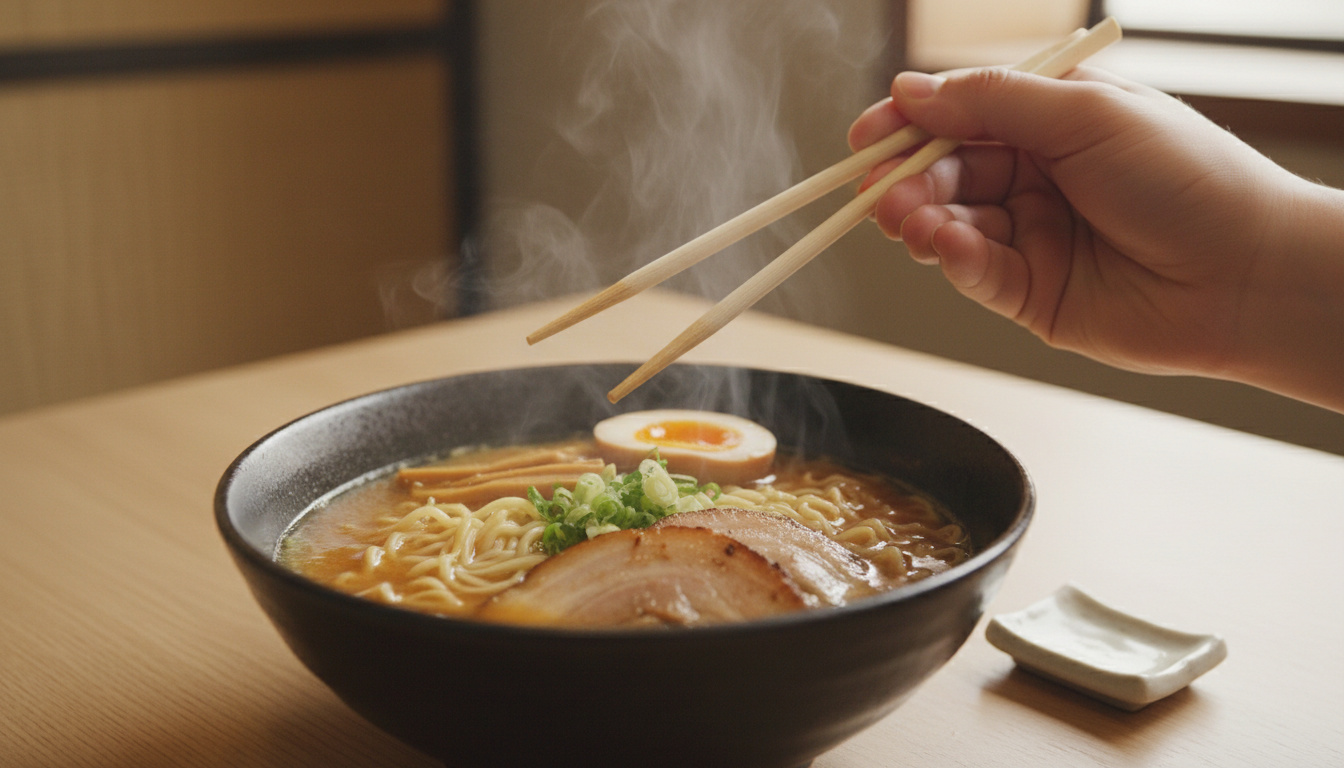

Mastering chopstick technique begins with understanding that one stick remains stationary while the other performs the gripping motion. The proper hold positions the upper stick like a pencil between thumb and forefinger, while the lower rests against the ring finger for stability. This configuration allows precise control over various food textures without excessive hand strain.
Cultural variations exist between Chinese and Japanese gripping styles, though both adhere to fundamental mechanical principles. Beginners typically require several days of practice to develop muscle memory for the coordinated finger movements. Proper technique prevents common etiquette faux pas and demonstrates respect for dining traditions spanning millennia.
How Do You Hold Chopsticks Correctly?
| Bottom Chopstick | Rests on ring finger and base of thumb |
| Top Chopstick | Positioned between thumb and index finger |
| Motion | Bottom remains stationary while top moves |
| Angle | Approximately 45 degrees to the table surface |
- The bottom chopstick serves as a stationary base supported by the ring finger and thumb base.
- The top chopstick functions as the mobile gripping element, controlled by the index and middle fingers.
- Proper positioning places the hand approximately one-third down from the chopstick tips.
- Only the upper chopstick should move when closing to grasp food.
- The thumb stabilizes both sticks while allowing the top to pivot.
- Beginners should maintain a relaxed grip to prevent hand fatigue during meals.
- Alignment requires the thicker ends to remain roughly even while narrower ends meet.
| Aspect | Standard Technique | Common Variation |
|---|---|---|
| Thumb Position | Stabilizes both sticks at base | Japanese style uses looser grip |
| Index Finger | Controls top chopstick movement | Chinese style applies more pressure |
| Support Finger | Ring finger holds bottom stick | Korean technique remains similar |
| Movement Source | Top stick pivots only | Some beginners incorrectly move both |
| Grip Tension | Firm but relaxed | Adjusts based on food texture |
| Stick Alignment | Thicker ends even | May adjust for hand size |
| Hand Position | One-third from tips | “Choking up” for beginners |
| Control Fingers | Thumb, index, middle | Ring finger passive support |
How to Hold Chopsticks for Beginners
The Stationary Foundation
Beginners should first establish the bottom chopstick position before adding the top stick. Place the thicker end against the base of your thumb, allowing the shaft to rest along the inside of your ring finger. This creates a stable channel that does not move during use.
Positioning the Top Stick
Hold the upper chopstick like a pencil, positioning it about one-third of the way from its top. Place the chopstick so only about an inch of the thicker end sticks out between your forefinger and thumb, with the lower joint of your thumb stabilizing it according to Japanese culinary guides.
Developing the Pivot Motion
The first chopstick serves as your stationary base stick and should remain still throughout use. The second chopstick does the actual work of gripping food. Move it using the top part of your thumb while keeping the bottom part stationary, and use your index and middle fingers as leverage to tighten or loosen the grip based on instructional analysis.
Beginners should practice gripping prawns or sushi before attempting rice or noodles. Larger items provide more surface area and forgiveness while learning the squeezing motion.
Chinese vs Japanese Chopstick Holds: Key Differences
Grip Tension Variations
Japanese chopstick technique typically employs a looser grip compared to Chinese methods, though both maintain the fundamental stationary-bottom, mobile-top principle. The Japanese style often positions the hand slightly higher on the sticks, while Chinese grips may apply more index finger pressure for manipulation of round foods like peanuts.
Regional Material Influences
Chinese chopsticks traditionally feature blunt tips and require slightly different finger positioning to grip slippery noodles. Japanese chopsticks taper to finer points, demanding precise control from the thumb and index finger. Korean chopsticks, often metal and flat, present distinct challenges not covered in standard beginner tutorials according to cultural documentation.
Hand Positioning Nuances
Right-handed users dominate instructional materials, though left-handed practitioners mirror the technique. Cultural preferences influence whether the hand rests on the table or floats above the bowl during use.
Common Mistakes in Holding Chopsticks and How to Fix Them
Crossing at the Tips
Many beginners allow the chopstick tips to cross, indicating misalignment in the base position. The thicker ends should remain roughly even while only the narrower tips meet to grasp food. Correct this by repositioning the bottom stick closer to the base of the thumb.
Moving Both Sticks
Attempting to move both chopsticks independently destroys the mechanical advantage of the lever system. The bottom stick must remain firmly anchored against the ring finger while the top stick performs all closing motion.
Gripping too tightly causes hand fatigue and reduces fine motor control. The hold should feel secure but relaxed, similar to holding a paintbrush rather than a hammer.
Specific etiquette rules regarding hand positioning relative to the bowl vary between cultures and families. When uncertain, observe your host’s technique or ask politely about local customs.
The Historical Development of Chopstick Grips
Archaeological evidence suggests chopsticks originated in China approximately 3,000 years ago, with grip techniques developing alongside cooking methods according to historical records.
- Ancient Origins: Early Chinese diners used the instruments primarily for cooking rather than eating, gripping them closer to the middle.
- Japanese Introduction: The utensils arrived in Japan during the 6th century CE, where grip styles adapted to local food customs and smaller bowl sizes.
- Korean Adaptation: Metal chopsticks introduced during the Baekje period required tighter grips to handle slippery surfaces.
- Modern Standardization: Contemporary tutorial methods emerged in the 20th century as global interest in Asian cuisine grew based on culinary history documentation.
What We Know and Don’t Know About Proper Technique
| Established Information | Information Requiring Clarification |
|---|---|
| The bottom chopstick remains stationary while the top moves | Precise angle measurements between Chinese and Japanese styles |
| The ring finger provides support for the base stick | Specific etiquette rules regarding hand height above the table |
| Thumb base stabilizes both sticks simultaneously | Optimal training duration for muscle memory development |
| Index and middle fingers control the top chopstick | Detailed differences in Korean metal chopstick grips |
| Proper positioning places the hand one-third from tips | Accessibility modifications for different hand sizes and dexterity levels |
Why Grip Technique Matters Beyond Functionality
Proper chopstick grip serves purposes beyond mere utensil control. In East Asian dining cultures, the technique demonstrates respect for the food, the preparer, and fellow diners according to food culture experts. Efficient handling prevents rice grains from scattering and allows delicate manipulation of fish bones or tofu without breaking the texture.
Physiologically, correct finger positioning prevents repetitive strain injuries during extended meals. The mechanical advantage of the lever system reduces the force required to grip food, minimizing fatigue in the intrinsic hand muscles. This biomechanical efficiency explains why the basic technique has remained largely unchanged for centuries despite regional variations.
Expert Guidance on Chopstick Mechanics
“Hold the upper chopstick like a pencil, positioning it about one-third of the way from its top.”
— Japanese Cultural Programming Educational Resources
“Synchronize your thumb tip, middle finger, and index finger to control the second chopstick’s movement as it closes against the base stick.”
— Technical Instruction Analysis
Key Takeaways for Mastering Chopstick Control
Effective chopstick use requires anchoring the bottom stick against your ring finger while manipulating the top stick with your thumb, index, and middle fingers. Beginners should start with larger food items and practice the squeezing motion before attempting complex manipulations. While Chinese and Japanese styles differ slightly in tension and positioning, both prioritize the stationary-base principle for mechanical advantage. For additional cultural context, see How to Hold Chopsticks: A Beginner’s Guide and How to use chop sticks.
Frequently Asked Questions
How long does it take to learn proper chopstick technique?
Most adults develop basic competency within three to seven days of daily practice. Mastery of fine control for difficult items like noodles may require several weeks.
Are there different techniques for left-handed users?
Left-handed practitioners mirror the standard technique, placing the stationary stick on the right side of the hand instead of the left. The mechanical principles remain identical.
What should I do if chopsticks feel too long for my hand?
“Choke up” by holding the sticks higher from the tip than traditional positioning suggests. This provides better leverage and control for smaller hands.
Why do my chopsticks keep crossing at the tips?
Crossing typically indicates the bottom stick is positioned too far toward your fingertips. Reposition it deeper into the web between thumb and index finger.
Is it acceptable to use training chopsticks?
Training chopsticks can help beginners understand the basic mechanics, though they should transition to standard chopsticks as soon as possible to develop proper muscle memory.
How do I know if I’m holding them too tightly?
If your hand cramps after five minutes or you cannot easily slide the top stick back and forth, your grip is too tense. Practice releasing pressure while maintaining control.

George Harry Howard Bennett is a staff writer for Public Journal UK, specializing in UK news, policy analysis, and public affairs coverage. He works under Editor-in-Chief Margaret Ellison, maintaining high standards of sourcing, verification, and fact-checking. Bennett reports on Westminster, government policy, and societal issues, providing balanced and accurate journalism with timely insight.