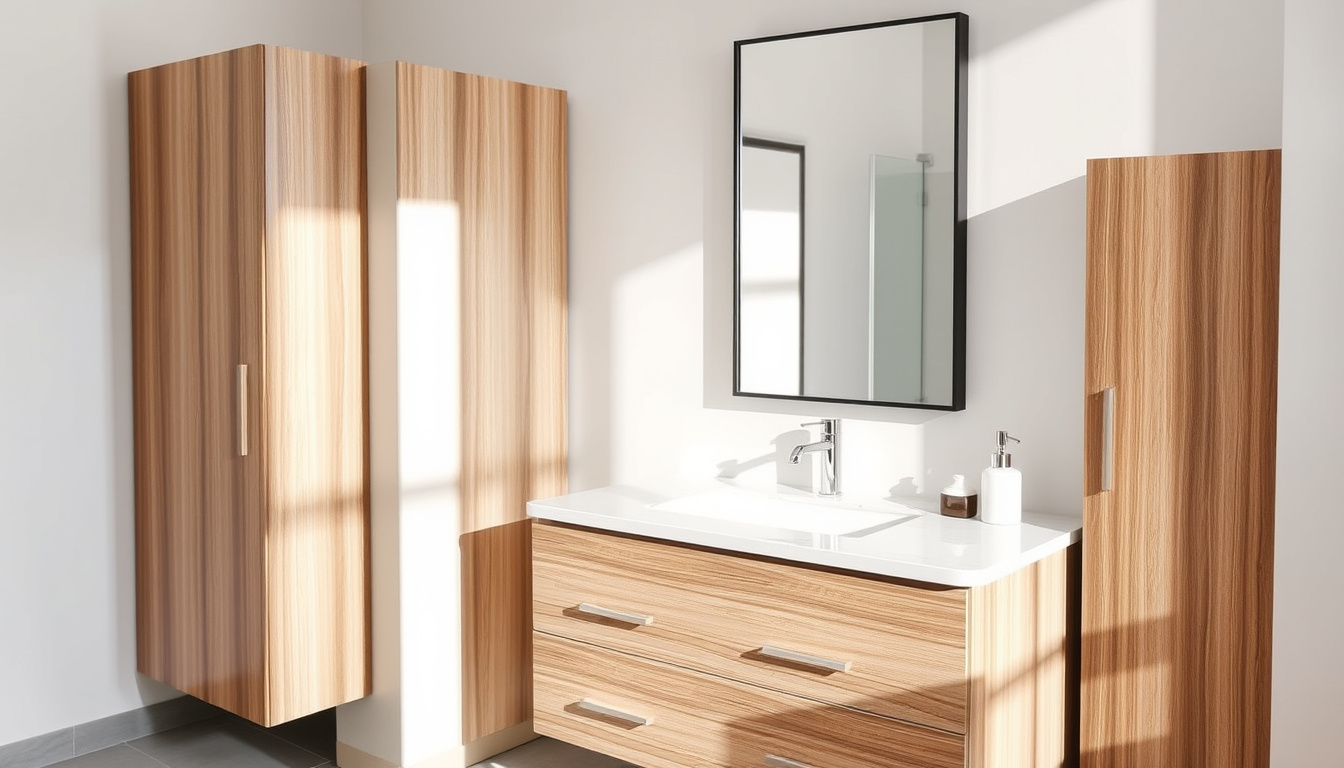
Choosing a bathroom vanity unit in Ireland often feels like a balancing act between style, space, and practicality. With standard sizes ranging from compact 400mm units for cloakrooms to generous 1200mm double vanities, the right choice depends on your room’s dimensions and your daily routine.
Average price range for a standard 600mm vanity unit: €300–€700 ·
Most popular width in Ireland: 600 mm ·
Common materials used: MDF, solid oak, ceramic ·
Wall-hung vs freestanding market share (approx.): 60% wall-hung / 40% freestanding ·
Typical lead time for custom vanity units: 2–4 weeks
Quick snapshot
- Vanity units combine a sink with built-in storage (Bathroom Warehouse Ireland)
- Wall-hung models require a solid wall or reinforcement (Big Bathroom Shop Ireland)
- Double vanity units require two separate plumbing supplies (Buy It Direct Ireland)
- Long-term durability comparison between MDF and solid wood in humid bathrooms (B&Q Ireland)
- Whether integrated LED mirrors reduce long-term energy costs (OnlineBathrooms.ie)
- 600mm width remains the standard choice for main bathrooms across Irish retailers (Bathroom Warehouse Ireland)
- Wall-hung units are gaining popularity in new builds and renovations (Big Bathroom Shop Ireland)
- Expect more integrated LED mirror cabinets as standard in vanity unit packages (Halo Tiles & Bathrooms)
- Custom sizes (e.g., 410mm, 560mm) are becoming more available for niche spaces (Buy It Direct Ireland)
| Attribute | Value |
|---|---|
| Standard width | 600 mm (most common); also 400, 800, 1000, 1200 mm |
| Typical height | 860 mm from floor to sink rim |
| Depth range | 400–500 mm |
| Popular styles | Wall-hung, freestanding, with/without mirror |
| Average price (including sink) | €300–€700 for standard 600mm unit |
What is a bathroom vanity unit?
A bathroom vanity unit is a piece of furniture that combines a sink with storage cabinets, designed to hold toiletries, towels, and cleaning supplies. Unlike a pedestal sink, which offers no storage, a vanity unit turns wasted space under the basin into usable drawers or shelves.
Bathroom Warehouse Ireland describes them as “the centrepiece of a modern bathroom.”
Definition and purpose of a vanity unit
The core purpose is twofold: provide a functional washbasin and hide the plumbing while offering storage. Units come in either wall-hung or freestanding styles, and common sizes range from 400mm to 1200mm width. Big Bathroom Shop Ireland notes that widths start at 400mm and extend to 600mm and 800mm conventional sizes.
Key components: sink, countertop, storage
- The sink is usually ceramic, porcelain, or stone resin.
- The countertop can be laminate, solid oak, or sintered stone.
- Storage includes drawers, cupboards, and often a shelf for a mirror cabinet.
A vanity unit replaces a bare sink with a storage solution. For Irish bathrooms with limited space, the 400mm or 600mm unit is the most practical choice.
The implication: buying a vanity unit is not just about aesthetics — it’s about reclaiming floor space and keeping the bathroom tidy.
What are the different types of vanity units?
Five types dominate the Irish market, each suited to a different layout and need.
Wall-hung vanity units
Wall-hung units are mounted directly to the wall, leaving the floor clear. This creates a floating look that makes a small bathroom appear larger. B&Q Ireland lists them as a space-saving option. Mounting heights typically range from 635mm to 760mm from the floor, according to Big Bathroom Shop Ireland.
Freestanding (floor standing) vanity units
Freestanding units sit on the floor and offer more storage capacity. Bathroom Warehouse Ireland says they deliver “timeless appeal with practical storage.” Heights vary between 790mm and 820mm for many products sold at B&Q Ireland.
Double vanity units
Double vanities are designed for master bathrooms, with two sinks separated by a countertop. Buy It Direct Ireland lists a 1200mm freestanding double vanity unit. They require two separate plumbing supplies.
Vanity units with integrated mirror
Some packages include a mirror cabinet that matches the unit. Halo Tiles & Bathrooms offers both wall-hung and freestanding units with optional mirror cabinets.
Wall-hung units save floor space but require solid wall mounting. Freestanding units offer more storage but take up floor area. The choice depends on whether you prioritise openness or capacity.
The pattern: Irish buyers increasingly choose wall-hung units for new builds, while freestanding remains popular in traditional homes.
How to choose the right vanity unit for your bathroom?
Selecting the right unit involves measuring your space, picking a mounting style, and choosing materials that resist Ireland’s damp climate.
Measuring your bathroom space
Start by measuring the available width, depth, and height. Leave at least 50mm clearance on each side for installation. Big Bathroom Shop Ireland advises noting the location of plumbing pipes before ordering.
Selecting the right width and height
Standard widths are 400mm (cloakroom), 600mm (main bathroom), and 800mm–1200mm (double). Standard height from floor to sink rim is 860mm according to B&Q Ireland. For wall-hung units, mounting height is between 635mm and 760mm.
Choosing between wall-hung and freestanding
Wall-hung suits small bathrooms and creates a modern look. Freestanding works in larger rooms and offers more storage. B&Q Ireland notes that freestanding units offer added flexibility.
Material considerations for Irish climate
Moisture-resistant materials are essential. MDF with a sealed lacquer finish is common and affordable. Solid oak is durable but requires periodic sealing. B&Q Ireland lists MDF and oak as top choices. Sintered stone countertops are also gaining popularity for their waterproof properties.
In Irish bathrooms, even “water-resistant” MDF can swell if the finish is damaged. Solid oak requires annual oiling to prevent warping.
The catch: the cheapest MDF unit may delaminate in a humid cloakroom, while a solid oak unit costs up to three times more but lasts decades.
What are the benefits of a vanity unit with mirror?
Buying a vanity unit with a matching mirror saves time and ensures a cohesive design. Some packages include built-in LED lighting.
Mirror included vs separate purchase
Integrated mirror cabinets are available from many Irish retailers. Halo Tiles & Bathrooms offers units with optional mirror cabinets. Separate purchase allows more flexibility but risks mismatched styles.
Integrated lighting options
LED mirrors are becoming standard. They provide even illumination for shaving or makeup application. OnlineBathrooms.ie lists several wall-hung units with LED mirror options.
Space-saving benefits
Mirror cabinets add storage behind the mirror, ideal for small bathrooms. They also reduce the need for a separate medicine cabinet.
For Irish homeowners, an integrated mirror cabinet can eliminate the need for additional shelving, freeing up wall space in tight cloakrooms.
The trade-off: integrated LED mirrors add €100–€300 to the total cost, but may reduce long-term energy bills if the LED driver is efficient.
Where can I buy vanity units in Ireland?
Irish buyers have several options, from online retailers to physical showrooms. Delivery costs and VAT-inclusive pricing vary.
Online retailers specializing in bathroom furniture
- Bathroom Warehouse Ireland – wide range of sizes, free delivery on orders over €250.
- Big Bathroom Shop Ireland – extensive filter options by width, style, and price.
- Buy It Direct Ireland – stock includes 410mm cloakroom units and 1200mm double vanities.
Brick-and-mortar showrooms
Halo Tiles & Bathrooms has showrooms in Dublin and Cork. B&Q Ireland has stores nationwide. Visiting a showroom allows you to see the finish and open drawers.
Considerations for delivery and installation
Free delivery thresholds vary — check the total cost including VAT and delivery. Halo Tiles & Bathrooms offers free delivery on orders over €100. Installation is extra; a plumber may charge €150–€250 for fitting a standard unit.
Price comparison across suppliers
Five suppliers, one pattern: wall-hung units are generally cheaper than freestanding of the same size. A 600mm wall-hung unit from Halo Tiles & Bathrooms costs around €350, while a freestanding version is €450. Big Bathroom Shop Ireland shows a similar spread.
For Irish buyers, the best value is often a 600mm wall-hung unit from an online retailer with free delivery. Compare total cost — not just the unit price — including VAT, delivery, and installation.
The pattern: prices across suppliers are within 10% for comparable units, so focus on finish quality and warranty terms.
Comparison: Wall-hung vs Freestanding Vanity Units
Three key differences, one theme: wall-hung units save space but require sturdy walls; freestanding units offer more storage but take up floor space.
| Feature | Wall-hung | Freestanding |
|---|---|---|
| Space below unit | Open floor – easier cleaning | Closed – floor space occupied |
| Storage capacity | Moderate (drawers/cupboard) | Larger (multiple drawers and shelves) |
| Installation complexity | Requires wall reinforcement | Simple – place on floor |
| Typical price (600mm) | €300–€500 | €400–€700 |
| Best for | Small bathrooms, modern design | Family bathrooms, traditional style |
The implication: for a cloakroom, wall-hung is the obvious choice. For a master bathroom, freestanding offers more storage and a classic look.
Specifications: Standard Vanity Unit Dimensions
Six dimensions, one pattern: Irish retailers stock units that fit standard plumbing rough-ins, but non-standard sizes are available.
| Specification | Typical Range | Notes |
|---|---|---|
| Width | 400mm, 600mm, 800mm, 1000mm, 1200mm | 600mm is most common |
| Height (floor to sink rim) | 760mm – 915mm | Standard 860mm for freestanding; wall-hung adjustable |
| Depth | 350mm – 500mm | Shallow for cloakrooms, deeper for master baths |
| Sink type | Ceramic undermount, countertop basin | Countertop basins need extra height |
| Material | MDF, plywood, solid oak, sintered stone | MDF most affordable; oak most durable |
| Warranty | 2–10 years | Check with retailer |
The catch: a 400mm deep unit may not fit a standard 500mm deep cabinet space, so always measure the alcove before ordering.
Pros and Cons of Vanity Units
Upsides
- Combines sink and storage in one piece of furniture
- Available in many sizes to fit any bathroom
- Wall-hung models free up floor space
- Easy to install with basic plumbing skills
- Wide choice of materials and finishes
Downsides
- Can be more expensive than a pedestal sink
- MDF units may swell in damp conditions
- Wall-hung units require solid wall mounting
- Limited countertop space on compact units
- Delivery and installation add to total cost
The trade-off: you pay more for a vanity unit than a pedestal sink, but you gain storage and a cleaner look.
Clarity: What We Know and What’s Uncertain
Confirmed facts
- Vanity units combine a sink with storage cabinets — Bathroom Warehouse Ireland
- Wall-hung models require a solid wall or reinforcement — Big Bathroom Shop Ireland
- Double vanity units require two separate plumbing supplies — Buy It Direct Ireland
- Standard width 600mm is the most common choice in Ireland — Bathroom Warehouse Ireland
- Freestanding units offer more storage than wall-hung — B&Q Ireland
What’s unclear
- Long-term durability comparison between MDF and solid wood in humid bathrooms — B&Q Ireland
- Whether integrated LED mirrors reduce long-term energy costs — OnlineBathrooms.ie
Expert Perspectives
“Measuring your plumbing locations before buying a vanity unit is essential. Many customers assume the standard rough-in will fit, but every bathroom is different.”
— Spokesperson, Bathroom Warehouse Ireland
“The GODMORGON series uses MDF with a foil finish for moisture resistance. It’s a popular choice in Irish bathrooms because it stands up to humidity without warping.”
— IKEA Ireland product description, IKEA Ireland
“Wall-hung vanities with a vessel basin may need a lower mounting height to accommodate the basin. Always check the total height including the basin depth.”
— Big Bathroom Shop Ireland
Summary
Choosing a vanity unit in Ireland is a decision that affects both the look and function of your bathroom for years. The market offers clear options: wall-hung for space-saving modern design, freestanding for traditional storage, and double units for master suites. The key is to measure carefully, choose moisture-resistant materials, and compare total cost including delivery and installation. For the Irish homeowner looking to upgrade a cloakroom, the clear winner is a 600mm wall-hung unit with a sealed MDF finish and integrated mirror. For a family bathroom, a 1200mm freestanding double vanity with solid oak top provides the durability and storage that daily use demands.
Related reading: **Ireland vanity unit buying guide – sizes and dimensions** · **Wall-hung vs freestanding vanity units comparison**
bigbathroomshop.ie, outbackwatch.net, getlocal.ie, brooksonline.ie, vente-unique.ie, newslayer.net
Frequently asked questions
How do I install a vanity unit?
Installation typically involves connecting the plumbing, mounting the unit (if wall-hung) or placing it on the floor, and sealing the edges. A plumber can complete the job in 2–3 hours. Ensure the wall is solid enough to support the unit — use plug-in fixings for plasterboard.
Is it better to buy a vanity unit with a mirror?
Buying a matching set saves time and ensures a cohesive design. Many Irish retailers offer packages that include a mirror cabinet. If you prefer a custom mirror, buy separately — but check the style and colour match.
What is the warranty on vanity units in Ireland?
Warranties vary by retailer: typically 2 years on MDF units, 5–10 years on solid oak. Check the terms before purchase. Some retailers offer extended warranties for an extra fee.
Can I use a vanity unit in a bedroom?
Yes, a vanity unit can be used as a bedroom sink unit, especially in en-suite or dressing rooms. Make sure the unit is designed for wet areas — some bedroom vanities are not fully waterproof.
What is the difference between a vanity unit and a cabinet sink?
A cabinet sink is a sink with a simple cupboard underneath, often without a countertop. A vanity unit includes a countertop, sink, and storage in one integrated piece, with a more finished appearance.
Do I need a plumber to install a vanity unit?
If you are comfortable with basic plumbing (connecting water supply and waste), you can install it yourself. However, for wall-hung units or if you need to move pipes, hire a plumber. Costs range from €150 to €250.
How do I clean a vanity unit without damaging the finish?
Use a soft, damp cloth and mild soap. Avoid abrasive cleaners or scrubbers. For MDF units, wipe up spills immediately to prevent swelling. For solid oak, use a wood cleaner and re-oil every 12 months.

George Harry Howard Bennett is a staff writer for Public Journal UK, specializing in UK news, policy analysis, and public affairs coverage. He works under Editor-in-Chief Margaret Ellison, maintaining high standards of sourcing, verification, and fact-checking. Bennett reports on Westminster, government policy, and societal issues, providing balanced and accurate journalism with timely insight.