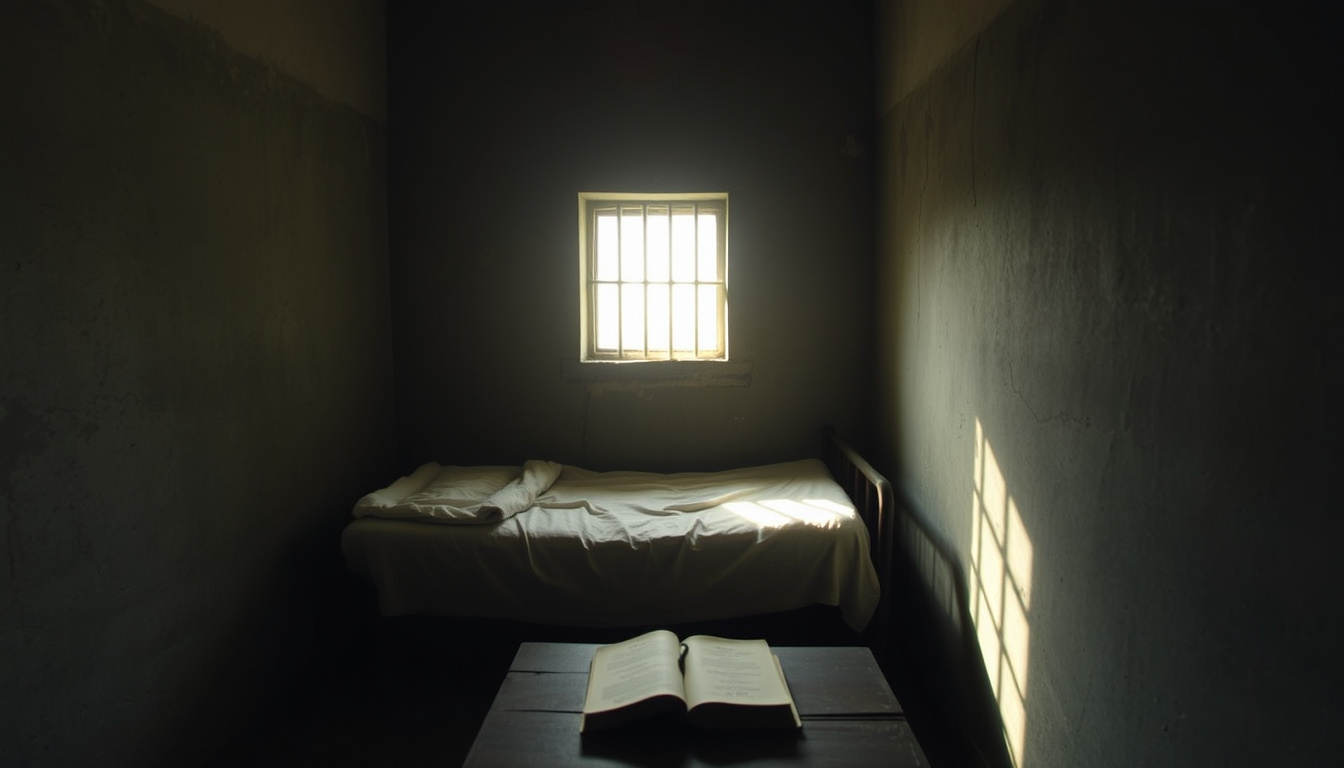
Few names carry the weight of Nelson Mandela — a man who walked out of prison after 27 years and into the presidency of a nation. His life reads like a masterclass in contradiction: a lawyer who took up arms, a prisoner who became a negotiator, and a president who stepped down after one term. This biography explores the moments that defined him, the choices that divided him from allies and opponents alike, and the legacy that still sparks debate worldwide.
Born: 18 July 1918 ·
Died: 5 December 2013 ·
Presidency: 1994 – 1999 ·
Prison Term: 27 years ·
Nobel Peace Prize: 1993 ·
Spouses: 3
Quick snapshot
- South Africa’s first black president (Britannica)
- Served 27 years in prison (Nobel Prize)
- Won Nobel Peace Prize in 1993 (Nobel Prize)
- Married three times (Britannica)
- His exact personal stance on modern LGBTQ issues beyond the 1996 constitution
- Level of direct involvement in specific MK military operations
- The precise intellectual turning point from nonviolence to armed struggle
- 1918: Born in Mvezo (Nelson Mandela Foundation)
- 1964: Sentenced in Rivonia Trial (Britannica)
- 1990: Released from prison (Nobel Prize)
- 1994: Becomes president (The Presidency of South Africa)
- Ongoing reinterpretation of his legacy by younger South Africans
- Debate over economic inequality versus political freedom achieved
- Global LGBT movement continues citing his constitution as foundational
Seven facts, one pattern: Mandela’s life arcs from rural royalty to global statesman, with each phase shaped by deliberate choice rather than accident.
| Label | Value |
|---|---|
| Full Name | Nelson Rolihlahla Mandela |
| Born | 18 July 1918, Mvezo, South Africa |
| Died | 5 December 2013, Johannesburg, South Africa |
| Political Party | African National Congress (ANC) |
| Education | University of Fort Hare, University of London |
| Children | 6 (4 biological, 2 step) |
| Known For | Anti-apartheid activism, Presidency, Reconciliation |
What is Nelson Mandela most famous for?
The fight against apartheid
- Mandela joined the African National Congress in 1944 (Britannica), marking the start of a decades-long struggle against a system that denied 80% of the population basic political rights.
- He co-founded the ANC Youth League (Wikipedia) and later led the Defiance Campaign in 1952, organizing mass civil disobedience against pass laws, curfews, and segregated facilities.
- The BBC describes Mandela as having “led the struggle to replace apartheid with a multiracial democracy” — a goal that made him a target of the state for nearly 50 years.
South Africa’s first black president
- Mandela became South Africa’s first democratically elected president on 10 May 1994, after the country’s first universal-suffrage election.
- He served one term from 1994 to 1999 (Wikipedia) and stepped down voluntarily — a rarity among post-colonial African leaders at the time.
- His presidency focused on dismantling apartheid-era laws, building new institutions, and launching the Truth and Reconciliation Commission.
Global icon of peace and reconciliation
- Mandela and F.W. de Klerk jointly received the 1993 Nobel Peace Prize for their work ending apartheid peacefully.
- His emphasis on forgiveness over revenge — inviting his former jailer to his inauguration and having tea with Betsie Verwoerd, widow of apartheid’s architect — became global symbols of reconciliation.
- Britannica calls him a “Black nationalist leader and statesman,” but his global stature transcended partisan identity — he became a moral benchmark for political leadership.
Bottom line: Mandela’s fame rests on a triple achievement — dismantling apartheid, winning the presidency through democracy, and choosing reconciliation over revenge. The catch: his fame often overshadows the hard compromises and armed tactics that got him there.
Mandela is one of the rare political figures who grew in stature after leaving office. By walking away after one term, he did what most revolutionaries won’t: surrender power voluntarily. That single act may have done more for his reputation than any policy.
The implication: Mandela’s most transformative political act came not in winning power, but in giving it up — a standard few liberation leaders have matched.
What was Nelson Mandela jailed for?
The Rivonia Trial and sabotage charges
- Mandela was arrested in 1962 for leaving the country illegally and inciting strikes, then tried again in the Rivonia Trial of 1963-64.
- On 12 June 1964, he was sentenced to life imprisonment on charges of sabotage and conspiracy to overthrow the government.
- Rather than deny the acts, Mandela used the trial as a political platform: “I have dedicated my life to this struggle of the African people. I have fought against white domination, and I have fought against black domination.”
27 years of imprisonment
- Mandela spent 27 years in prison, most of it on Robben Island (1964-1982), then Pollsmoor Prison (1982-1988).
- He was 46 when imprisoned and 71 when released — prison consumed his most productive middle years, but he used them to study, write, and negotiate from inside.
- The regime repeatedly offered conditional release if he denounced violence; he refused each time,Britannica notes.
International campaign for his release
- “Free Mandela” became a global rallying cry by the 1980s, with the UN, anti-apartheid movements, and cultural figures pressuring South Africa.
- Mandela was finally released on 11 February 1990, walking out of Victor Verster Prison hand-in-hand with Winnie Madikizela-Mandela.
- Within four years, he would become president.
Bottom line: Mandela was jailed not for vague activism but for leading an armed campaign against the apartheid state. His 27-year imprisonment, intended to silence him, instead turned him into the world’s most famous political prisoner and created the moral gravity that made negotiation inevitable.
Where was Nelson Mandela born and raised?
Childhood in the Transkei
- Nelson Rolihlahla Mandela was born on 18 July 1918 in the village of Mvezo, in the Eastern Cape region of South Africa.
- His father, Gadla Henry Mphakanyiswa, was a chief of the Thembu people; after his father’s death, young Rolihlahla became a ward of the acting Thembu regent, Jongintaba Dalindyebo.
- “His given name, Rolihlahla, means ‘pulling the branch of a tree’ — colloquially ‘troublemaker'” notesBritannica. The name “Nelson” was later assigned by a teacher.
Education at Fort Hare and Healdtown
- Mandela studied law at the University of Fort Hare and later at the University of the Witwatersrand, where he became friends with Oliver Tambo.
- He was expelled from Fort Hare for leading a student protest, a pattern that would define his political trajectory.
- The Nobel Prize biography notes he completed his BA via correspondence and studied law at Wits, though he never graduated — a common obstacle for black students under apartheid.
Escape to Johannesburg and early legal career
- To avoid an arranged marriage, Mandela fled to Johannesburg in 1941, where he worked as a night watchman and later as a clerk at the law firm Witkin, Sidelsky & Eidelman.
- He became the first black partner at the law firm Tambo & Mandela in 1952, providing legal aid to black South Africans who couldn’t access the justice system.
- His early legal career overlapped directly with his activism — he helped draft the ANC’s Freedom Charter in 1955, which became the blueprint for the post-apartheid constitution.
Bottom line: Mandela’s early life followed a classic colonial trap — a rural royal education that gave him the tools to question the system, then a forced flight to the city where he turned from law student to lawyer-activist. He never finished his law degree, yet became the country’s most consequential legal mind.
How many wives did Nelson Mandela have?
Evelyn Mase: the first wife
- Mandela married Evelyn Mase in 1944, a nurse from the Transkei who shared his early activism.
- They had four children: Madiba Thembekile, Makgatho, Makaziwe (who died in infancy), and a second Makaziwe.
- The marriage ended in divorce in 1958 amid political strain and Evelyn’s increasing Jehovah’s Witness faith, which clashed with Mandela’s political commitments.
Winnie Madikizela-Mandela: the struggle years
- Mandela married social worker Nomzamo Winifred Madikizela in 1958, while he was on trial for treason.
- Winnie became his public face during the 27 years of imprisonment, enduring her own harassment, banishment, and detention.
- The couple divorced in 1996, after her involvement in controversies during the late 1980s, including the Stompie Moeketsi abduction and her bodyguard’s actions.
Graça Machel: the final chapter
- Mandela married Graça Machel on his 80th birthday in 1998, two years after his divorce from Winnie.
- Graça Machel is the widow of Samora Machel, former president of Mozambique — making her the only woman to have been first lady of two countries.
- She stayed with Mandela until his death in 2013, focusing on humanitarian work through the Mandela Foundation.
Bottom line: Mandela’s three marriages mirror his life stages: the early partner of political struggle (Evelyn), the long-distance martyr’s wife (Winnie), and the post-presidential companion (Graça). His divorce from Winnie in 1996 acknowledged that his celebrity and her political ambitions had grown irreconcilable.
Did Nelson Mandela support LGBTQ rights?
South Africa’s inclusive post-apartheid constitution
- The 1996 South African constitution, ratified under Mandela’s presidency, explicitly prohibited discrimination based on sexual orientation — a global first for any national constitution.
- South Africa became the first country in the world to include sexual orientation as a protected characteristic in its founding legal document.
- This was achieved through the combined efforts of ANC-aligned LGBT activists, the Constitutional Assembly, and drafters including Albie Sachs, later a Constitutional Court judge.
Mandela’s speeches on the LGBT movement
- Mandela made some ambiguous remarks about the “gay movement” early in his presidency — suggesting that equality for LGBT people was a “less important issue” compared to race — but never tried to reverse the constitutional protections.
- By 1996, his public statements evolved. In his speech at the signing of the constitution, he framed it as protecting “all our citizens from those who seek to discriminate based on race, gender, belief, or sexual orientation.”
- The ACLU and other human rights organizations have cited Mandela’s legacy as foundational for the modern LGBT movement, particularly in the Global South.
Legacy for the global fight for equality
- South Africa became the first country in Africa to outlaw sexual orientation discrimination in 1996, the first in Africa to legalize same-sex marriage in 2006, and continues to have the most progressive LGBT laws on the continent.
- Mandela’s personal views remain somewhat opaque — he was a man of his generation (born 1918) but presided over a document that was ahead of its time.
- The paradox: Mandela’s government created the legal foundation for equality, but he personally did not champion the issue as a public priority during his presidency.
Bottom line: Mandela’s government ratified the world’s first constitution to ban sexual orientation discrimination in 1996, but his own statements on LGBT rights were hesitant. The contradiction is real: a constitutional legacy ahead of its time, tied to a leader who let his deputies lead the fight on this issue.
For queer South Africans and global activists, the tension is unresolved: celebrate the constitution’s promise while demanding that Mandela’s foundation explicitly name LGBT rights as part of his legacy. The Mandela Foundation has moved slowly on this — a gap younger activists are pressing to close.
The pattern: Mandela’s constitutional legacy on sexual orientation outpaces his personal evolution on the issue — a gap common to leaders who govern through consensus rather than conviction.
Was Nelson Mandela a violent or nonviolent activist?
The early nonviolent Defiance Campaign
- From 1944 to 1960, Mandela was a committed nonviolent activist, leading the Defiance Campaign of 1952 and the Congress of the People in 1955.
- He was deeply influenced by Mahatma Gandhi’s philosophy of nonviolence, which had been adapted to South African conditions by the Natal Indian Congress.
- But Mandela was also a pragmatist: when nonviolence failed to stop apartheid violence, he began to question its efficacy.
The formation of Umkhonto we Sizwe
- After the Sharpeville Massacre in 1960, when police killed 69 peaceful protesters, Mandela and the ANC leadership concluded that nonviolence alone was insufficient.
- In 1961, he co-founded Umkhonto we Sizwe (MK), the armed wing of the ANC, dedicated to selective sabotage against government and economic infrastructure.
- MK targeted military installations, power lines, and government offices at night to minimize civilian casualties — a tactic Mandela described as “armed struggle with a human face.”
The pragmatism of the armed struggle
- Mandela never described himself as a pacifist. In his Rivonia Trial speech, he said: “I do not, however, deny that I planned sabotage. I did not plan it in a spirit of recklessness, nor because I have any love of violence.”
- He argued that the state’s violence forced the hand of the liberation movement — a position that cost him some global pacifist support but earned him credibility among anti-colonial movements.
- After prison, he embraced negotiation and reconciliation, leading to the peaceful transition to democracy that earned him the Nobel Peace Prize.
Mandela’s tactical evolution can be broken into two distinct phases.
| Dimension | Nonviolent Phase (1944–1961) | Armed Struggle Phase (1961–1990) |
|---|---|---|
| Primary Method | Mass mobilization, civil disobedience, strikes | Selective sabotage, guerrilla formation (Umkhonto we Sizwe) |
| Key Influence | Gandhi’s Satyagraha, ANC constitutionalism | Sharpeville Massacre, anti-colonial wars |
| Outcome | State repression, Treason Trial | Life imprisonment, global prisoner status |
Bottom line: Mandela was neither purely nonviolent nor purely violent. He was a tactical pragmatist who escalated to armed struggle when peaceful methods failed, then returned to negotiation when the conditions shifted. For scholars of conflict resolution, his career is a case study in “when nonviolence needs a credible threat of violence to work.”
For historians and peace activists, Mandela presents an uncomfortable truth: his transition from armed struggle to Nobel laureate undermines the “pure nonviolence” narrative. If your audience is the Global South, the lesson is that armed struggle may be a necessary phase, not a disqualification from peace — but Western peace frameworks rarely allow this complexity.
The catch: the Nobel laureate narrative obscures the reality that Mandela’s path to peace ran directly through a period of armed resistance — a complexity that global hero-making tends to flatten.
Nelson Mandela’s timeline
The milestones of Mandela’s life can be read as a map of the 20th century’s political struggles.
| Date | Event |
|---|---|
| 1918 | Born on July 18 in Mvezo, Transkei, South Africa (Nelson Mandela Foundation) |
| 1944 | Joins the ANC and co-founds the ANC Youth League (Nobel Prize) |
| 1952 | Leads the Defiance Campaign against apartheid laws |
| 1956 | Arrested and charged in the Treason Trial (acquitted 1961) |
| 1961 | Co-founds Umkhonto we Sizwe (MK) (Britannica) |
| 1962 | Arrested for leaving the country illegally and inciting strikes |
| 1964 | Sentenced to life imprisonment in the Rivonia Trial (Nobel Prize) |
| 1990 | Released from Victor Verster Prison on February 11 (Nobel Prize) |
| 1993 | Awarded the Nobel Peace Prize jointly with F.W. de Klerk (Nobel Prize) |
| 1994 | Elected as first black President of South Africa (The Presidency of South Africa) |
| 1999 | Steps down after one term (Britannica) |
| 2013 | Dies on December 5 in Johannesburg at age 95 (Britannica) |
The timeline shows a consistent pattern: each retreat (prison, isolation) was followed by a strategic advance (negotiation, presidency, legacy-building).
Section: Clarity assessment
Confirmed facts
- Mandela was the first black president of South Africa (1994-1999) (Britannica)
- He spent 27 years in prison (Nobel Prize)
- He won the Nobel Peace Prize in 1993 (Nobel Prize)
- The post-apartheid constitution banned discrimination based on sexual orientation (Britannica)
- He was married three times (Britannica)
- He co-founded Umkhonto we Sizwe (Britannica)
What’s unclear
- The precise evolution of his personal views on the modern LGBTQ movement beyond the broad anti-discrimination constitution
- The extent of his direct involvement in specific MK military operations and decisions
- The exact intellectual turning point in his personal philosophy balancing nonviolence versus armed struggle
What this means: the historical record on Mandela is settled on broad outlines, but the specific mechanics of his choices — on violence, on sexuality, on direct command — remain areas for research rather than certainty.
Quotes from Nelson Mandela
“I have dedicated my life to this struggle of the African people. I have fought against white domination, and I have fought against black domination. I have cherished the ideal of a democratic and free society in which all persons live together in harmony and with equal opportunities. It is an ideal which I hope to live for and to achieve. But if needs be, it is an ideal for which I am prepared to die.”
— Nelson Mandela, Rivonia Trial speech, 20 April 1964 (Nobel Prize)
“Education is the most powerful weapon which you can use to change the world.”
— Nelson Mandela, multiple speeches
“Resentment is like drinking poison and then hoping it will kill your enemies.”
— Nelson Mandela, attributed
“We commit ourselves to the construction of a society of which all humanity will be proud.”
— Nelson Mandela, Inaugural Address, 1994 (The Presidency of South Africa)
These four quotes reveal a leader who understood the political power of language — each was a strategic intervention at a specific historical moment.
Summary
Mandela’s legacy is not a single thing. For historians, he is a case study in how armed revolutionaries can become democratic statesmen — and what gets lost in that translation. For activists, his anti-apartheid credentials remain solid, but his hesitance on modern equality questions leaves a gap. For readers in the United States and Western Europe, the lesson is uncomfortable: one of the 20th century’s greatest moral leaders spent 27 years in prison not for nonviolent civil disobedience but for leading an armed insurrection. For South African youth inheriting high unemployment and racial inequality, the implication is clear: Mandela won political freedom, but the economic transformation he envisioned remains unfinished, and his successors must deliver where he could not.
en.wikipedia.org, mandela.ac.za, gov.za, thepresidency.gov.za, britannica.com, aktualitetsmagasin.se
For a more detailed account of Mandela’s life, readers can explore detailed account of Mandelas life which traces his journey from activist to president.
Frequently asked questions
What is Nelson Mandela’s birth name?
His birth name was Rolihlahla Mandela, meaning “pulling the branch of a tree” (or “troublemaker” in colloquial Xhosa). The name “Nelson” was added by a teacher.Britannica
When did Nelson Mandela become president?
He became South Africa’s first democratically elected president on 10 May 1994, serving until 1999.The Presidency of South Africa
What was the name of the armed wing Mandela helped found?
Umkhonto we Sizwe (MK), founded in 1961 after the Sharpeville Massacre.Britannica
Did Nelson Mandela have any siblings?
He had three sisters — Baliwe, Nomabakrypto, and Mabel — and a brother named Daligqili. He was the eldest of four children.Nelson Mandela Foundation
How did Nelson Mandela die?
He died on 5 December 2013 in Johannesburg at age 95 from a respiratory infection, after a long battle with lung problems and the effects of tuberculosis contracted during imprisonment.Britannica
What is the Mandela Effect?
The “Mandela Effect” is a psychological phenomenon where many people share a false memory — named after the widespread misconception that Mandela died in prison in the 1980s, when he actually died in 2013.
What did Nelson Mandela mean by ‘Long Walk to Freedom’?
“Long Walk to Freedom” is the title of Mandela’s 1994 autobiography. The phrase refers to the decades-long struggle against apartheid — from his early activism through 27 years in prison to the presidency — and the unfinished work of building a just society.Nelson Mandela Foundation
What awards did Nelson Mandela win besides the Nobel Peace Prize?
Mandela received hundreds of awards, including the Order of the Nile (Egypt), the Presidential Medal of Freedom (USA, 2002), the Lenin Peace Prize (USSR, 1973), and honorary degrees from over 50 universities worldwide.Britannica
The questions themselves reveal how Mandela’s legacy is still contested: the answers satisfy curiosity but also raise deeper debates about his strategic choices and unfinished work.
Related reading
- Maya Angelou: Biography, Quotes, Poems, and Legacy — Poets and civil rights figures who intersected with Mandela’s era
- Benjamin Netanyahu: Biography, Corruption, Global Relations — Contrasting leadership styles of global political icons
These biographies sit alongside Mandela’s as examples of lives that crossed political, cultural, and international boundaries — each offering a contrast or parallel to his story.

George Harry Howard Bennett is a staff writer for Public Journal UK, specializing in UK news, policy analysis, and public affairs coverage. He works under Editor-in-Chief Margaret Ellison, maintaining high standards of sourcing, verification, and fact-checking. Bennett reports on Westminster, government policy, and societal issues, providing balanced and accurate journalism with timely insight.