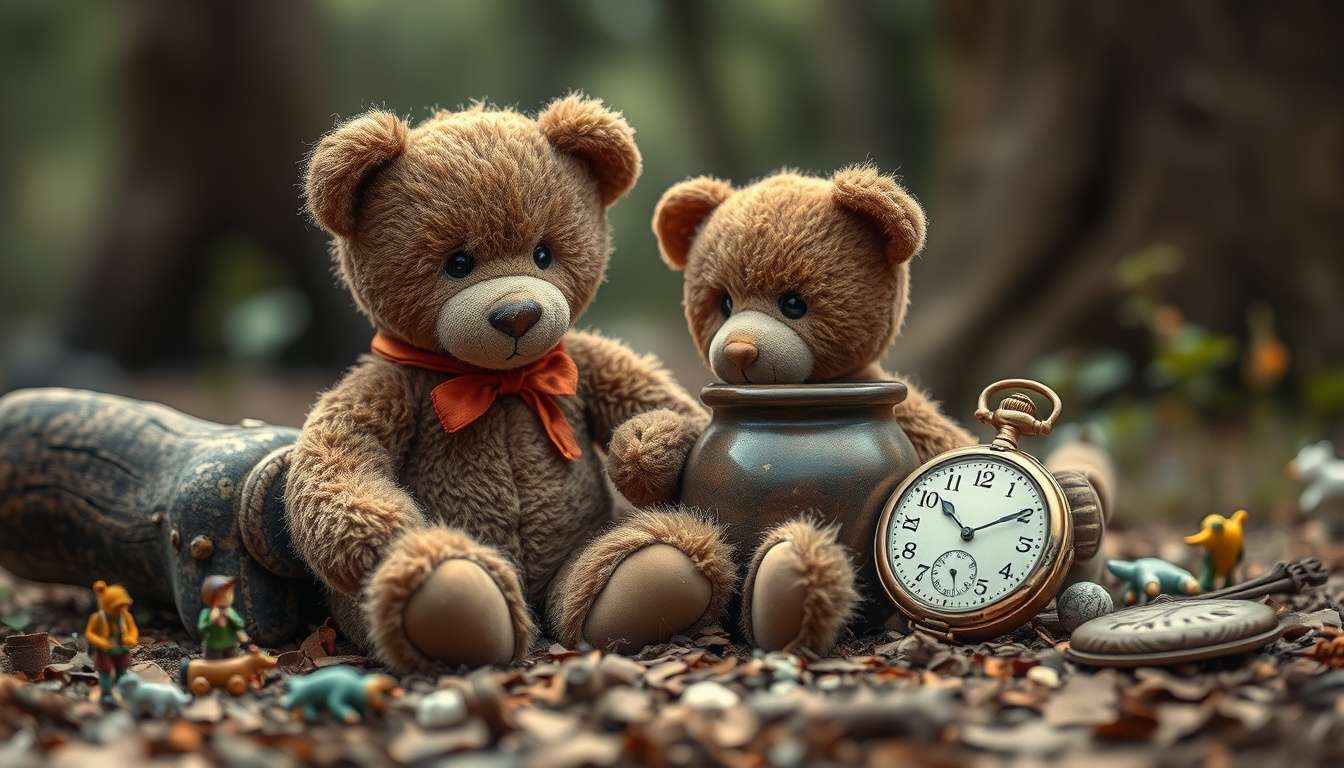
A honey-loving bear and his stuffed-animal friends have charmed readers for nearly a century, but the stories behind them hold more depth than most people realize. The Hundred Acre Wood’s residents weren’t just drawn from imagination — they were inspired by real toys, a real Canadian black bear, and the childhood of a boy named Christopher Robin. This guide separates canon facts from modern myths, explores the surprising mental-health interpretations fans have built, and answers the questions people keep asking in 2025.
First appearance: 1926 ·
Books by A. A. Milne: 2 (1926, 1928) ·
Number of main friends: 6 ·
Disney adaptation released: 1966 ·
Winnie the Pooh Day: January 18
Quick snapshot
- Pooh is a fictional male bear created by A. A. Milne (Encyclopaedia Britannica)
- First book published October 14, 1926 (Teachers College, Columbia University Libraries)
- Characters based on real stuffed animals owned by Christopher Robin Milne (Teachers College, Columbia University Libraries) (Encyclopaedia Britannica)
- Pooh is consistently referred to as male in Milne’s books (Encyclopaedia Britannica) (Encyclopaedia Britannica)
- Whether “Pooh” originally meant anything beyond a nickname (Ball State University research)
- Whether A. A. Milne intended any mental health diagnoses for characters (Ball State University research)
- Exact date of the real bear Winnie’s death (Ball State University research)
- Whether the Disney version of the characters has become more canonical than Milne’s originals for most readers (Ball State University research)
- 1924: First poem about Edward Bear (later Pooh) published (Encyclopaedia Britannica)
- 1926: Winnie-the-Pooh book released (Teachers College, Columbia University Libraries)
- 2022: Original book enters U.S. public domain
- 2023: Horror film Blood and Honey released
- Public domain allows more derivative works and adaptations
- Continued fan debate about mental health symbolism
- Growing interest in original character origins vs. Disney versions
Nearly 100 years after his first appearance, Winnie the Pooh remains one of the most recognized fictional characters worldwide — but most people know the Disney version, not Milne’s original creation. Understanding the real origins changes how readers interpret everything from character personalities to the horror-film spin-offs that have emerged since the books entered the public domain.
Seven key facts capture what’s actually known about the Winnie the Pooh universe — grounded in publication records, archival sources, and the characters’ original toy inspirations.
| Fact | Details |
|---|---|
| Creator | A. A. Milne (English author) |
| First book | Winnie-the-Pooh (1926) |
| Second book | The House at Pooh Corner (1928) |
| Illustrator | E. H. Shepard |
| Original toy owner | Christopher Robin Milne |
| Disney debut | 1966 short film Winnie the Pooh and the Honey Tree |
| Copyright status (US) | Public domain as of 2022 (for original books) |
Who are Winnie the Pooh’s friends?
The core group includes seven distinct characters — each introduced as a separate stuffed animal owned by Christopher Robin Milne — plus the only human in the stories. According to Disney’s official character guide, each has a distinct personality that has been refined across decades of adaptations. Britannica’s reference entry identifies the same cast but with slightly different emphasis — Pooh as “good-natured and honey-loving,” Eeyore as “gloomy,” and Owl as “pontificating.”
Christopher Robin and the Hundred Acre Wood
The only human character in the stories, Christopher Robin is based on Milne’s real son. Columbia University Libraries notes that the stories were “inspired by his son Christopher Robin and his toys.” In the Disney version, he’s described as Pooh’s closest friend who others turn to for guidance.
Piglet the timid pig
A very small pig who is perpetually anxious. Disney’s description calls him “small in size but with the biggest heart in the Hundred Acre Wood.” Piglet’s fearfulness has made him a recurring point of discussion in mental-health readings of the cast.
Tigger the bouncy tiger
Introduced in the second book, Tigger is described by Disney as “boisterous, exuberant, and one-of-a-kind.” He is known for his boundless energy, unique bouncing gait, and the catchphrase “TTFN — Ta-ta for now!”
Eeyore the gloomy donkey
Perhaps the most discussed character in modern online culture, Eeyore is a melancholy gray donkey whose personality has led to widespread association with depression. Disney describes Eeyore as “gloomy, with loyalty that wins the hearts of his friends.” He first appeared in the 1926 book Winnie-the-Pooh.
Rabbit the organized neighbor
An organized, compulsive character who often acts as the group’s self-appointed leader. Disney’s guide notes that Rabbit is “often the self-appointed leader of the Hundred Acre Wood.” In fan interpretations, his meticulous nature has been linked to obsessive-compulsive traits.
Owl the self-proclaimed scholar
Owl presents himself as an intellectual authority, though his advice is often comically unreliable. Britannica describes him as “pontificating,” and Disney says he’s a “know-it-all whose friends seek his advice.”
Kanga and Roo the mother and son
The only mother-child pair in the Hundred Acre Wood. Britannica describes Kanga as “energetic with her inquisitive baby Roo in her pouch.” Disney calls her a “warm, protective mother.”
The pattern: these characters were never meant to be archetypes — they were toys first, then characters, then icons.
Is Winnie the Pooh 100 years old?
The short answer: not yet. The character will turn 99 in 2025, one year short of the century mark. But the timeline is more interesting than a simple number.
Publication timeline: 1926 to present
Teachers College, Columbia University Libraries confirms the first book, Winnie-the-Pooh, was published on October 14, 1926. A sequel, The House at Pooh Corner, followed in 1928. That means as of October 2025, the character will be exactly 99 years old.
The real bear named Winnie
The name “Winnie” actually came from a real black bear. According to historical records, Columbia University Libraries documents that Canadian soldier Lt. Harry Colebourn brought a bear cub named Winnie to London in 1914. That real bear, a female, was eventually housed at the London Zoo, where Christopher Robin Milne visited her — leading to the character’s name.
The character is approaching a centenary that many assume has already passed. By October 2026, Pooh will officially be 100 — but the real bear Winnie was born in 1914, making her 111 in 2025. The fictional character is younger than the animal that inspired its name.
The implication: the centenary conversation is really two separate timelines — one for the fictional bear, one for the real animal — and conflating them muddies the story.
Is Pooh male or female?
This question surfaces repeatedly, likely because the real bear named Winnie was female. The answer depends on whether you mean the character or the animal.
Pronoun usage in Milne’s books
Throughout all of A. A. Milne’s original stories, Pooh is consistently referred to with male pronouns. Britannica and Disney both use “he” to describe the character. The fictional bear is definitively male.
The gender of the real bear Winnie
The real bear that inspired the name was a female black bear from Canada. According to Columbia University Libraries, Lt. Harry Colebourn named the cub after his hometown of Winnipeg. That real bear was female — but the fictional character was written as male from the start.
Which Pooh character represents depression?
Eeyore is the character most commonly associated with depressive traits — a reading that has become deeply embedded in online culture. But the relationship between Milne’s characters and mental health conditions is more complicated than most summaries suggest.
Eeyore’s persistent sadness
Eeyore’s defining trait is his gloomy outlook. Disney describes him as “gloomy, with loyalty that wins the hearts of his friends.” In the original books, Eeyore frequently loses his tail, has his house demolished, and responds with resigned melancholy rather than anger. Britannica describes the character simply as “a gloomy gray donkey.”
Theories linking characters to mental health conditions
Academic research has examined this connection. A study from Ball State University concluded that the Pooh characters did not represent different mental disorders in Milne’s original design. However, the same study notes that the characters “still display symptoms that readers may recognize as resembling common psychological disorders.” The association is a modern fan interpretation — not authorial intent.
The 2023 horror film Winnie the Pooh: Blood and Honey features a version of Eeyore who is killed — a plot point that has confused many viewers. The original books contain no such event. The film is an independent, non-canonical work made possible because the original 1926 book entered the U.S. public domain in 2022. It is not connected to Disney or Milne’s estate in any way.
The catch: readers who want a clean diagnosis will always find one — but that’s a reflection of the reader’s needs, not the author’s intent.
Winnie the Pooh and mental health
The idea that each character represents a specific mental health condition has become one of the most persistent conversations about the Hundred Acre Wood. Here’s what the research actually shows.
ADHD and Tigger
Tigger’s boundless energy, impulsivity, and inability to sit still have led many fans to associate him with attention-deficit/hyperactivity disorder. Disney describes him as “boisterous” and “exuberant,” but no official source confirms this as an intentional parallel. The Ball State research lists this as a reader-recognized symptom pattern, not an authorial design.
Anxiety and Piglet
Piglet’s small size, trembling demeanor, and constant worry have made him the character most often connected to anxiety disorders. Again, the Ball State study confirms that readers recognize these symptoms but found no evidence Milne intended a clinical parallel.
Depression and Eeyore
Eeyore’s persistent sadness and low energy are consistently read as depressive traits. This is the strongest character-condition association in popular culture, but remains interpretive. Milne’s own letters, quoted by biographers, describe Eeyore as simply “the donkey who is sad” without diagnostic language.
Obsessive-compulsive traits in Rabbit
Rabbit’s need for order, his meticulous garden-management, and his frustration with the others’ chaos have led to associations with obsessive-compulsive patterns. This is the least discussed connection but has gained traction in online forums dissecting character personalities.
Interpreting Milne’s characters through a mental health lens makes the stories feel more relevant to modern readers — but it also risks retrofitting diagnostic frameworks onto stories that were deliberately written as light childhood escapes. The Ball State research is clear: the characters were not designed as case studies, even if they resonate that way. For readers seeking representation, the value is real. For canon accuracy, the evidence is absent.
What this means: the Hundred Acre Wood works as a mirror for readers — but the glass was never designed to be a diagnostic tool.
“It is more fun to talk with someone who doesn’t use long, difficult words but rather short, easy words like ‘What about lunch?'”
A. A. Milne, from the introduction to Winnie-the-Pooh (1926)
Milne’s own words reveal a writer who prioritized warmth and simplicity over complexity or hidden meaning — a useful corrective to the elaborate psychological readings that have grown up around his characters.
“When I was ten, I read my father’s books and felt they were about me and my toys. And so they were.”
Christopher Robin Milne, from his autobiography
“I drew Pooh as I saw him — a roly-poly bear who was all tummy. The character was already there in the text. I just gave him form.”
E. H. Shepard, illustrator of the original books
en.wikipedia.org, en.wikipedia.org, winnie-the-pooh.com, booknormblog.wordpress.com, simple.wikipedia.org, disney.fandom.com, nl.wikipedia.org, info.mysticstamp.com, norsknettcasino.org
Frequently asked questions
What are the names of all Winnie the Pooh’s friends?
The main characters are: Winnie the Pooh (the bear), Christopher Robin (the human boy), Piglet (a small pig), Tigger (a bouncy tiger), Eeyore (a gloomy donkey), Rabbit (an organized rabbit), Owl (a self-proclaimed scholar), Kanga (a mother kangaroo), and Roo (her baby).
Is Eeyore really killed in the books?
No. Eeyore is not killed in any of A. A. Milne’s original stories. The misconception comes from the 2023 horror film Winnie the Pooh: Blood and Honey, which is a non-canon independent production made after the original book entered the U.S. public domain.
Will Winnie the Pooh turn 100 in 2025?
No. The first book was published on October 14, 1926. As of 2025, the character is 99 years old. The centenary falls in October 2026.
Is Pooh a boy or a girl?
Winnie the Pooh the fictional character is male — referred to with “he/him” pronouns throughout Milne’s books and all official Disney materials. The real bear named Winnie who inspired the name was a female from Canada.
Which character in Pooh is considered ADHD?
Tigger is most often associated with ADHD-like traits — high energy, impulsivity, and difficulty sitting still. This is a modern fan interpretation, not an official diagnosis from Milne or Disney.
Why is the character named Pooh?
In Milne’s introduction to the first book, he writes that “Pooh” was the name of a real swan the family knew. Christopher Robin called the swan “Pooh” because that’s the noise the swan made when being fed bread. The name was later transferred to the bear.
What mental disorder does Eeyore represent?
Eeyore is widely associated with depression. His persistent sadness, low energy, and resigned attitude toward misfortune align with common depressive symptoms. Academic research from Ball State University confirms readers recognize these traits but found no evidence Milne intended a clinical diagnosis.
Related reading
- Donald Duck: Catchphrase, Real Name, and Character Guide — Another classic character breakdown from the same era of children’s entertainment
- Sid Sloths: The Real Ice Age Character Species Explained — A similar “beloved animated character explained” piece with species and lore analysis

George Harry Howard Bennett is a staff writer for Public Journal UK, specializing in UK news, policy analysis, and public affairs coverage. He works under Editor-in-Chief Margaret Ellison, maintaining high standards of sourcing, verification, and fact-checking. Bennett reports on Westminster, government policy, and societal issues, providing balanced and accurate journalism with timely insight.