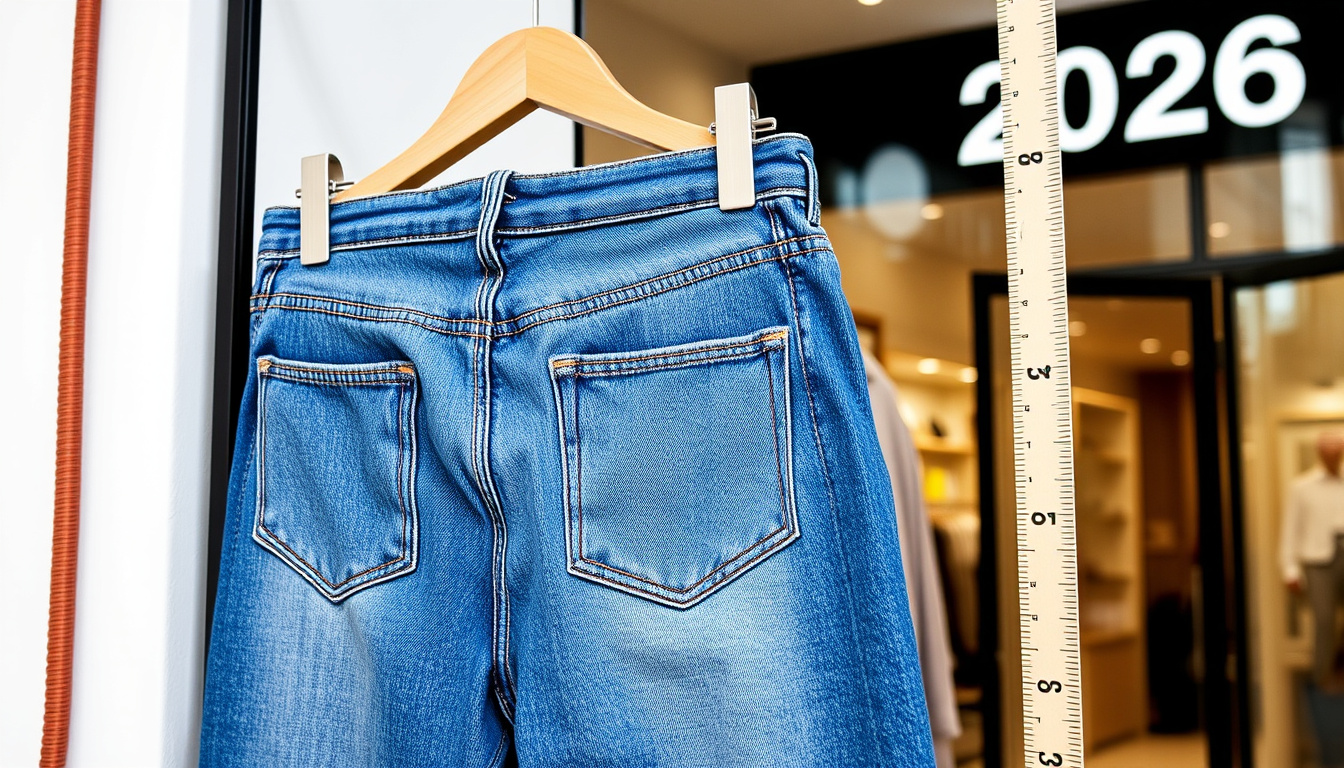
Let’s be honest: low-rise jeans have a reputation. For anyone who lived through the early 2000s, the word “low-rise” might conjure a specific mix of nostalgia and mild dread—the feeling of constantly tugging at a waistband that seemed to have a mind of its own. But here’s the thing: in 2026, the low-rise jean is back, and it’s not just a recycled trend. It’s being re-cut, re-sized, and re-styled for a new generation, and the current market reflects this, with major retailers in Ireland and beyond now offering dedicated low-waist sections.
This guide isn’t about telling you whether to love them or hate them; it’s about the practicalities—how to find the right fit, decode the sizing chaos, and buy a pair that actually looks intentional, not like a wardrobe accident. We’ll dig into the measurements, the common fit challenges, and where to shop, so you can decide for yourself if this trend has a place in your rotation.
- Low-rise jeans sit on the hips, not the natural waist.
- Typical rise measurement: 7–9 inches from crotch to waistband.
- Peak era: 2003–2007 (Y2K), but the 2026 revival is less extreme.
- Sizing can be harder because the waistband does less work when jeans sit low.
- Because they sit below the natural waist, true size can vary.
- Common issues: muffin top, gaping at the back, shorter torso illusion.
- Current brands may not go as extreme as the 2000s, but low-rise is widely available.
- H&M has a dedicated low-waist jeans section.
- Modern cuts include baggy, flare, and wide-leg—not just the skinny silhouettes of the 2000s.
- Measure a pair of jeans you already own that fit well—don’t rely on your usual waist size.
- Check the rise measurement on the size chart before buying.
- Start with H&M or Levi’s for a reliable baseline; go to G-STAR or Anarchy Label for fashion-forward cuts.
You’ll see plenty of chatter about age limits, but the honest answer is more nuanced than a simple “yes” or “no.” According to apparel sizing experts at policyline.uk, the real issue isn’t age—it’s fit and confidence. What changes as we get older is often our body shape and comfort priorities, not our right to wear a certain silhouette. The more useful question is: does this particular pair flatter *your* body, right now? A 45-year-old with a straight hip line can absolutely rock a low-rise jean, while a 30-year-old with a shorter torso might find them uncomfortable. A low-rise jean styled with a longer, flowing top reads very differently than one paired with a cropped halter.
It’s taken from the crotch seam to the top of the waistband, and it determines everything about where the jean sits on your body. A true low-rise jean sits on the hips, not the natural waist, which is why the fit can feel so different from what you’re used to. One thing to note: the term “low-rise” can be a bit of a moving target. Who What Wear notes that many jeans labeled low-rise fit higher than expected, so shoppers should verify the exact rise position before buying.
The rise measurement is the code you need to crack. Don’t trust the label—measure the jean.
Fit challenges and how to solve them
Let’s be real about the fit problems. They’re common, and they can be frustrating. But most of them are fixable with the right approach. The two most frequent complaints are muffin top and gaping at the back. Muffin top happens because the waistband sits below the natural waist, so it can dig into the softest part of the torso. The fix is often sizing up or choosing a style with a slightly higher rise—even a 1-inch difference can change the whole look.
Gaping at the back: Because the jeans sit below the natural waist, the waistband can gap if you have a curvier hip-to-waist ratio. The fix is to look for a curvy fit or a style with a contoured waistband. Balance this by choosing a top that doesn’t cut off at the waist, or by adding a long-line layer. If the jeans feel like they’re about to slide off or dig in, they’re not the right pair. Because low-rise jeans sit on a different part of your body, the sizing can be wildly different from your standard mid-rise pair. FashionBeans says low-rise sizing can be harder than conventional jeans because waist measurements do less of the work when the jeans sit on the hips.
How to find your true size
If you’re used to grabbing your standard waist size, prepare to do a little more work with low-rise jeans. Because they sit below the natural waist, your true size can vary significantly from brand to brand. Anarchy Label notes that brands rarely standardize these measurements, so a size 29 in one label might fit completely differently in another. Here’s a practical approach: measure a pair of jeans you already own that fit well. Then compare that to the size chart of any low-rise pair you’re considering.
On a low-rise jean, the waistband is often smaller than your natural waist—because it’s not meant to sit there. If there’s more than a finger’s width of space between the waistband and your lower back, you need a smaller size or a different cut.
Where to buy low-rise jeans in 2026
If you’re in Ireland or shopping online, you have more options than you might think. The trend has moved from niche to mainstream, and the retail landscape reflects that. H&M has made a committed play here, with a dedicated low-waist section that spans multiple fits and washes. This is significant because it signals that the trend has real staying power, not just a flash in the pan. Levi’s is another strong choice. They’re a specialist denim brand with a strong understanding of how to craft a flattering low-rise cut. If you’re after something with a bit more edge, Anarchy Label is worth a look, though their sizing can be less predictable, so budget time for returns.
Just be aware that Irish sizing can sometimes run a bit larger than European standard, so double-check the size chart if you’re ordering from a UK or EU site.
Start with H&M or Levi’s if you’re on a budget or want a reliable baseline. Go to G-STAR or Anarchy Label if you’re looking for a specific cut or a more fashion-forward interpretation.
Is it possible to wear low-rise jeans without looking like you just stepped off a 2004 music video set? Yes, and the key is balance. The 2026 way to wear low-rise jeans is with structure on top and a tailored fit on the bottom. A blazer, a fitted turtleneck, or a long-line vest all work to ground the look.
policyline.uk, anarchylabel.com, whowhatwear.com, g-star.com, very.co.uk, realsimple.com, fashionnova.com, instyle.com, elle.com, eonline.com, fashionbeans.com, urbanoutfitters.com
FAQ
They should sit on your hips without gaping at the back or digging in at the front. You should be able to squat and bend without feeling like they’re sliding off or cutting into you.
Yes. Brands like H&M have dedicated low-waist sections, and current cuts are typically not as low as the Y2K era’s most dramatic styles. The trend is widely available but toned down.
They were dismissed by some as a 2000s trend, but the revival has changed that. Major retailers in Ireland (H&M, Zara, Bershka, Stradivarius, Hollister, Boohoo) now stock low-rise styles, though dedicated sizing guidance is still limited—which is why measuring is essential.
Measure a pair of jeans you own that fit well, then compare that to the brand’s size chart. Because low-rise sits on the hips, your usual waist size may not be accurate.
Yes, but the modern interpretation is less extreme than the 2000s, with dedicated sections at H&M. The right question is whether the fit flatters your body and feels comfortable. Age is less important than the specific fit, and choosing a slightly higher low-rise (around 9 inches) can be more comfortable and versatile.
On a straight hip line, they tend to sit smoothly. On a curvier hip-to-waist ratio, gaping at the back is more likely—a curvy fit or a contoured waistband solves this. For shorter torsos, a 9-inch rise may feel more balanced than a 7-inch one.

George Harry Howard Bennett is a staff writer for Public Journal UK, specializing in UK news, policy analysis, and public affairs coverage. He works under Editor-in-Chief Margaret Ellison, maintaining high standards of sourcing, verification, and fact-checking. Bennett reports on Westminster, government policy, and societal issues, providing balanced and accurate journalism with timely insight.