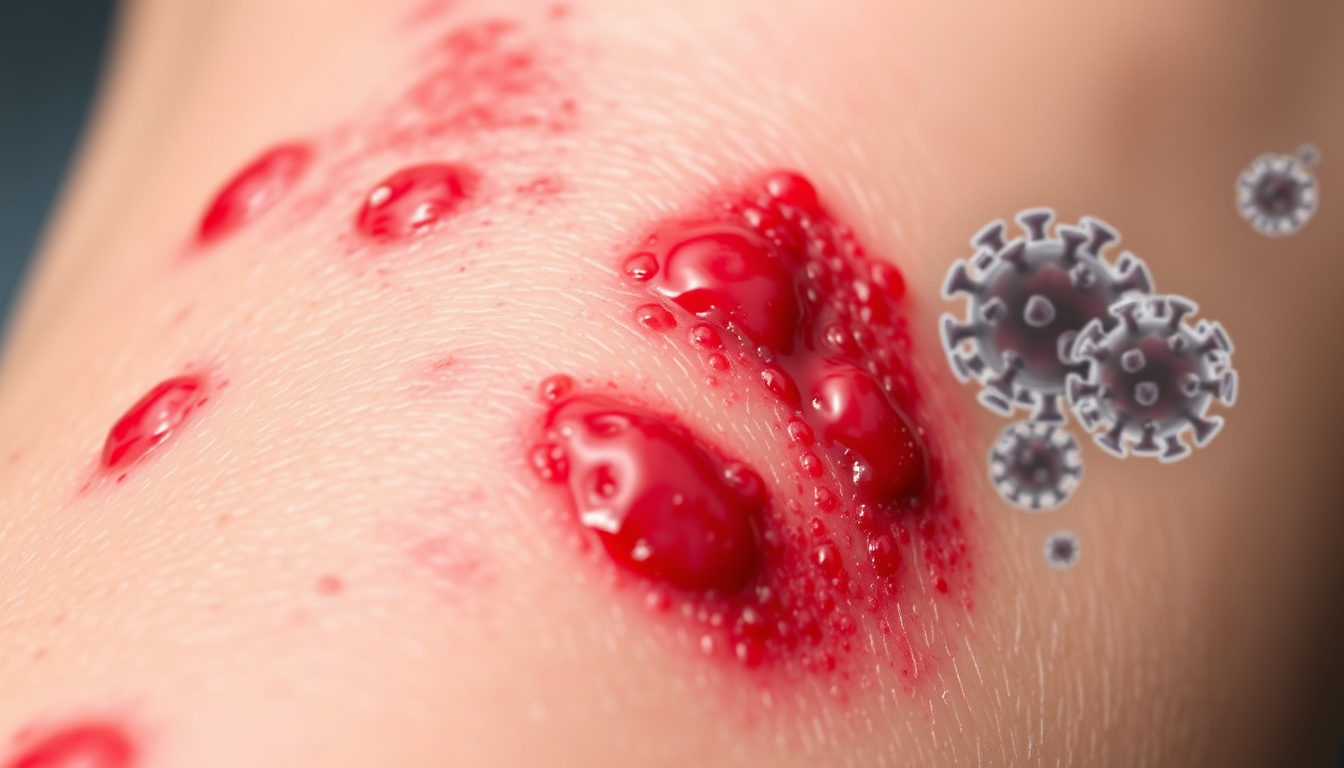
Few health questions spark as much confusion as whether you can “catch” shingles from someone else. The short answer is no — but the full picture is more nuanced: the same varicella-zoster virus can spread from a shingles rash to cause chickenpox in someone susceptible, not shingles, and this guide unpacks what’s transmissible, who’s at risk, and how long precautions last.
Lifetime risk of shingles: 1 in 3 ·
Annual cases in the US: about 1 million ·
Age of highest risk: over 50 ·
Recurrence rate: less than 5% ·
Vaccine efficacy (Shingrix): over 90% in adults 50+
Quick snapshot
- Shingles itself is not contagious, but the virus can spread to cause chickenpox (CDC (U.S. public health agency))
- Transmission requires direct contact with fluid from blisters (Healthline (medical information publisher))
- Exact mechanisms that trigger viral reactivation (WHO (global health authority))
- Whether stress alone can cause shingles without other immune factors (Mayo Clinic (U.S. academic medical center))
- Antiviral treatment reduces severity if started within 72 hours (WHO)
- Vaccination (Shingrix) lowers risk of shingles and postherpetic neuralgia (CDC)
Five key facts that frame the core medical truth about shingles transmission and prevention.
| Label | Value |
|---|---|
| Cause | Reactivation of varicella-zoster virus |
| Contagious | Only through rash contact, not airborne |
| Available vaccine | Shingrix (recombinant) — 2 doses |
| Treatment | Antiviral medications (acyclovir, valacyclovir, famciclovir) |
| Recurrence | Less than 5% |
Is it safe to be around someone with shingles?
For most people, yes — but with an important caveat. The virus inside the shingles rash can spread to someone who has never had chickenpox or the chickenpox vaccine, giving them chickenpox, not shingles. The U.S. Centers for Disease Control and Prevention (CDC) states: “You cannot get shingles from someone with shingles.” (CDC (U.S. public health agency))
Can you catch shingles directly from a person with shingles?
- No. Shingles is a reactivation of the varicella-zoster virus already dormant in your own nervous system. (WHO (global health authority))
- Exposure to someone with shingles cannot cause shingles in another person — it can only cause chickenpox in susceptible individuals. (NHS (U.K. national health service))
What is the actual risk to people who haven’t had chickenpox?
- Direct contact with fluid from shingles blisters can transmit the varicella-zoster virus. (CDC)
- The risk is highest for unvaccinated individuals and those who never had chickenpox. (CDC)
How does the virus spread from a shingles rash?
- Transmission occurs through direct contact with fluid from open blisters — not through coughing, sneezing, or saliva in typical cases. (CDC)
- For localized shingles, exposure is defined as intimate contact like touching the rash or changing bandages. (Minnesota Department of Health (state public health authority))
The implication: you cannot “catch” shingles from anyone. The only transmission risk from a shingles patient is chickenpox — and only to those who are not already immune.
A person with shingles poses no threat of giving you shingles. The real risk — chickenpox in unvaccinated or never-infected individuals — is manageable by simply covering the rash and avoiding direct contact with the fluid.
This means that with simple precautions, the risk to others is effectively zero.
What is the most common way to get shingles?
The virus that causes shingles is already inside you. Nearly all adults over 40 carry the varicella-zoster virus dormant in their nerve tissue. (WHO)
What triggers the reactivation of the chickenpox virus?
- Immune decline — whether from age, illness, or medication — allows the dormant virus to reactivate. (Mayo Clinic (U.S. academic medical center))
- Stress, infection, and certain immunosuppressive drugs are recognized triggers. (CDC)
Who is at highest risk for shingles?
- Anyone who has had chickenpox is at risk, but the odds climb steeply after age 50. (CDC)
- Immunocompromised individuals — transplant recipients, people on chemotherapy, or those with HIV — face higher risk. (WHO)
Can stress cause shingles?
- Stress is a known co-factor, though the exact mechanism remains unclear. (Mayo Clinic)
- In clinical practice, stress is listed as a potential trigger alongside physical illness. (NHS)
Why this matters: shingles is not something you catch — it’s something your own body does when its immune surveillance drops. The most reliable defense is vaccination, which trains your immune system to keep the virus in check.
How long are you contagious with shingles?
The contagious window is tied entirely to the rash. The CDC confirms that a person with shingles can spread the virus only from the time the rash appears until the blisters have crusted over. (CDC)
When does the contagious period start and end?
- It starts when blisters form and ends once all blisters are dry and scabbed — typically 7 to 10 days. (GoodRx (health information service))
- Scratching or touching the rash prolongs the presence of fluid and extends the risk period. (CDC)
Can you transmit shingles before the rash appears?
- No. The virus is not present on the skin surface or in respiratory secretions during the prodromal phase. (CDC)
How long after shingles are you no longer contagious?
- Once the blisters crust over and no fluid is present, the risk of transmission drops to near zero. (WHO)
- Blisters may take 2–4 weeks to fully heal, but the contagious phase ends when crusting is complete. (CDC)
The pattern: the rash is the clock. Keep it covered, avoid touching it, and once it scabs, the window closes.
Should you isolate if you have shingles?
Full isolation is not required for most people, but smart precautions protect those around you. Neither the CDC nor state health departments recommend home quarantine for shingles in community settings. (New Jersey Department of Health Communicable Disease Service Manual)
Do you need to stay home from work or school?
- Not mandatory, but covering the rash and avoiding high-risk contacts is advised. (CDC)
- Healthcare workers may need to be excluded from patient contact until lesions crust. (Minnesota Department of Health)
What precautions should you take around others?
- Cover the rash with clothing or a non-stick bandage. (CDC)
- Do not share towels, clothing, or bedding. (NCOA (National Council on Aging))
- Wash hands frequently, especially after touching the rash area. (CDC)
Who should avoid contact with a person with shingles?
- Pregnant women who have never had chickenpox or the vaccine, premature infants, and immunocompromised individuals should avoid contact until the rash crusts. (CDC)
- For disseminated shingles (widespread rash), airborne precautions may be needed — stay home or use isolation in hospital settings. (New Jersey Department of Health)
The trade-off: you don’t need to lock yourself in a room, but you do need to be a responsible neighbor — especially around vulnerable people.
If you have shingles and live with someone who is pregnant or immunocompromised, separate living spaces until blisters crust. The CDC recommends this even if that person has had chickenpox, because the risk of secondary exposure is real.
Balancing caution with practicality keeps everyone safe.
What are the very first signs of shingles?
Before the rash appears, the virus sends a warning signal: a localized pain, burning, or tingling on one side of the body. The rash follows 1–5 days later. (Mayo Clinic)
What does the early stage feel like?
- Often described as a deep ache, itching, or electric sensation in a band-like area. (CDC)
- Some people also develop flu-like symptoms — fever, headache, fatigue — before the rash. (NHS)
How soon after symptoms does the rash appear?
- Within 1–5 days of the initial pain or tingling, a red rash with fluid-filled blisters emerges. (Mayo Clinic)
- The rash follows a dermatome pattern — a strip along a nerve pathway — and typically does not cross the midline of the body. (CDC)
What are the four classic signs of shingles?
- Pain (burning, stabbing, or tingling) (CDC)
- Rash (clusters of blisters on red skin) (CDC)
- Itching in the affected area (CDC)
- Flu-like symptoms (fever, headache, fatigue) (CDC)
The catch: early treatment with antivirals works best when started within 72 hours of the rash. If you feel that one-sided burning sensation and know you’ve had chickenpox, call your doctor — don’t wait for the blisters to confirm it.
Confirmed facts vs. what remains unclear
Confirmed facts
- Shingles is not transmissible as shingles to others. (CDC)
- Antiviral treatment is effective within 72 hours of rash onset. (WHO)
- Vaccination reduces risk of shingles and postherpetic neuralgia. (CDC)
- The virus can spread via direct contact with open blisters. (CDC)
What’s unclear
- Exact mechanisms of viral reactivation triggers. (Mayo Clinic)
- Whether stress alone can trigger shingles without other factors. (NHS)
- Why some people experience long-lasting pain (postherpetic neuralgia) and others do not. (CDC)
“Shingles is caused by the varicella-zoster virus — the same virus that causes chickenpox.”
— CDC (U.S. public health agency)
“You cannot get shingles from someone with shingles.”
— NHS (U.K. national health service)
“The risk of getting shingles increases as you get older, especially after age 50.”
— Mayo Clinic (U.S. academic medical center)
For anyone over 50 or living with a weakened immune system, the decision is clear: get the Shingrix vaccine, cover the rash if it appears, and remember that shingles is not something you catch from others — it’s something your own body does when immune protection wanes. The alternative — weeks of pain and a real risk of postherpetic neuralgia — is far worse.
Frequently asked questions
Can shingles kill you?
Shingles itself is rarely fatal, but complications can be serious. Postherpetic neuralgia (chronic pain) is the most common complication. In rare cases, shingles can lead to pneumonia, encephalitis, or bacterial skin infections that may be life-threatening, especially in immunocompromised people. (CDC)
Is shingles dangerous?
For most healthy adults, shingles is painful but not life-threatening. The biggest danger is postherpetic neuralgia — persistent nerve pain that can last months or years after the rash heals. People with weakened immune systems face higher risks of severe complications. (Mayo Clinic)
Can you catch shingles twice?
Yes, but it’s uncommon. The recurrence rate is less than 5% overall. Having shingles once does create some immunity, but because the virus remains dormant, reactivation can happen again, especially if immune function drops further. (CDC)
Is there a cure for shingles in 3 days?
No credible cure can fully clear shingles in 3 days. Antiviral drugs like acyclovir or valacyclovir, started within 72 hours of the rash, can shorten the duration and reduce severity, but the rash still takes 7–10 days to crust. No treatment makes shingles disappear in 72 hours. (WHO)
Can you get shingles from the shingles vaccine?
No. The Shingrix vaccine is a recombinant (non-live) vaccine — it cannot cause shingles. Some people experience temporary side effects like soreness, fatigue, or fever, but the vaccine itself does not contain the live virus. (CDC)
What is the best treatment for shingles?
Antiviral medications (acyclovir, valacyclovir, famciclovir) started within 72 hours of rash onset are the standard treatment. Pain management with over-the-counter analgesics or prescription nerve pain medications may also be needed. Keeping the rash clean and covered helps prevent spread. (NHS)
Can shingles cause complications like postherpetic neuralgia?
Yes, postherpetic neuralgia (PHN) is the most common complication — persistent pain in the area where the rash was, lasting weeks or even years after healing. The risk of PHN increases with age. Vaccination with Shingrix significantly reduces the risk. (CDC)
Who should get the shingles vaccine?
The CDC recommends Shingrix for adults aged 50 and older, and for adults 19+ with weakened immune systems who are at increased risk of shingles. Two doses are given 2 to 6 months apart. Even if you’ve already had shingles, vaccination is recommended to prevent recurrence. (CDC)

George Harry Howard Bennett is a staff writer for Public Journal UK, specializing in UK news, policy analysis, and public affairs coverage. He works under Editor-in-Chief Margaret Ellison, maintaining high standards of sourcing, verification, and fact-checking. Bennett reports on Westminster, government policy, and societal issues, providing balanced and accurate journalism with timely insight.