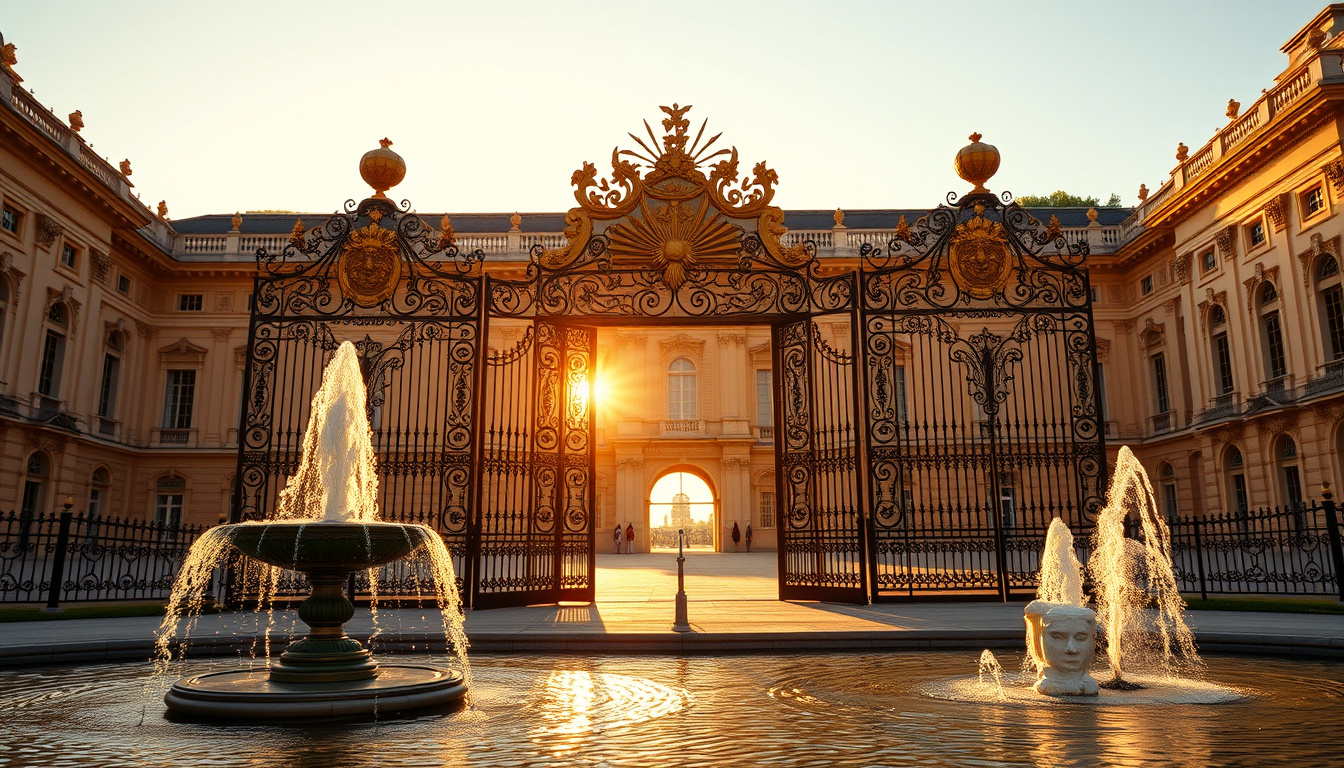
Louis XIV turned a hunting lodge into the most opulent palace in Europe and centralized power so completely that his very nickname—the Sun King—suggested the universe revolved around him, but behind the glitter lay a childhood shaped by rebellion and a reign that strained France to its limits. Here’s what you need to know about the man who embodied an era.
Reign length: 72 years (1643–1715) ·
Known as: Sun King (Le Roi Soleil) ·
Palace built: Palace of Versailles ·
Age at accession: 4 years, 8 months
Quick snapshot
- Born 5 September 1638 at Saint-Germain-en-Laye (BBC History (historical source))
- Reigned 72 years, 110 days — longest of any sovereign monarch (Wikipedia (community encyclopedia))
- Moved the royal court to Versailles in 1682 (Château de Versailles (official palace museum))
- Died at Versailles on 1 September 1715 (BBC History, historical source) (BBC History (historical source))
- Exact number of illegitimate children — estimates range from 7 to 11 (historical sources vary)
- True extent of suffering of common people under his policies, often clouded by royal propaganda
- Whether he actually said “L’État, c’est moi” — likely apocryphal but widely attributed
- Precise financial cost of Versailles construction — records are incomplete and likely understated
- 1638: Born at Saint-Germain-en-Laye (BBC History (historical source))
- 1643: Becomes king at age 4 (Wikipedia, community encyclopedia) (BBC History (historical source))
- 1661: Start of personal rule after Mazarin’s death (Château de Versailles (official palace museum))
- 1682: Court moves permanently to Versailles (National Geographic (geography and history publication))
- 1715: Death of Louis XIV (BBC History, historical source) (BBC History (historical source))
- Succession passed to great-grandson Louis XV, then aged 5 (Wikipedia, community encyclopedia)
- Legacy as model for absolute monarchy across Europe, with mixed financial consequences for France
Seven key facts, one pattern: Louis XIV’s identity was built on precise milestones that defined his reign from start to finish.
| Attribute | Value |
|---|---|
| Full name | Louis Dieudonné de Bourbon |
| Born | 5 September 1638 |
| Died | 1 September 1715 |
| Reign | 14 May 1643 – 1 September 1715 |
| Spouse | Marie Thérèse of Austria (m. 1660) |
| House | House of Bourbon |
What is King Louis XIV famous for?
His role in absolutism
- Louis XIV centralized power to an unprecedented degree, eliminating remnants of feudalism by compelling the nobility to reside at Versailles, as noted by Wikipedia (community encyclopedia).
- He governed without a chief minister after Mazarin’s death in 1661, personally overseeing every major decision (Château de Versailles, official palace museum).
- The state became the instrument of the king’s will — a model emulated by monarchs across Europe.
Building the Palace of Versailles
- Versailles began as a modest hunting lodge built for Louis XIII and was transformed into an immense complex under Louis XIV from 1661 to 1710, according to Encyclopaedia Britannica (established reference work).
- The palace served as the principal residence of the French kings from 1682 until the Revolution (UNESCO World Heritage Centre, cultural heritage body).
- Built along an east-west axis to follow the rising sun, the palace reinforced the Sun King imagery (National Geographic, geography and history publication).
Wars and territorial expansion
- Louis XIV waged four major wars: the War of Devolution (1667–1668), the Franco-Dutch War (1672–1678), the War of the League of Augsburg (1688–1697), and the War of the Spanish Succession (1701–1714).
- These conflicts expanded France’s borders but drained the treasury and burdened the peasantry with heavy taxes.
Cultural patronage
- He founded the Academy of Sciences and the Royal Academy of Dance, promoting arts and knowledge as tools of prestige.
- Cultural propaganda — from paintings to operas — centered on Apollo and the sun, reinforcing his divine right (National Geographic, geography and history publication).
Louis XIV didn’t just build a palace — he built a machine for controlling the nobility. By forcing aristocrats to compete for his favor at Versailles, he neutralized the one group that could challenge his authority. The system worked for a century, but it also sowed the seeds of resentment that would eventually fuel the Revolution.
How many illegitimate children did Louis the 14th have?
His mistresses and their children
- Louis XIV had multiple official mistresses, most notably Louise de La Vallière, Françoise-Athénaïs de Montespan, and later Madame de Maintenon (whom he secretly married).
- Historical estimates for the number of illegitimate children range from 7 to 11 — the exact count remains uncertain because some died in infancy and records are incomplete.
- Montespan alone bore him at least seven children, several of whom survived to adulthood.
Legitimized children
- Louis XIV legitimized many of his bastards, granting them titles such as duc du Maine and comte de Toulouse.
- He even issued an edict allowing his legitimized sons to succeed to the throne if the legitimate line died out — a move that was later overturned after his death.
Impact on succession
- Louis’s only legitimate son, Louis, Grand Dauphin, died in 1711, before his father.
- Succession passed to his great-grandson, the future Louis XV, who was just five when he ascended the throne (Wikipedia, community encyclopedia).
The Sun King, who styled himself as the source of all light and life, could not keep his own legitimate line alive. His bastards were given every privilege — yet none could inherit the crown he had so carefully constructed.
What this means: Louis XIV’s family drama illustrates the fragility of hereditary rule. Even an absolute monarch couldn’t control biology.
How did Louis XIV treat his people?
Economic policies and tax burden
- To fund his wars and the construction of Versailles, Louis XIV imposed heavy taxes on the peasantry, including the taille and the gabelle (salt tax).
- The nobility and clergy were largely exempt, placing the entire burden on commoners.
- By the end of his reign, France’s national debt was enormous, setting the stage for fiscal crises under his successors.
Religious persecution of Huguenots
- In 1685, Louis XIV revoked the Edict of Nantes, which had granted religious tolerance to Protestants, forcing Huguenots to convert or flee (Encyclopaedia Britannica, established reference work).
- An estimated 200,000 Huguenots left France, taking their skills and capital to England, the Netherlands, and Prussia — a significant economic blow.
Centralization of power
- Louis XIV ruled through intendants — royal agents who oversaw provinces directly, bypassing local nobles.
- He also curbed the power of the regional parlements (law courts), reducing them to recording his edicts without debate.
Nobility control at Versailles
- Nobles were required to spend part of the year at Versailles, where they could be watched and kept from plotting (Wikipedia, community encyclopedia).
- This system of surveillance-through-opulence became a hallmark of his absolutist rule.
For the common people, the Sun King’s glow was dim. While the court danced in silk, villages starved under the weight of taxes. The Revocation of the Edict of Nantes didn’t just persecute — it deprived France of its most industrious subjects.
The pattern: Louis XIV traded the loyalty of the many for the submission of the few. The result was a stable throne, but a hollow treasury and a resentful populace.
Why was Louis XIV called the Sun King?
The Apollo myth
- The name originated from Louis’s role as Apollo in the 1653 ballet Ballet de la Nuit, where he performed as the rising sun banishing darkness (BBC History, historical source).
- Apollo, the sun god, represented order, reason, and the arts — qualities Louis sought to embody.
Role of ballet and art
- Louis XIV was an accomplished dancer and used ballet as political propaganda: the central sun figure — himself — brought harmony to the world.
- The sun motif appeared in every medium: on the ceilings of Versailles, in medallions, tapestries, and even the palace layout (National Geographic, geography and history publication).
Symbolism of the sun
- The sun was a perfect symbol: it was unique, constant, and life-giving — qualities that mapped directly onto the king’s image.
- Louis adopted the motto “Nec pluribus impar” (not unequal to many), suggesting he alone could match the combined power of others.
Why this matters: The Sun King was a deliberate brand. Louis XIV understood that perception was power — calling himself the sun wasn’t vanity; it was statecraft.
How did Louis XIV died?
Cause of death: gangrene
- Louis XIV died of gangrene caused by an infection in his leg, according to BBC History (historical source).
- He had suffered from various ailments in his final years, including gout and dental infections.
Last days at Versailles
- He spent his final days in the Palace of Versailles, surrounded by courtiers and physicians.
- On 1 September 1715, at 8:15 AM, he died at the age of 76 after a reign of 72 years.
Succession by Louis XV
- Because his son and grandson had predeceased him, the crown passed to his great-grandson, Louis XV, then five years old (Wikipedia, community encyclopedia).
- Louis XIV was buried at Saint-Denis Basilica, traditional resting place of French monarchs.
The implication: Even the Sun King could not escape the frailty of the flesh — his drawn-out end was a final, human counterpoint to decades of divine pretension.
Timeline: The Sun King’s life and reign
- 1638 – Birth of Louis XIV
- 1643 – Becomes king at age 4 after Louis XIII dies
- 1653 – Ballet de la Nuit – becomes known as Sun King
- 1661 – Start of personal rule after Cardinal Mazarin’s death (Château de Versailles, official palace museum)
- 1667–1668 – War of Devolution
- 1672–1678 – Franco-Dutch War
- 1682 – Court moves permanently to Versailles (National Geographic, geography and history publication)
- 1685 – Revocation of the Edict of Nantes (Encyclopaedia Britannica, established reference work)
- 1701–1714 – War of the Spanish Succession
- 1715 – Death of Louis XIV; succeeded by Louis XV (BBC History, historical source)
The pattern: Each phase of Louis XIV’s reign built on the previous — from childhood insecurity to absolute control, from cultural flourish to military overreach, ending in a succession crisis that exposed the limits of his system.
Clarity check: What we know vs what remains uncertain
Confirmed facts
- Date of birth (5 September 1638) and death (1 September 1715) sources agree across BBC History (historical source) and Wikipedia (community encyclopedia).
- Reign spanned exactly 72 years, 110 days — longest in European history among sovereign monarchs.
- Construction of Versailles from 1661 to 1710, with court moving there in 1682 (Château de Versailles, official palace museum).
- Revocation of Edict of Nantes in 1685 (Encyclopaedia Britannica, established reference work).
- Centralization of power and absolutist governance.
What’s unclear
- Exact number of illegitimate children — estimates range from 7 to 11 depending on recording methods.
- True extent of suffering among common people — royal archives emphasize grandeur; peasant complaints are scarce.
- Whether he ever said “L’État, c’est moi” — the phrase was attributed after his death without contemporary evidence.
- Whether Louis XIV personally directed all military strategies or relied heavily on his generals — records show delegation but the degree remains debated.
What this means: Even with meticulous court records, the Sun King’s life contains gaps that historians still debate — the legend often fills what evidence leaves open.
Voices from history: Quotes about Louis XIV
“I am the state.” — Attributed to Louis XIV (likely apocryphal)
Often repeated as the ultimate expression of absolutism, though most historians doubt he ever spoke those exact words.
“He took pleasure in making everyone feel his superiority. He was so much the king that he could not bear any kind of equality.” — Duc de Saint-Simon, memoirist and court insider
Saint-Simon, who spent decades at Versailles, offered a critical yet intimate portrait of the monarch’s personality (Wikipedia, community encyclopedia).
“It is not only the longest reign in history, but the most brilliant.” — Voltaire, from his work Le Siècle de Louis XIV
Voltaire praised Louis’s cultural achievements even as he condemned the wars that impoverished the nation.
The pattern: Three voices — the king’s attributed words, a courtier’s critique, and a philosopher’s measured praise — capture the contradictions of a reign that dazzled and devastated in equal measure.
Summary
Louis XIV left France a paradox: a centralized state admired across Europe, but financially exhausted and socially divided. The Sun King’s brilliance blinded contemporaries to the cracks beneath the gilded surface. For modern readers, his reign is a warning about the cost of unchecked power — one that echoes every time a leader confuses their will with the nation’s good. For context on another monarch whose reign reshaped a nation, see our article on King George III: Biography, Madness, Children, and Legacy.
en.wikipedia.org, historyextra.com, britannica.com, history.com, chateauversailles.fr, en.chateauversailles.fr, en.chateauversailles.fr, encyclopedia.com
Frequently asked questions
Is Taylor Swift related to King Louis XIV?
No, there is no credible genealogical link. This is a rumor circulating on social media without any historical evidence. Taylor Swift’s ancestry traces to Scottish, German, and English roots, not French royalty.
What was Louis XIV’s religion?
He was Roman Catholic. His devotion to Catholicism was intense, leading him to revoke the Edict of Nantes and persecute Huguenots.
How long did Louis XIV rule France?
He ruled for 72 years and 110 days, from 14 May 1643 until his death on 1 September 1715 — the longest reign of any sovereign monarch in European history.
Who succeeded Louis XIV?
His great-grandson Louis XV succeeded him at the age of five, as his son and grandson had both died before him.
What was the original purpose of the Palace of Versailles?
It began as a hunting lodge built for Louis XIII. Louis XIV transformed it into the seat of French government and a symbol of absolute monarchy.
Did Louis XIV have any famous quotes?
The most famous attributed quote is “L’État, c’est moi” (I am the state), though historians doubt he ever said it. It perfectly captures his absolutist philosophy, regardless of authenticity.
Why did Louis XIV build Versailles?
He built it to centralize power, control the nobility, and glorify the French monarchy. Moving the court to Versailles in 1682 allowed him to keep potential rivals under constant surveillance.

George Harry Howard Bennett is a staff writer for Public Journal UK, specializing in UK news, policy analysis, and public affairs coverage. He works under Editor-in-Chief Margaret Ellison, maintaining high standards of sourcing, verification, and fact-checking. Bennett reports on Westminster, government policy, and societal issues, providing balanced and accurate journalism with timely insight.