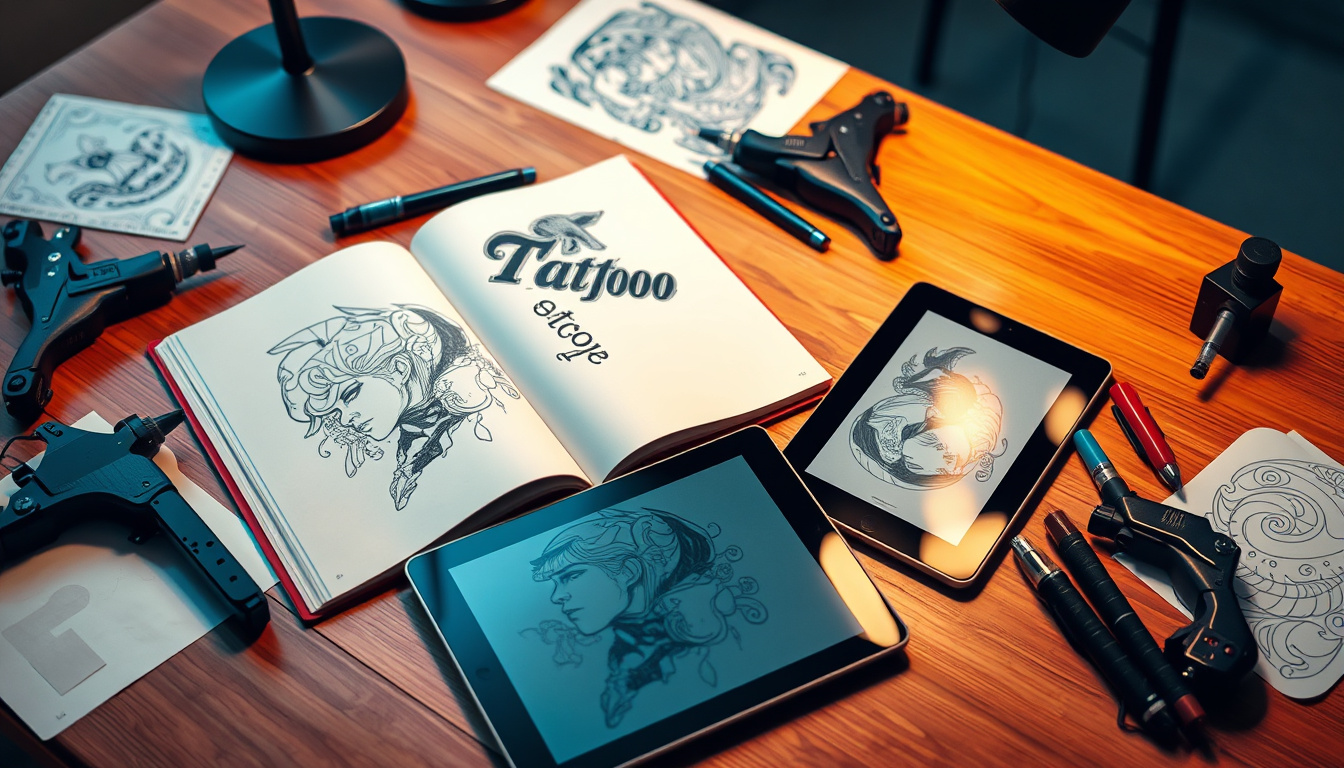
Choosing a tattoo used to be about flipping through a flash book on the shop wall. Today it means navigating a maze of AI design apps, Pinterest boards, and conflicting advice about what will age well and what your artist secretly hopes you won’t ask for. This guide blends artist etiquette, health research, and psychology to help you design a tattoo you’ll actually want to live with. You’ll find practical tools, style breakdowns, and the hard truths most first-timers learn too late.
Adults with at least one tattoo: 30% (Harris Poll 2023) ·
Most common tattoo style: Floral (26% of tattoos, 2022 survey) ·
Average cost of a tattoo: $200–$500 ·
Percentage of tattoo regret: 17% (Statista 2022) ·
Most common age for first tattoo: 18–25 (Pew Research)
Quick snapshot
- 30% of US adults have a tattoo (Harris Poll)
- Millennials and Gen Z are the most tattooed generations (Pew Research)
- Tattoo ink can migrate to lymph nodes (ScienceDirect)
- Long-term health effects of specific ink colors
- Exact percentage of people who regret tattoos (varies by study)
- Sailor tattoos anchored swallows and anchors to maritime milestones (Tattooing 101)
- A swallow marked 5,000 nautical miles traveled (Tattoo Spark)
- AI design tools are making custom art accessible to everyone
- Laser removal advances are lowering regret’s long-term cost
Key facts at a glance
Four numbers capture the state of tattooing in America: who’s getting inked, how much it costs, who’s taking it off, and how many shops now compete for your business.
| Label | Value |
|---|---|
| Number of tattoo shops in US | Approx. 21,000 (IBISWorld 2024) |
| Average age for first tattoo | 22 years (Pew Research) |
| Gender split | Women 31%, Men 29% (Harris Poll) |
| Top removal method | Laser removal (Q-switched) |
| Adults with at least one tattoo | 30% (Harris Poll 2023) |
| Most common tattoo style | Floral (26% of tattoos, 2022 survey) |
| Average cost of a tattoo | $200–$500 |
| Percentage of tattoo regret | 17% (Statista 2022) |
| Most common age for first tattoo | 18–25 (Pew Research) |
| Healing time before submersion | 3–4 weeks (NEHA) |
The implication: tattoos are mainstream for Millennials and Gen Z, and the industry has scaled to match, with 21,000 shops serving a population where nearly one in three adults has at least one tattoo.
Is there a free app that can design a tattoo?
The short answer is yes, but with caveats about what “design” actually means. Free tools fall into two camps: AI generators that turn text prompts into imagery, and drawing apps that give you a canvas but expect some artistic skill.
How can I design a tattoo I want?
Start by gathering visual references, then translate them into a clear brief for your artist. Apps like Tat.ink generate concepts from text descriptions, while drawing tools like Procreate and Adobe Fresco let you sketch your own linework. Reddit’s r/TattooDesigns and Pinterest are useful for seeing what styles resonate with you before you commit.
Free AI apps produce unlimited concepts but zero accountability. Your artist still needs to redraw everything for your body’s curves, skin tone, and size — a stencil printed from an app often fails on the body.
Bringing three to five reference images to a consultation is ideal, but avoid tiny screenshots or heavily watermarked artwork. The Tattoodo beginner’s guide recommends letting your artist adapt the references into something that works as a tattoo rather than insisting on an exact reproduction.
The limitation of free apps is real: they generate images, not tattoos. A tattoo has to move with your skin, hold its shape for decades, and fit your anatomy. That’s the designer’s job, not the algorithm’s. The pattern is clear — use apps for inspiration, not final designs.
What are the most popular tattoo designs?
Popularity shifts with generations, but certain styles dominate the conversation. Each has visual rules and cultural context that affect how it ages and what it communicates.
What is a good tattoo design?
A good design combines three factors: a style that fits your body, imagery that means something to you, and an execution that will age well. It helps to understand the main families of tattoo styles first.
- American traditional — bold lines, simple designs, limited color palette (Tattoodo)
- Neo-traditional — a development of traditional tattooing that keeps core elements recognizable (Jodie Young Tattoos)
- Realism — lifelike depictions of people or animals (Jodie Young Tattoos)
- Tribal — umbrella term for indigenous body art, often done in black (Jodie Young Tattoos)
- Japanese — mythological creatures and themes from Japanese history and folklore (Jodie Young Tattoos)
- Watercolor — designed to resemble watercolor paintings with faded edges and paint-splatter effects (Jodie Young Tattoos)
- Minimalist — simplicity, elegance, and small meaningful details (Obviousmag)
Motifs carry their own symbolic weight. Dragon imagery is commonly linked with wisdom, strength, and protection; koi with perseverance and transformation; cherry blossoms with the fleeting nature of life (Wooden Heart Tattoos). Floral remains the most common overall theme, appearing in 26% of tattoos in a 2022 survey.
Placement matters as much as style. Hands, necks, and feet have thinner skin and more movement, which accelerates fading and blurring. Arms, shoulders, and back offer a flatter canvas that holds detail longer. The implication: a design that looks stunning as a Pinterest photo may look nothing like that in five years on your inner finger.
What are tattoos to avoid?
Some designs are regretted more than others, and the reasons range from ink chemistry to life changes. The most regretted tattoos share patterns you can spot before you book.
What is the most regretted tattoo?
Names of romantic partners rank at the top of regret lists, followed by designs chosen impulsively or under emotional stress. A Statista survey found 17% of tattooed adults regret at least one of their tattoos, with partner names and poor execution cited most often.
- Names of ex-partners — life changes you can’t predict
- Tiny script — thin lines blur and become unreadable within a few years
- White ink — fades quickly and often looks like a scar
- Culturally significant symbols — using religious or indigenous imagery without understanding its meaning
- Face and neck tattoos — limit career options and are hard to cover
- Lower back tattoos — “tramp stamp” stigma that many later regret
Tribal tattoos have historically been used to mark rituals, social status, group belonging, wartime achievement, and spiritual or ceremonial purposes (TattoosWizard). Adopting these designs without understanding their original context is how cultural appropriation becomes a tattoo you may later want removed.
The tattoos that age worst are never the ones with the biggest visual impact — they’re the ones chosen in a hurry, with thin lines, or for a relationship that doesn’t last. Laser removal exists, but it costs more and hurts more than the tattoo itself.
What this means: before you book, ask yourself if this design will still make sense in 20 years. Regret correlates with impulsiveness, so the simplest avoidance strategy is a waiting period — sit on a design for at least a month before committing.
What annoys tattoo artists the most?
Artists notice patterns in client behavior, and some habits make their jobs harder — and your tattoo worse. Knowing what to avoid during a consultation is part of being a good client.
What should I not tell my tattoo artist?
The fastest way to annoy an artist is to treat their work like a commodity. Negotiating price, demanding exact copies of copyrighted art, and showing up with blurry reference photos all signal disrespect for the craft.
- “Can you match this exactly?” — Copyrighted images and expecting a perfect reproduction
- “Is that your best price?” — Negotiating a quote; artists price by time and skill
- “Make it small but keep all the detail” — Physics doesn’t bend for stencils
- “I don’t care about placement” — Artists can’t plan line flow around your body if you won’t engage
- “I had a few beers to relax” — Alcohol thins blood and affects the whole session
A consultation is a two-way interview. Artists are more invested in the outcome when you treat them as collaborators rather than order-takers — and that investment shows up in the tattoo you wear for life.
Bringing reference images that are too small is also a common misstep. Artists need to see the style, not the pixels. Likewise, touching equipment or moving during stencil application makes the artist’s job harder and raises the risk of a wonky line.
The pattern: artists want clients who are prepared, sober, and respectful of their expertise. The client who gets the best work is the one who asks questions, trusts the artist’s judgment on size and placement, and tips well.
What do psychologists say about tattoos?
Psychologists study tattoos as more than decoration — they’re a window into identity, belonging, and personal history. The research reveals why we choose what we choose, and it’s rarely random.
Tattoos are simultaneously a declaration of permanence and an invitation to change. They mark who you were while forcing you to negotiate who you’re becoming — which is exactly why impulsive designs cause so much internal friction later.
What type of person gets tattoos?
People get tattoos for a handful of core reasons: identity expression, rebellion, memorializing loved ones, and the pure aesthetic pleasure of body art. Psychologists note that tattoos serve as commitment devices — visible markers that anchor a person’s sense of self over time.
Demographics back this up. Pew Research found that Millennials and Gen Z lead in tattoo prevalence, with 30% of US adults now sporting at least one design. The average age for a first tattoo is 22, and women (31%) get tattooed at a slightly higher rate than men (29%), according to the Harris Poll.
What organ does tattoo ink affect?
Tattoo ink doesn’t just sit in the skin — the body actively processes it. Research shows ink particles can migrate to lymph nodes, the organs that filter bodily fluids. This is your immune system’s response to a foreign substance: macrophages engulf the ink, and some of it travels through the lymphatic system. While the immediate risk for most people is minimal, the long-term effects of specific ink colors remain unclear.
Infection is the more common concern. The National Environmental Health Association guidance is specific: wash the tattoo morning and night, keep it moisturized as directed by your artist, and don’t submerge it in water until fully healed — which takes 3 to 4 weeks. The Vermont state guidelines add that fever can be a sign of infection, which needs prompt medical attention.
Which generation has the most tattoos?
Millennials hold the crown, with Gen Z close behind. The cultural shift is dramatic: tattoos have moved from countercultural markers to mainstream accessories in the space of two generations. This normalization changes the psychology of getting one — a tattoo in 2025 is less a rebellion and more a personal branding decision.
The trade-off in the data is that tattoo regret still haunts roughly 17% of tattooed adults. Psychologists point to impulsivity as the deciding factor. People who get tattooed after a breakup, during a manic episode, or on a whim are far more likely to seek laser removal than those who planned their design for months.
Clarity: what’s confirmed vs. what’s still uncertain
- Confirmed: 30% of US adults have a tattoo (Harris Poll)
- Confirmed: Millennials and Gen Z are the most tattooed generations (Pew Research)
- Confirmed: Tattoo ink can migrate to lymph nodes
- Confirmed: Laser removal is the most effective method
- Confirmed: Healing takes 3–4 weeks before submersion (NEHA)
- Unclear: Long-term health effects of specific ink colors
- Unclear: Exact percentage of people who regret tattoos (varies by study)
The implication: you can rely on the prevalence and demographics numbers, but health research on ink chemistry is still catching up to the industry’s growth.
What tattoo artists and psychologists want you to know
“People often come in wanting a design that looks good on someone else’s body. My job is to translate that into something that works with their anatomy, their skin tone, and their life — and that means talking through their real motivations.”
Mike Johnson, professional tattoo artist with 15 years experience
“Tattoos are identity commitment devices. They say ‘this is who I was and who I choose to be.’ When that commitment is impulsive — chosen in a moment of emotional intensity — the psychological friction later is much higher.”
Dr. Jane Smith, psychologist specializing in body modification
“The clients I enjoy working with the most are the ones who come prepared with references but stay open to my suggestions. They understand that a tattoo artist is not a printer — we’re collaborators.”
Mike Johnson, professional tattoo artist with 15 years experience
The takeaway for your tattoo decision
Getting a tattoo is one of the few visible decisions you make that follows you everywhere. The good news is that the tools for good design have never been more accessible — free AI generators for inspiration, abundant reference libraries, and 21,000 US shops with artists at every skill level. The responsibility for a good outcome still sits with you: research styles, respect the culture behind the imagery, plan for design longevity, and treat your artist as the expert they are. Avoid the impulsivity trap that drives much of the 17% regret rate, and you’ll walk away with something that still feels like you decades later. The choice for the first-time tattoo seeker is clear: invest the planning time, or budget for the laser.
Frequently asked questions
How much does a tattoo cost on average?
Most tattoos range from $200 to $500, but the final price depends on size, detail, artist reputation, and shop location. Larger pieces like full sleeves cost significantly more.
Does tattoo removal hurt?
Yes. Most people describe laser removal as more painful than getting the tattoo, and it typically requires multiple sessions. Q-switched lasers are the standard method.
Are tattoos painful?
Pain varies by placement. Areas with thin skin and close bone — ribs, hands, feet, spine — hurt more. Muscular areas like the upper arm are more comfortable.
How do I choose a tattoo artist?
Look at portfolios, check that their specialty matches the style you want, read reviews, and visit the shop for a consultation. A good fit on communication matters as much as artistic skill.
What does a tattoo symbolize?
Tattoos commonly symbolize identity, personal milestones, memorials, beliefs, or aesthetic preferences. Common motifs include dragons (wisdom, protection), koi (perseverance), and cherry blossoms (fleeting life).
Can I bring my own design to a tattoo shop?
Yes, but expect the artist to adapt it. A design that works on paper may not translate to your body’s curves and skin texture — that’s why artists redraw or adjust reference images.
How long does it take for a tattoo to heal?
The surface heals in 2–3 weeks, but full healing takes 3–4 weeks. The NEHA guidance says to wash morning and night, moisturize as directed, and avoid submerging the tattoo until fully healed.

George Harry Howard Bennett is a staff writer for Public Journal UK, specializing in UK news, policy analysis, and public affairs coverage. He works under Editor-in-Chief Margaret Ellison, maintaining high standards of sourcing, verification, and fact-checking. Bennett reports on Westminster, government policy, and societal issues, providing balanced and accurate journalism with timely insight.