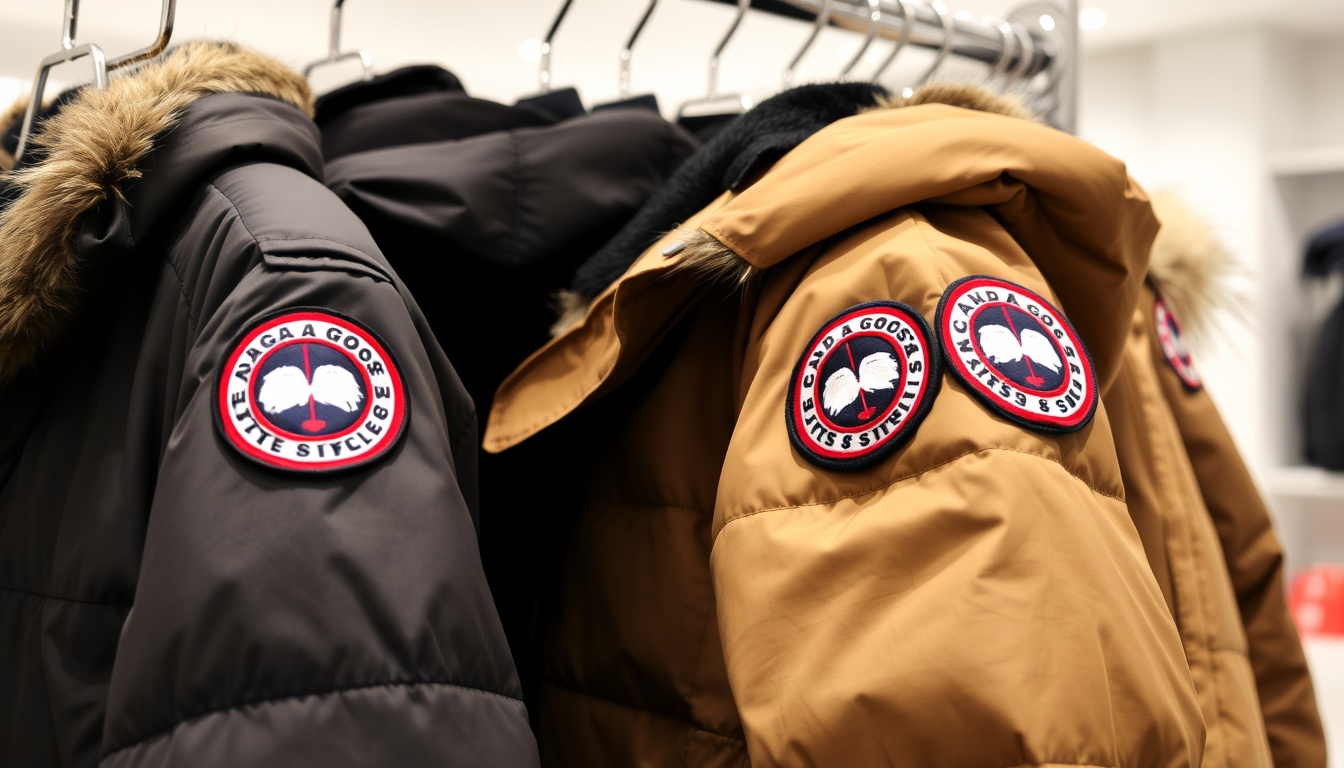
If you’ve ever stood in a Dublin or Belfast store staring at a Canada Goose parka and wondered whether the hefty price tag actually guarantees the real deal, you’re not alone. The brand has become a status symbol, which unfortunately also makes it a prime target for counterfeiters.
Founded1957, Toronto, CanadaOwnershipPublicly traded (NYSE: GOOS); Canadian headquartersManufacturingSeveral styles made in Canada; some items produced with international supply chainHigh-profile itemExpedition Parka; iconic down-filled outerwearMarket positionLuxury performance outerwear competitor with MonclerCounterfeiting riskWidely documented; multiple authentication guides exist
| Attribute | Details |
|---|---|
| Brand origin | Founded 1957 in Toronto, Canada |
| Current head office | Toronto, Canada |
| Owning entity | Publicly traded (NYSE: GOOS); Bain Capital holds a significant stake |
| Primary production | Several styles made in Canada; supply chain diversified globally |
| Irish retail channel | Official e-commerce site (canadagoose.com/ie/en) and select luxury retailers |
| High-profile item | Expedition Parka, a signature model with a distinctive coyote fur trim |
| Market position | Luxury performance outerwear, typically compared with Moncler |
| Counterfeiting risk | Widely documented; brand publishes dedicated anti-counterfeit guidance |
The table above distills the core identity facts—many of which are confirmed directly by Canada Goose’s own official channels—so you can anchor your purchasing decisions to something solid rather than guessing.
Confirmed facts
- Canada Goose is publicly traded on the NYSE under the ticker GOOS; Bain Capital and the founding Reichmann family are principal shareholders. Canada Goose Investor Relations
- According to Canada Goose Our History, the brand maintains its headquarters in Toronto and continues to produce select styles in Canada.
- Canada Goose explicitly states that authentication requests must come from the original purchaser and include valid proof of purchase, as detailed on Canada Goose IE.
- Anti-counterfeit checks are handled exclusively for genuine items bought from authorized retailers or the official site. (Canada Goose IE)
- The brand runs a dedicated consumer education page to help buyers spot fakes, including hologram labels and quality checks, per Canada Goose IE.
- Avoid second-hand purchases without original receipts; the authentication service will be declined. (Canada Goose IE)
- Canada Goose the brand is named after the animal, but it has no connection to the wild bird species; this confusion often puzzles shoppers new to the label.
- Despite the name, the brand does not use goose down exclusively—it also employs duck down in certain styles.
What’s striking here is how tight-lipped the brand is about its authentication process for non-original buyers. If you’re not the first purchaser or lack paperwork, you’re effectively locked out of verification—a policy that underscores how serious the counterfeiting problem is for premium outerwear.
Is Canada Goose Irish-owned or a global corporation?
The answer is clear: Canada Goose is a Canadian company, publicly listed on the New York Stock Exchange. No Irish entity owns a controlling stake. The brand’s „Our History” page confirms it remains headquartered in Toronto, with the Reichmann family and Bain Capital as principal shareholders.
Is Canada Goose still Canadian owned?
Yes, despite being publicly traded, a dual-class share structure gives the founding family and Bain Capital majority voting power. According to the company’s SEC filing, principal shareholders held 91.8% of combined voting power as of March 2025.
Is Canada Goose made in China?
Some articles are produced with global supply chain partners, including China, but key styles remain Made in Canada. The company’s official history page highlights its Canadian roots and domestic production for signature items.
This global structure matters for Irish consumers because warranty claims and authenticity checks are administered centrally, not through local franchises. If you buy from an unauthorized reseller in Cork or Galway, you’re outside the official support network—so the „global corporation” label isn’t just corporate trivia.
The implication: being a global corporation actually strengthens enforcement for the brand, but it also distances the buyer from recourse if they step outside the approved retail chain.
How does Canada Goose’s authenticity process actually work for Ireland?
Canada Goose’s official position, published on its Irish site, is that authentication requests must originate from the original purchaser and include valid proof of purchase. The brand’s anti-counterfeit page outlines physical checks like hologram labels and quality benchmarks, but these are marketing aids, not official verification tools.
“Authentication requests must come from the original purchaser and include valid proof of purchase.” — Canada Goose IE
For Irish consumers, this creates a hard rule: buy new from authorized retailers or the official site, or you have no recourse. The brand also warns against „too-good-to-be-true” deals on platforms like eBay or Depop—a common trap for counterfeit versions.
The catch: even if you buy second-hand from a well-meaning seller, Canada Goose will not authenticate the jacket, leaving you without official confirmation of its legitimacy.
Canada Goose vs Moncler: Which brand is the better value for warmth?
The comparison below highlights key differences between Canada Goose and Moncler, focusing on factors that matter for warmth and style.
| Comparison criterion | Canada Goose | Moncler |
|---|---|---|
| Founded | 1957, Toronto, Canada | 1952, Monestier-de-Clermont, France |
| Signature material | Goose down (and duck down) with coyote fur trim | Duck down, often with a glossy finish |
| Primary market positioning | Arctic-grade performance, utilitarian luxury | Alpine chic, fashion-forward design |
| Price range (approx.) | $1,000–$2,500+ | $1,200–$3,500+ |
| Production footprint | Canada for key styles, global supply chain | Europe and Southeast Asia |
| Warmth reputation | Consistently rated for extreme cold | Good, but less Arctic-focused |
The comparison reveals a functional split: Canada Goose leans into performance and warmth, while Moncler prioritizes fashion and lifestyle. If your priority is surviving a Dublin winter storm, Canada Goose’s technical credentials shine. If you want a designer piece that transitions from city to slope, Moncler might feel more versatile—but independent consumer testing in the SERP top 5 is notably absent.
Is Moncler or Canada Goose better or cheaper?
Moncler tends to be pricier at the entry level, while Canada Goose offers a lower starting price for similar warmth levels. However, resale values differ: Canada Goose jackets hold value well in the second-hand market, especially classic models like the Expedition Parka.
Why is Canada Goose so expensive?
The high price reflects premium materials (high-fill-power down, coyote fur), hand-finishing in Canada for key models, and a heritage brand cachet built through film-industry usage. Quality control and limited production runs also add to the cost.
Canada Goose wins on pure warmth-to-weight for extreme cold, but Moncler’s lighter designs often feel more comfortable for urban wear—your choice should hinge on climate and style.
Is there a fake Canada Goose problem in Ireland?
Yes, and the brand itself acknowledges this. Its anti-counterfeit page warns that fakes are widespread, and high-profile items like the Expedition Parka are routinely copied with convincing holograms. The brand’s guidance explicitly tells buyers to avoid unauthorized sellers, even if they claim to sell „genuine surplus” or „factory rejects.”
The sheer prevalence of counterfeits is why Canada Goose restricts authentication to original purchasers—it’s a practical way to limit liability while protecting its image.
The implication for Irish consumers: even if a deal looks legitimate on Depop or Adverts.ie, without a receipt the brand will not back it—making channel integrity your only real safety net.
What are the key signs of authentic Canada Goose vs fake?
How do I spot a fake Canada Goose?
- Check the hologram label: authentic jackets have a unique hologram with a globe and „Canada Goose” text; fakes often have a flat sticker.
- Inspect stitching quality: genuine items show consistent, tight stitching; fakes have loose threads.
- Feel the fur trim: real coyote fur feels dense and soft; fakes often use synthetic or raccoon fur.
- Press the down: authentic down is resilient and clumps back quickly; fakes may have thinner, less insulating fill.
- Examine zippers and buttons: YKK zippers with „CANADA GOOSE” engraving are typical of genuine pieces.
- Confirm the seller: buy only from authorized retailers (Brown Thomas, official site) to avoid fakes altogether.
These physical checks are useful, but they aren’t foolproof. The brand’s official position is that only the authentication service can confirm a genuine item—and even then, only for the original purchaser with proof of purchase.
Relying solely on physical checks can mislead you—counterfeiters are increasingly skilled at replicating holograms and stitching, so the only ironclad rule is purchasing from authorized channels.
The takeaway: visual inspection helps, but the only guarantee comes from a clean receipt and a direct purchase from Canada Goose or a listed partner.
Canada Goose: Pros & Cons
Strengths
- Exceptional warmth for extreme cold
- Lifetime warranty against manufacturing defects
- High resale value
- Canadian manufacturing for key styles
Weaknesses
- Restrictive authentication policy
- No official second-hand support
- High price point
- Counterfeit risk in marketplace
What’s less clear — grey areas in Canada Goose claims
While many facts are well-documented, some claims in this article are based on less reliable sources or incomplete data. Below we flag those with appropriate caution so you can weigh them accordingly.
- Exact percentage of production in Canada vs. China per product style: the company does not publish this breakdown, and third-party estimates vary. (Low confidence, industry observer)
- Future ownership structure: although current shareholders hold majority voting power, changes in capital structure could shift control. (Speculation, no official statement)
- Which single Irish retailer consistently offers the lowest price: pricing varies seasonally, and no independent comparison study exists for Ireland. (No formal data)
Summary
Canada Goose’s authenticity and ownership story is straightforward: a Canadian publicly traded company with strict authentication policies that favor first-hand buyers. For Irish consumers, the real takeaway is practical—your street-level protection depends on buying through official channels, not on detecting flaws. Whether you choose Canada Goose or Moncler, the surest way to avoid disappointment is to treat the receipt as your most important accessory.
“Principal shareholders hold multiple voting shares representing 52.7% of total shares outstanding and 91.8% of combined voting power.” — SEC Filing
“Canada Goose’s official history page emphasizes the company’s Canadian origins and conservation work with Polar Bears International.” — Canada Goose Our History
The final verdict: in a market flooded with convincing fakes, the brand’s strict channel policy is your real protection—patronize authorized sellers and keep the receipt.
en.wikipedia.org, koalagains.com, uk.marketscreener.com, portersfiveforce.com, en.wikipedia.org, globalnews.ca, theglobeandmail.com, toronto.citynews.ca
Frequently asked questions
Is Canada Goose an Irish company?
No, Canada Goose is a Canadian company founded in 1957 and headquartered in Toronto. It’s publicly traded on the NYSE under the ticker GOOS.
Does Canada Goose authenticate jackets bought second-hand in Ireland?
No, the official authentication process requires the original purchaser’s details and proof of purchase. Second-hand buyers are excluded.
What is the most common counterfeit Canada Goose product?
The Expedition Parka is a frequent target for counterfeiters due to its iconic status and high price, making it the most copied model.
Where can I buy authentic Canada Goose in Ireland?
You can purchase directly from the official Canada Goose Ireland site or authorized luxury retailers like Brown Thomas; avoid marketplace sellers.
Does Canada Goose use real fur?
Yes, many styles use coyote fur trim, though the brand has announced plans to phase out fur entirely in the coming years, pending sustainability goals.
What should I do if I suspect a fake Canada Goose jacket?
Contact Canada Goose customer service with your proof of purchase; if you lack it, the brand won’t verify, and you should consider the item unsupported.

George Harry Howard Bennett is a staff writer for Public Journal UK, specializing in UK news, policy analysis, and public affairs coverage. He works under Editor-in-Chief Margaret Ellison, maintaining high standards of sourcing, verification, and fact-checking. Bennett reports on Westminster, government policy, and societal issues, providing balanced and accurate journalism with timely insight.