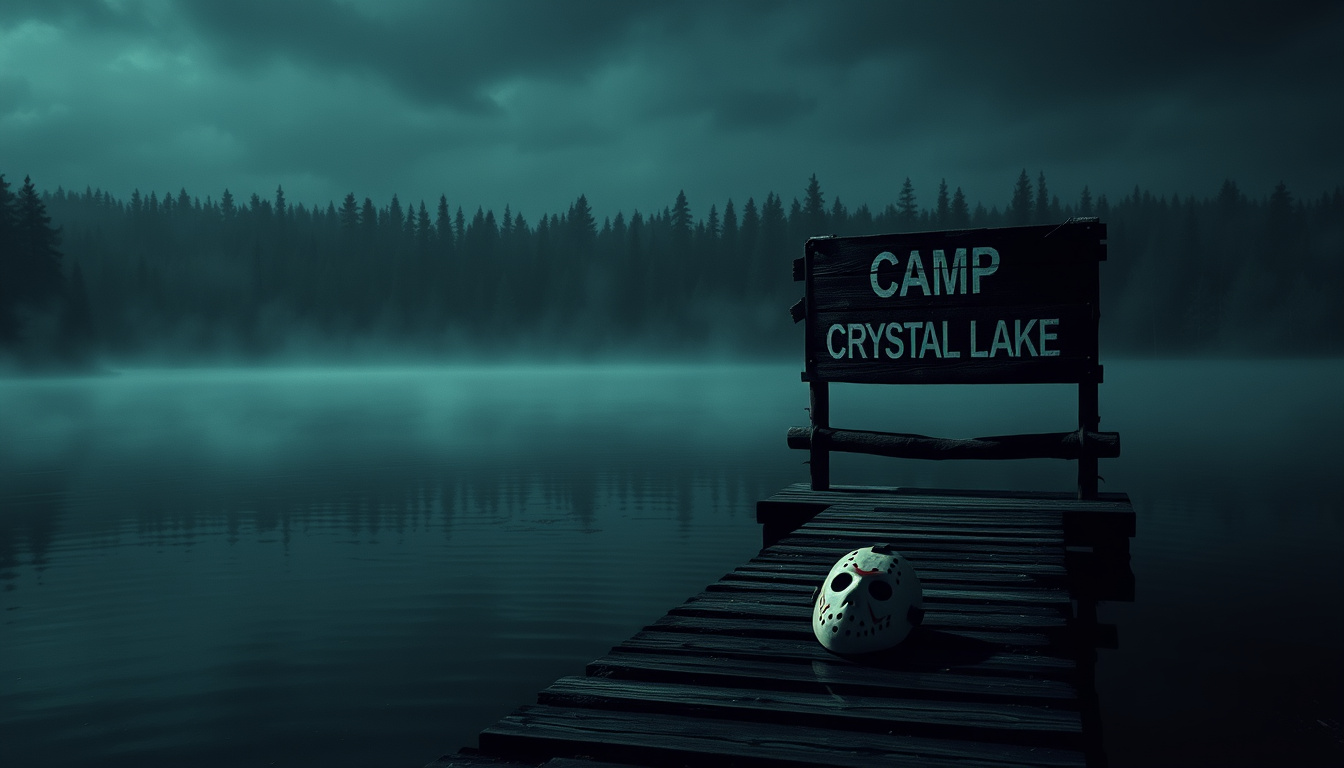
A disfigured kid from a 1980 slasher film still dominates Halloween conversations decades later because Jason Voorhees isn’t just a movie monster; he’s a cultural shorthand for survival horror and the subject of endless fan arguments about power levels, weaknesses, and who could beat him. I’ve separated the undisputed facts from the deep-cut lore and the wild speculation to answer the questions fans actually ask, all while looking at the evidence from the films and fan communities.
First appearance: Friday the 13th (1980) · Number of films: 12 (including crossover) · Portrayed by: Ari Lehman, Warrington Gillette, Steve Dash, and others (Friday the 13th Wiki)
Quick Snapshot
- First appeared in 1980 (Friday the 13th Wiki)
- Drowned as a child (Friday the 13th Wiki)
- Mother was Mrs. Voorhees (Friday the 13th Wiki)
- Superhuman strength (Villains Fandom)
- Regeneration (Villains Fandom)
- Resurrected multiple times (Friday the 13th Wiki)
- Machete (Friday the 13th Wiki)
- Hockey mask (Friday the 13th Wiki)
- Iconic horror villain (Villains Fandom)
- Multiple film appearances (Friday the 13th Wiki)
- Merchandise and games (Villains Fandom)
Here’s a quick look at the core facts that form the foundation of the franchise.
| Attribute | Detail | Source |
|---|---|---|
| First appearance | Friday the 13th (1980) | Friday the 13th Wiki |
| Portrayed by | Ari Lehman, Warrington Gillette, Steve Dash, etc. | Friday the 13th Wiki |
| Number of films | 12 (including crossover Freddy vs Jason) | Friday the 13th Wiki |
| Signature weapon | Machete | Friday the 13th Wiki |
| Height | 6’5″ (varies) | Friday the 13th Wiki |
| Body count | Over 300 (franchise) | Friday the 13th Wiki |
Confirmed Facts
- Jason is a purely fictional character, created by Victor Miller (Villains Fandom).
- His first appearance was in 1980’s Friday the 13th (Friday the 13th Wiki).
- He drowned as a child at Camp Crystal Lake (Friday the 13th Wiki).
What’s Unclear
- The exact origin of his supernatural powers is not consistently explained across films (Villains Fandom).
- Canonical weaknesses vary from film to film, making a single definitive weakness hard to pin down (Villains Fandom).
Was Jason Voorhees based on a true story?
No. Unlike some horror stories that are loosely inspired by real events, Jason Voorhees is a purely fictional character. The character was created by screenwriter Victor Miller for the 1980 film Friday the 13th. Miller conceived of Jason as the son of a camp cook, a backstory that was deliberately built as a shock ending rather than a retelling of a real legend.
- Villains Fandom (a fan-run database) notes that Jason is often described as having superhuman strength and durability.
- The character’s drowning at Camp Crystal Lake is the central tragedy that binds him to the location.
“I conceived of Jason as the son of a camp cook, a backstory built as a shock ending.” — Victor Miller
What was Jason’s disability?
In the original 1980 film, Jason is portrayed as a child with an intellectual disability and a facial deformity, which was a significant factor in his backstory. The character’s modern interpretation, especially after he becomes an adult, shifts to focus on his physical deformities from his injuries, including his iconic burned and mutilated face, rather than his mental state. This distinction is a key point of canon: the initial characterization of Jason was a victim, a misunderstood outcast, before he was a monster.
While the first film treats his disability with a bit of pathos, the franchise later discards it, replacing a tragic figure with a superhuman juggernaut. The trade-off is that Jason becomes less human, making his kills more spectacular but less emotionally resonant.
The implication: The shift from tragic victim to supernatural monster defines the franchise’s tonal inconsistency.
Why did Jason Voorhees start killing?
Jason’s motivation for killing is a direct consequence of his origin story. As a child, he drowned, and his mother, Pamela Voorhees, was the camp cook who went on a killing spree to avenge his death. After his mother is decapitated by a survivor, Jason witnesses her death. This event becomes the singular trauma that triggers his first murder spree as an adult in Friday the 13th Part 2. He is not killing for a complex ideology; he is a wounded and enraged child acting out a vendetta.
- His motive is rooted in revenge for the neglect of the camp counselors and the loss of his mother.
The pattern: Revenge, not ideology, drives Jason—a deeply personal vendetta rooted in childhood trauma.
How powerful is Jason Voorhees?
Jason’s power set is one of the most debated topics in horror fandom. Unlike a ghost or a demon, his power scales with the film’s continuity and tone. In the original film, he is a tragic figure; by the later sequels, he is a supernatural force of nature. According to Villains Fandom, secondary sources credit him with superhuman strength, durability, and the ability to regenerate. He can punch through skulls, shrug off gunfire, and survive injuries that would kill a normal man. His resurrection is a recurring theme, often facilitated by lightning or a buried power that defies logic.
Additionally, his most iconic visual trait—the hockey mask—is a practical tool that conceals his disfigurement while also serving as a symbol of his implacable nature. Some fan discussions, such as those on Comic Vine (a fan forum), highlight his ability to sense people through walls or within a building range, a sort of supernatural echolocation that makes him a terrifying opponent in close quarters.
What is Jason’s weakness?
While often unstoppable, Jason has a few consistent, if situational, weaknesses. In the early films, he is a man in a mask, and can be outrun, outsmarted, or overwhelmed by mobs. However, his most famous weakness is his fear of water, a phobia stemming from his near-drowning. In the films, he can be defeated temporarily by incapacitation—being shot, stabbed, or even blown up—but these are almost always resets, not final solutions. The only permanent check on his power is the narrative: he is often “killed” at the end of a film, only to be revived in the next because of his supernatural nature.
- Water: Jason’s fear of drowning is a tangible psychological block.
- Explosions/Fire: These can dismember him to the point of inactivity, if not total death.
- Canon: Specific films introduce specific weapons (e.g., a machete to the neck, being dragged to Hell) that can put him on hold for a while.
The more powerful Jason gets, the less interesting his weaknesses become. The franchise trades the tension of a vulnerable hunter for the spectacle of an unkillable tank. For fans of the later films, this is the point; for skeptics, it’s a narrative crutch.
Who is stronger, Jason or Michael Myers?
This is the eternal heavyweight bout of slasher cinema. Both are masked, silent, and brutally strong, but they represent different philosophies of evil. Jason is a supernatural revenant, a creature of anger and vengeance who possesses superhuman strength, regeneration, and a signature weapon (the machete). Michael Myers, on the other hand, is more often portrayed as a human boogeyman in his earliest appearances—pure evil in human form, with peak-human physicality and a chillingly high pain tolerance.
Fan comparisons lean toward Jason having the edge in raw, physical power:
- One CBR breakdown (a pop-culture news outlet) notes that Jason’s feats of strength—like bending steel and decapitating victims—are far beyond Michael’s more grounded “strength of a large man.”
- However, Michael Myers’ advantage lies in his intellect and his stealth. He is not a berserker; he is a predator who plans, waits, and disappears. According to a fan comparison on DeviantArt, Michael is often depicted with “anger empowerment” and pain suppression, making him equally, if not more, relentless in a fight.
“Jason’s feats of strength—like bending steel and decapitating victims—are far beyond Michael’s more grounded ‘strength of a large man.’” — CBR
So, who wins in a straight-up brawl? Most head-to-heads give the edge to Jason due to his explicit healing factor and superior strength. But in a cat-and-mouse game, Myers might land the killing blow because he’s a smarter killer. A popular prediction from G1-Team (a versus-focused blog) summarizes both as having “super strength, endurance, stealth, teleportation, and regeneration,” but gives the durability and raw power edge to the man from Crystal Lake.
Is Freddy Krueger afraid of Jason?
This is a crossover question, not a real fear. In the film Freddy vs Jason, Freddy is terrified of being forgotten and uses Jason as a pawn to restore his power. He isn’t scared of Jason’s strength; he’s scared of the mundane existence of not being feared. In that sense, Freddy’s fear is for his own relevance, not his life. So, canonically, not in a “running away” sense, but in a “you’re going to ruin my legacy” sense.
Who can beat Jason Voorhees? (and other vs. outcomes)
The internet loves a vs. fight. Here’s a reality check based on the most common fan debates:
- Michael Myers: It’s a coin-flip, but Jason’s healing factor wins 7/10.
- Deadpool: Deadpool can’t die, but Jason can’t be permanently killed either. It’s an infinite stalemate, though Deadpool’s healing factor outpaces Jason’s, making him the eventual winner by attrition.
- Spider-Man: Spider-Man is way faster and stronger (he can lift 10+ tons), but if Jason gets a single hit with the machete, it’s over. Still, Spidey’s spider-sense means he never gets tagged. CBR notes this as a common “speed vs. strength” debate.
- Ghostface (Scream): These are just costumed humans. Jason would dismantle them in seconds, as they rely on stealth and fear.
- Freddy Krueger: Freddy can only hurt Jason in the dream world, but Jason has famously dragged Freddy into the real world. A single motherly shame scare might work, but it’s a losing battle for Freddy.
The overwhelming consensus in fan debates, like those seen on G1-Team, is that Jason’s powerscale is intentionally broken—he is a force of nature, not a hero.
Can Jason be killed permanently?
In the franchise’s internal logic, the only way to truly kill Jason is to remove his reason to exist. This was done in Jason Goes to Hell, when he is stabbed with his own machete and dragged to Hell. But even then, he is resurrected multiple times. In Jason X, he is abandoned in space, which kills him (in a hilariously over-the-top way, by getting exposed to a cryo-chamber). The fandom consensus is that as long as there is a Friday the 13th or a Crystal Lake to return to, Jason exists. He is the physical embodiment of consequence for the town’s misdeeds. Permanence is not in his nature—nor is it in the franchise’s business model.
The implication: Narrative convenience, not logic, dictates whether Jason stays dead.
Jason Voorhees vs. the World: A Comparison of Powers and Weaknesses
To put Jason’s abilities into perspective, let’s see how he stacks up against other icons of the genre.
| Feature | Jason Voorhees | Michael Myers | Freddy Krueger | Ghostface |
|---|---|---|---|---|
| Primary Origin | Drowned child who returns as a revenant (supernatural) | Pure evil, born human but demonic in nature | Undead child murderer (dream demon) | Human identity, masked killer(s) |
| Core Power | Superhuman Strength, Regeneration, Invulnerability | Peak human strength, Stealth, Pain Tolerance | Dream Manipulation | Intellect, Stealth, Collaboration |
| Signature Weapon | Machete, Hockey Mask | Kitchen Knife, occasionally a gun | Razor glove | Razor-sharp knife |
| Weakness | Water phobia (early), specific supernatural artifacts (later, more rare) | Psychological trauma, “evil” not invulnerable to mortal damage | Fear can weaken him; dragging him to reality makes him mortal | Human frailty; unmasking reveals identity; physical exertion |
| Permanence | Can be “killed” but always returns; functionally immortal in mainstream canon | Can be temporarily destroyed, but returns in sequels | Requires a “prime” to fully extinguish | Requires a human actor; killing the actor ends the threat |
The pattern here is about a spectrum of violence. Michael Myers starts as a human, making his kills terrifyingly plausible. Jason Voorhees starts as a drowned child and becomes a demigod, making his kills fantastical. Freddy and Ghostface occupy the polar ends of that spectrum—one is a literal monster, the other a regular human.
Conclusion: The Unkillable Icon
Jason Voorhees isn’t just a killer; he’s a monument to the idea that some fears don’t die. He is the ultimate expression of a revenge fantasy, a force of nature that punishes the irresponsibility of youth and the cover-up of a small town’s sins. For a new viewer, the takeaway is to watch the original film with fresh eyes—look past the memes and see a deeply sad, twisted fairy tale about a mother’s love and a child’s pain. For a gore-hound fan, the fun is in the mythology building, watching a grieving mother’s son evolve from a swimmer into a trans-dimensional zombie. And for the casual reader, let this guide be your map: the truth is that Jason Voorhees, in his purest form, represents the consequence of a world that looks away when it should have helped.
For veteran fans, the choice is clear: embrace the camp, respect the fear, and remember that no one is truly a master of the slasher genre unless they can outsmart a man with a machete who refuses to stay dead.
Jason Voorhees remains the most discussed slasher because he asks one question: What if the victim didn’t stay down? The answer is a franchise of films, a legion of fans, and a body count that never stops growing.
deathbattlefanon.fandom.com, deviantart.com, thedigitalfix.com, fictionhorizon.com, comicvine.gamespot.com, reddit.com, halloween-thegame.wiki
Frequently Asked Questions
Here are some of the most common questions fans search for about Jason Voorhees.
What is Jason Voorhees’ real name?
His real name is Jason Voorhees. He was born to Elias and Pamela Voorhees. His first name is established in the original film.
How many Friday the 13th movies are there?
There are 12 films in the franchise, including the crossover film Freddy vs Jason (2003). This count includes the 2009 remake.
Is Jason Voorhees a zombie?
In the original film, he is a human child who drowns. After the first film, and especially from Friday the 13th Part 2 onward, he is depicted as a revenant—a resurrected being with supernatural powers—which is why he is often described as being a “zombie” or a “mummy” in later films.
Why does Jason wear a hockey mask?
He wears a hockey mask to hide his severely disfigured face, which was damaged first by the accident and later by the events of the series. The mask is also a trophy and a symbol of his power.
Did Jason really drown?
Yes, in the canon of the first film, Jason drowns as a child. However, the sequels reveal that he survived somehow, which is a major consistency issue. Its exact nature is a source of fan debate.
What is Jason’s relationship with his mother?
Jason’s mother, Pamela, is the original killer in the 1980 film. She kills to avenge him. Jason’s entire existence in the sequels is often tied to his loyalty to her memory, and seeing her death is the trigger for his killing spree.
Has Jason ever won a fight against Freddy Krueger?
In the 2003 film Freddy vs Jason, Freddy wins the fight, dragging Jason into the real world where he ultimately defeats him (or at least, neutralizes him) by pinning him and emerging victorious. However, the movie’s ambiguous ending suggests a potential split.

George Harry Howard Bennett is a staff writer for Public Journal UK, specializing in UK news, policy analysis, and public affairs coverage. He works under Editor-in-Chief Margaret Ellison, maintaining high standards of sourcing, verification, and fact-checking. Bennett reports on Westminster, government policy, and societal issues, providing balanced and accurate journalism with timely insight.