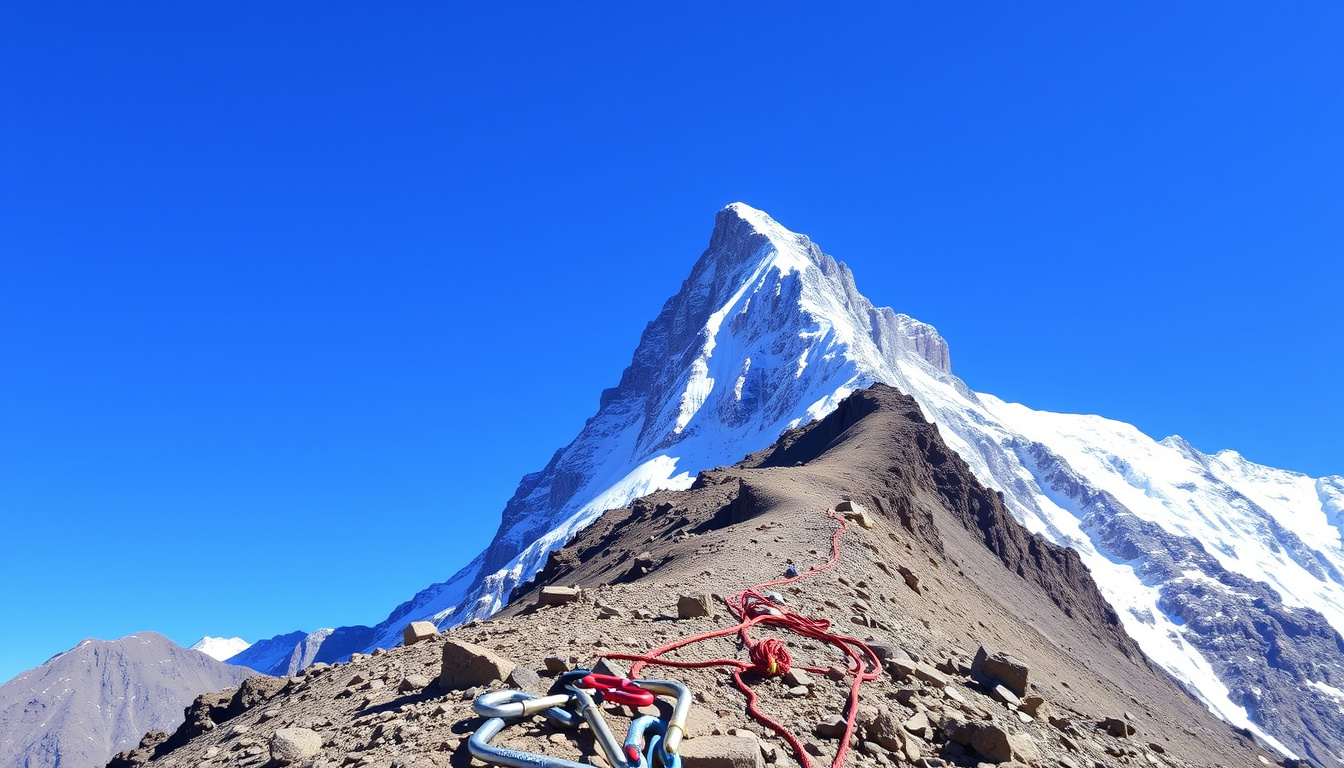
If you’ve ever wondered whether climbing a 4,000-meter peak is within reach for someone who isn’t a mountaineer, you’re not alone. Mount Toubkal, the highest point in North Africa, has built a reputation as a beginner-friendly high-altitude trek. But behind that label lies a set of real challenges that catch unprepared hikers off guard.
Height: 4,167 m (13,671 ft) ·
Location: High Atlas, Morocco ·
Prominence: 3,755 m ·
First recorded ascent: 1923 by the Marquis de Segonzac ·
Typical ascent duration: 2–3 days
Quick snapshot
- Non-technical, no ropes needed (Earth’s Edge trekking operator)
- Moderate to challenging for beginners (Earth’s Edge)
- Altitude is the main difficulty (Adventure Alternative)
- Standard 2-day itinerary (Earth’s Edge)
- Optional 3-day for better acclimatization (Ian Taylor Trekking)
- Summit day: 8–9 hours hiking (Earth’s Edge)
- Summit 4,167 m (13,671 ft) (Bookatrekking.com)
- Altitude sickness risk above 3,000 m (Adventure Alternative)
- No supplemental oxygen required (Adventure Alternative)
- Guided trek significantly cheaper than Kilimanjaro (Call to Adventure)
- 2–3 day guided package widely available (Earth’s Edge)
- Budget-friendly for a high-altitude trek (Call to Adventure)
Six key facts, one takeaway: Toubkal is a moderate, budget-friendly mountain where altitude—not technical skill—poses the real test.
The numbers tell a clear story: Toubkal demands respect for altitude, not climbing ropes.
| Fact | Detail |
|---|---|
| Height | 4,167 m (13,671 ft) — highest peak in North Africa (Bookatrekking.com) |
| Location | High Atlas Mountains, Morocco (Bookatrekking.com) |
| Typical duration | 2–3 days for standard itinerary (Earth’s Edge) |
| Difficulty grade | Moderate (non-technical) — no ropes required (Earth’s Edge) |
| Summit day distance | Up to 12 km with ~1,400 m elevation gain (Bookatrekking.com) |
| Altitude sickness risk | Present above 3,000 m; pacing and hydration are key (Adventure Alternative) |
How hard is Mount Toubkal to climb?
Understanding the altitude and its effects
At 4,167 m, Toubkal sits high enough to cause altitude sickness in susceptible climbers. Adventure Alternative notes that altitude is the primary obstacle, not steep rock or ice. Symptoms like headaches and nausea typically begin around 3,000 m, but most trekkers manage them with slow pacing and proper hydration.
Physical fitness requirements for Toubkal
You don’t need to be an athlete, but consistent cardio and leg strength help. According to Earth’s Edge, the climb is suitable for hikers with good general fitness and some prior trekking experience. Stamina matters more than technical skill because the summit day demands 8–9 hours of sustained effort over rocky terrain.
Typical day-by-day difficulty breakdown
- Day 1: Imlil (1,740 m) to Toubkal Refuge (3,207 m) — 5–7 hours of uphill hiking on well-marked trails.
- Summit day: Refuge to summit and back — 8–9 hours, including the steep switchbacks and a short scramble near the top.
- Day 3 (optional): Descent to Imlil — 4–5 hours, easier on the lungs but hard on the knees.
Earth’s Edge describes the itinerary as “gruelling for the unprepared” but manageable for anyone who trains.
For a first-time high-altitude trekker, Toubkal offers a true test of endurance without the technical scare. The trade-off: you still need to take altitude seriously—it’s the one factor that can stop even fit climbers.
Is Mount Toubkal harder than Kilimanjaro?
Altitude comparison
Kilimanjaro’s summit (5,895 m) is 1,728 m higher than Toubkal, making it a more serious altitude challenge. According to Call to Adventure, Kilimanjaro requires at least a week to allow for proper acclimatization, while Toubkal can be done in a long weekend.
Technical difficulty
Toubkal involves some rock scrambling near the top, especially on the final ridge. Kilimanjaro, by contrast, is a trekking route with no scrambling at all. Call to Adventure notes that Toubkal’s scrambling sections can be uncomfortable for those with a fear of heights, but they are short and not exposed.
Duration and acclimatization differences
Kilimanjaro’s longer duration (5–9 days) allows for gradual altitude gain, yet acute mountain sickness (AMS) is far more common there. Call to Adventure says Kilimanjaro has a higher fatality rate due to altitude. Toubkal’s shorter, steeper profile means less time to acclimatize, but the lower peak reduces overall risk.
The pattern: If technical climbing scares you, Kilimanjaro is safer in that regard. If altitude intimidates you, Toubkal is the gentler introduction.
Mount Toubkal vs Kilimanjaro: Which Trek Is Right for You?
Three differences, one decision point: budget and time.
| Feature | Mount Toubkal | Kilimanjaro |
|---|---|---|
| Height | 4,167 m (Bookatrekking.com) | 5,895 m (Call to Adventure) |
| Technical difficulty | Non-technical with some scrambling (Earth’s Edge) | Trekkable, no scrambling (Call to Adventure) |
| Duration | 2–3 days (Earth’s Edge) | 5–9 days (Call to Adventure) |
| Acclimatization | Moderate; shorter time at altitude (Adventure Alternative) | Serious; long ascent profile required (Call to Adventure) |
| Cost | Budget-friendly ($200–400 guided) (Call to Adventure) | $2,000–6,000 (Call to Adventure) |
Budget and logistics
A guided Toubkal trek costs a fraction of a Kilimanjaro expedition. Independent climbers can even do it for under $100 including park fees and transport from Marrakech. Kilimanjaro’s national park fees alone exceed $500. Call to Adventure calls the price difference “staggering.”
Experience level and physical preparation
Beginners with good fitness can tackle Toubkal after a few months of cardio training. Kilimanjaro, due to its altitude and length, demands more commitment. Earth’s Edge says most people in good condition can summit Toubkal, whereas Kilimanjaro’s success rate is only 65–85% depending on the route.
Scenery and cultural experience
Toubkal offers Berber villages, terraced valleys, and a dramatic summit ridge. Kilimanjaro provides equatorial glaciers and a savanna-like approach. Neither is “better,” but Toubkal’s cultural immersion with local guides is a highlight many trekkers mention.
If you’re a budget-conscious beginner with a long weekend, Toubkal is the smarter choice. If you want a longer expedition and have deep pockets, Kilimanjaro remains the trophy.
Do you need oxygen to climb Toubkal?
Altitude on Toubkal and oxygen saturation
No. Unlike Everest or Denali, Toubkal’s 4,167 m does not require supplemental oxygen. Adventure Alternative states clearly that oxygen is not used on this mountain. Most trekkers maintain oxygen saturation above 85–90% if they pace themselves.
When supplemental oxygen is used
Oxygen is reserved for peaks above 7,000 m. For Toubkal, the risk of severe hypoxia is low. What matters is acclimatization: ascending slowly and staying hydrated.
Prevention of altitude sickness without oxygen
The best prevention is a slow ascent. According to Ian Taylor Trekking, a three-day itinerary (two nights at the refuge) significantly reduces headache and nausea. Diamox (acetazolamide) can be used with a doctor’s advice but is not essential.
How safe is it to trek Mount Toubkal?
Common risks: altitude, weather, terrain
The main physical risks are altitude sickness, sun exposure, and dehydration. In summer, lower sections can be very hot. In winter, snow and ice make the summit ridge slippery. Ian Taylor Trekking warns that the descent is often where injuries occur—fatigue leads to stumbles.
Guide requirements and local regulations
Legally, a guide is not mandatory for Toubkal, but the Moroccan government “recommends” one. Call to Adventure notes that enforcement is lax. However, most experienced trekkers advise hiring a local guide for safety and cultural insight.
Recent safety record and fatalities
Official accident statistics are not published, so comparing fatality rates is difficult. Anecdotally, fatal incidents are rare. The biggest dangers are falls in winter and not being prepared for sudden weather changes.
Can a beginner climb Mount Toubkal?
Fitness baseline needed
You need to be able to hike 8–9 hours with a backpack while gaining 1,000+ meters in elevation. According to Earth’s Edge, a beginner with “good physical condition” and determination can succeed.
Training recommendations before the climb
Start with day hikes carrying a 10–15 kg pack. Add stair climbing or incline treadmill sessions. Ian Taylor Trekking recommends training for two to three months, focusing on leg strength and cardiovascular endurance.
What to expect on the trail
The trail is rocky and uneven. There are no ladders or fixed ropes. Scrambling near the summit is short but requires using hands. Roam with Ross describes the summit ridge as “airy but not terrifying.”
Beginners consistently report that underestimating the descent is their biggest mistake. The knee-jarring 2,000 m drop from the refuge to Imlil can be harder than the ascent if you’re not used to long downhills.
Upsides
- Non-technical—no prior mountaineering needed
- Low cost compared to other high-altitude treks
- Short duration works for a long weekend
- Rich Berber culture along the route
Downsides
- Altitude sickness risk is real even at this height
- Summit day is long and physically demanding
- Scrambling section may intimidate those with vertigo
- Winter conditions require ice axe and crampons
How to prepare for Mount Toubkal: a step-by-step plan
- Build your cardio base. Aim for 30–60 minutes of running, cycling, or stair climbing, 4–5 times a week for 8 weeks.
- Practice with a heavy pack. Do 3–4 day hikes with 10–15 kg to condition your shoulders and legs.
- Acclimatize before you go. Spend a night in the refuge at 3,207 m before summiting.
- Pack smart. Multiple warm layers, waterproof jacket, trekking poles, sun protection, and a 2-liter hydration bladder.
- Book a guide or join a group. Local guides handle logistics and provide safety backup.
Ian Taylor Trekking adds: “Don’t skip the poles—they save your knees on the descent.”
Confirmed facts and what’s unclear
Confirmed facts
- Mount Toubkal is the highest peak in North Africa at 4,167 m (Bookatrekking.com)
- No supplemental oxygen is required to climb Toubkal (Adventure Alternative)
- A 2–3 day itinerary is the standard approach (Earth’s Edge)
- Altitude sickness risk exists above 3,000 m (Adventure Alternative)
What’s unclear
- Exact number of accidents per year—no official registry exists
- Whether a guide is legally required—currently not enforced
- Comparative fatality rates versus Kilimanjaro due to different reporting standards
What trekkers say: first-hand perspectives
“I was surprised by how much the altitude slowed me down. I’d run half-marathons before Toubkal, but at 3,800 m every step felt like a lunge.”
Guide from Earth’s Edge trekking operator
“What I wish I knew: the descent is almost as taxing as the ascent. Pounding down 1,400 m to the refuge left my knees sore for days.”
Contributor at Call to Adventure
“Poles and a good pair of hiking boots are non-negotiable. I also recommend a three-day itinerary so you have extra time to acclimatize.”
Ian Taylor, trekking expert
For budget-conscious beginners who dream of a high-altitude summit but don’t have weeks of vacation time, Mount Toubkal is the clear winner. The choice is simple: a weekend of hard work rewarded by North Africa’s top—or a more expensive, longer journey to Kilimanjaro. Either way, the altitude will test you—but only one will fit your calendar and wallet.
horizonguides.com, facebook.com, solofemalewanderer.com, muchbetteradventures.com, instagram.com, theglobetrottingdetective.com, xn--tckub8csa2d0272a.com
For those just starting out, understanding the Mount Toubkal difficulty for beginners can make all the difference in planning a successful summit.
Frequently asked questions
What is the best time to climb Mount Toubkal?
The recommended window is April to October, when conditions are mild and the trails are free of snow. Bookatrekking.com notes that summer days can be hot below 3,000 m, so early starts are key.
How much does it cost to climb Mount Toubkal?
Guided group treks range from $200–400 per person. Independent climbers can spend under $100 for park fees (about 20–30 EUR) and round-trip transport from Marrakech.
Do I need a guide for Mount Toubkal?
It’s not legally required, but highly recommended for safety and local navigation. Call to Adventure says most first-timers benefit from a guide’s route knowledge and acclimatization advice.
What altitude sickness medication is recommended for Toubkal?
Acetazolamide (Diamox) can help prevent symptoms, but it requires a prescription. Ascending slowly and staying hydrated often works just as well.
Is Mount Toubkal a technical climb?
No. In summer it is a non-technical trek with short sections of scrambling. No ropes, ice axes, or mountaineering skills are necessary.
How do I train for climbing Mount Toubkal?
Focus on cardiovascular endurance (running, cycling) and leg strength (lunges, stair climbing). Practice day hikes with a loaded backpack over 8–10 km with 800+ m of elevation gain.
Can I climb Mount Toubkal in one day?
Technically yes, from Imlil, but it would be a grueling 12–14 hour day with over 2,400 m of elevation gain and minimal acclimatization. Most trekkers choose the 2-day standard.
What should I pack for a Mount Toubkal trek?
Essentials: sturdy hiking boots, trekking poles, a 3-season sleeping bag, warm layers (fleece and down jacket), waterproof shell, sun hat, sunscreen, water bottles, high-energy snacks, and a headlamp.

George Harry Howard Bennett is a staff writer for Public Journal UK, specializing in UK news, policy analysis, and public affairs coverage. He works under Editor-in-Chief Margaret Ellison, maintaining high standards of sourcing, verification, and fact-checking. Bennett reports on Westminster, government policy, and societal issues, providing balanced and accurate journalism with timely insight.