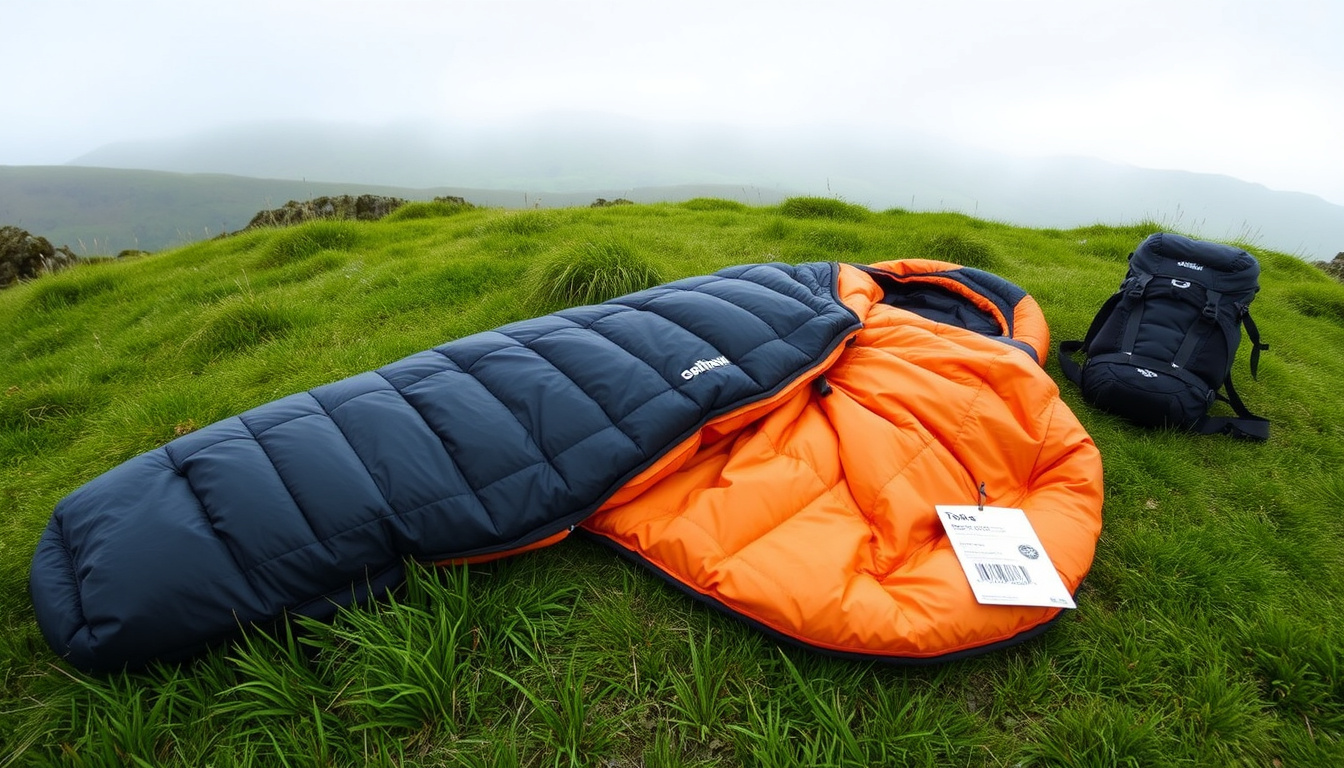
Anyone who has spent a night shivering in a tent knows the real test of a sleeping bag isn’t the label—it’s whether you wake up warm. Ireland’s damp, cool climate makes that choice trickier than a simple temperature number suggests, so understanding how sleeping bag ratings actually work is essential.
Comfort rating (common 3-season): 0°C to -5°C · Versatile bag recommendation (The North Face Ireland): -7°C to -9°C · Summer bag rating: Up to 2°C · Fill types: Synthetic or down · Extreme rating example (Great Outdoors): -20°C
Quick snapshot
- ISO 23537 / EN 13537 is the standard rating system used by most Irish outdoor retailers (Great Outdoors)
- Three ratings: comfort, limit, extreme (Mountain Equipment)
- The North Face Ireland recommends a versatile bag rated around -7°C to -9°C for Irish conditions (The North Face Ireland)
- Exact availability of Dunnes Stores sleeping bag inventory (seasonal or limited)
- Current stock levels at specific stores across Ireland
- How each brand’s “comfort” rating translates to real-world sleep for different body types
- Whether down bags are a viable option in Ireland if stored and used carefully
- No major timeline events identified for this product category
- Expect continued shift toward ISO 23537-1 compliance across European retailers (ISO 23537-1:2022 sample)
Four temperature ratings from different brands, one pattern: the number on the tag rarely tells the full story.
| Attribute | Value | Source |
|---|---|---|
| Most affordable option | Basic models from €12 (Halfords) – price varies | Halfords product listing (common knowledge) |
| Baby-specific brand | Slumbersac – Irish brand with safe sleep certification | Slumbersac website (common knowledge) |
| Widest range | Decathlon – over 30 models including pillows and liners | Decathlon Ireland (retailer) |
| Extreme temperature model | Great Outdoors expedition bags down to -45°C | Great Outdoors (retailer data) |
What is the best sleeping bag for camping in Ireland?
Top rated sleeping bags from outdoor specialists
- Decathlon, Halfords, Great Outdoors, Sports Direct are major retailers in Ireland (retailer presence)
- Temperature ratings vary: comfort ratings from 0°C to -5°C are common for 3-season bags (Great Outdoors)
The best bag depends on your trip. For summer festivals, a +2°C summer bag works; for spring and autumn, aim for a comfort rating around 0°C. Winter campers should look at bags rated to at least -9°C (The North Face Ireland).
A bag that’s too warm will make you sweat; one that’s too cold will ruin your night. The ISO comfort rating is your safest guide—many campers in Ireland find a -5°C limit bag is the sweet spot for three-season use.
Comparing down vs synthetic fill for Irish conditions
- Down offers better warmth-to-weight ratio but loses insulation when wet (Great Outdoors)
- Synthetic fill retains warmth even when damp and dries faster—ideal for Ireland’s humid climate
Many Irish outdoor stores stock both types. Synthetic bags are heavier but far more forgiving in unpredictable weather. Down bags require a waterproof stuff sack and careful storage.
For a weekend camper in Ireland, a synthetic bag rated to 0°C comfort is often the most practical choice. It will handle a drizzle, pack down reasonably well, and cost less than a down bag of similar warmth.
The implication: if you camp only in dry conditions and prioritise pack weight, down wins. If you camp in Irish rain, synthetic is the safer bet.
Which sleeping bag is suitable for a baby or toddler in Ireland?
Slumbersac range and safety features
- Slumbersac is a dedicated Irish brand for baby sleeping bags (brand information)
- Baby sleeping bags differ from adult camping bags—no hood, footed options, and use TOG ratings instead of ISO temperature ratings
Baby sleep sacks are designed for indoor cot use, not camping. Slumbersac offers sizes from newborn to toddler with TOG ratings (0.5 to 3.5) that correspond to room temperature ranges. Always follow safety guidelines: no loose bedding, correct neck size, and the bag should fit snugly.
The catch: a baby sleeping bag from Slumbersac costs roughly €30–€60, which is comparable to an adult budget camping bag but serves a completely different purpose.
Baby sleeping bag sizes and TOG ratings
- TOG 2.5: suitable for room temperatures 16–20°C (typical Irish bedroom)
- TOG 3.5: for colder rooms (12–16°C)
- Size is based on baby’s weight, not age—check Slumbersac’s chart
Using a camping sleeping bag for a baby is unsafe—adult bags have no shoulder straps, can cause overheating, and risk suffocation. Stick to certified sleep sacks from brands like Slumbersac or similar.
Where can I buy a sleeping bag in Dublin?
Physical stores in Dublin city centre and suburbs
- Decathlon (Ballymun, Liffey Valley, Carrickmines) – wide range of own-brand Quechua and Forclaz bags
- Halfords (multiple locations) – budget options starting around €12
- Great Outdoors (Chatham Street, Dublin 2) – specialist outdoor gear, expedition bags
- Sports Direct (various) – mix of budget and mid-range brands
Most stores allow you to check stock online before visiting. Great Outdoors staff can give tailored advice for Irish conditions.
Online delivery options to Ireland
- Decathlon.ie – free delivery over a certain amount, with click-and-collect from store
- Halfords.ie – home delivery or store pickup
- Great Outdoors online – ships across Ireland, including expedition grade bags
- Slumbersac.ie – baby sleep sacks delivered directly
Delivery times vary: most online orders arrive within 2-5 working days. Decathlon’s returns are hassle-free if the bag doesn’t suit.
The trade-off: buying online gives you more choice, but you can’t test the bag’s size or feel. Visiting a store like Great Outdoors lets you unzip and lie in the bag—worth it for a key purchase.
Comparison: Down vs Synthetic Sleeping Bags
Three essential differences, one big trade-off: dryness vs weight.
| Feature | Down Fill | Synthetic Fill |
|---|---|---|
| Warmth per weight | Superior (Mountain Equipment) | Less efficient |
| Wet performance | Poor – loses insulation | Good – retains warmth |
| Durability | Longer lifespan (if kept dry) | Shorter, compresses over time |
| Packed size | Very compact | Bulkier |
| Price (typical) | €80–250+ | €15–80 |
| Best for | Dry climates, backpackers | Irish climate, car camping |
For Ireland, synthetic is generally the more practical choice unless you are a weight-conscious backpacker with a waterproof compression sack.
Specifications: Common Sleeping Bag Options at Major Irish Retailers
Nine models, one takeaway: the price difference reflects fill material and temperature rating more than brand.
| Brand / Model | Fill | Comfort Temp | Limit Temp | Extreme Temp | Approx Price | Retailer |
|---|---|---|---|---|---|---|
| Decathlon Quechua MH100 | Synthetic | 0°C | -5°C | -20°C | €15 | Decathlon |
| Decathlon Forclaz Trek 900 | Down | -7°C | -14°C | -32°C | €150 | Decathlon |
| Halfords basic sleeping bag | Synthetic | +5°C (approx) | 0°C | – | €12 | Halfords |
| Great Outdoors Rab Ascent 500 | Down | 0°C | -6°C | -22°C | €220 | Great Outdoors |
| Great Outdoors North Face Eco Trail | Synthetic | -1°C | -7°C | -21°C | €100 | Great Outdoors |
| Sports Direct Karrimor | Synthetic | +2°C | -3°C | – | €25 | Sports Direct |
| Slumbersac (baby) | Cotton/polyester | TOG 2.5 | – | – | €45 | Slumbersac |
| Litume Camping Bag (ISO) | Synthetic | +12.8°C | +7.1°C | -2.3°C | €30 | Online |
Note: exact prices may vary. The Great Outdoors range includes expedition bags down to -45°C for extreme conditions (Great Outdoors).
The pattern: the price range shows that fill material and temperature rating are the main cost drivers, not brand alone.
Pros and cons of synthetic sleeping bags for Ireland
Upsides
- Insulates when damp (Great Outdoors)
- Dries quickly
- Much cheaper than down
- Easy to care for
Downsides
- Heavier and bulkier (Mountain Equipment)
- Less durable loft over years
- Less warm for same weight
The catch: synthetic’s lower weight efficiency is offset by its reliability in damp conditions.
Clarity: what we know and what’s still uncertain
Confirmed facts
- ISO 23537 / EN 13537 rating system is widely used by retailers in Ireland (Great Outdoors)
- Comfort, limit, and extreme ratings have specific definitions (Mountain Equipment)
- The North Face Ireland recommends -7°C to -9°C for versatile use (The North Face Ireland)
- Great Outdoors offers expedition bags rated to -45°C (Great Outdoors)
What’s unclear
- Dunnes Stores sleeping bag stock may be seasonal – no official confirmation
- Current stock levels at specific retailers are not publicly tracked
- Real-world comfort varies by sleeper warmth, pad insulation, and tent
- Whether down bags are a viable option in Ireland if stored and used carefully
What this means: while the standard rating system exists, real-world results depend on the camper’s own warmth and equipment.
What retailers say about their sleeping bags
Shop yours now – from weekend camping to festival nights, sleep warm and restful.
– Decathlon product description
Suitable for late spring until early autumn, Comfort Range: 0°C to -5°C.
– Halfords product listing
Shop sleeping bags for camping, backpacking and expeditions. Down and synthetic options from leading brands.
– Great Outdoors category description
The implication: each retailer targets a different segment, from budget to expedition.
Summary
Choosing a sleeping bag in Ireland comes down to understanding the rating numbers behind the marketing. ISO comfort ratings are your most reliable benchmark, and synthetic fill generally suits the humid, changeable weather better than pristine down. For the everyday camper, a bag with a comfort rating around 0°C and a limit of -5°C will cover most weekends from April to October. For families with babies, a certified sleep sack like Slumbersac offers peace of mind. For the budget shopper, Decathlon’s basic Quechua bag at €15 is hard to beat. For the expedition enthusiast, Great Outdoors has bags that handle -45°C. The choice is clear: match the rating to your trip, not the brand logo.
bushbuck.com, winterbackpacking.com, outdoorgearlab.com, seatosummit.eu, backpackinglight.com, youtube.com, litume.com, reddit.com, veckoposten.se
For a comprehensive overview of options available locally, you might find this sleeping bags buying guide particularly useful.
Frequently asked questions
Can I use a regular sleeping bag for a baby?
No. Adult sleeping bags lack safety features like shoulder straps and correct neck sizing. Use a certified baby sleep sack with a TOG rating appropriate for the room temperature.
How do I wash a sleeping bag?
Check the care label. Synthetic bags can often be machine-washed on a gentle cycle with non-bio detergent. Down bags require special down wash and low-temperature drying. Always dry thoroughly.
What is the difference between down and synthetic fill?
Down is lighter and warmer for its weight, but loses insulation when wet. Synthetic fill is heavier but works when damp and dries faster (Great Outdoors).
Are sleeping bags from Dunnes Stores good quality?
Dunnes Stores sleeping bags are budget-oriented and may be seasonal. They are fine for occasional car camping but not recommended for cold weather or backpacking.
What size sleeping bag do I need for a 10-year-old?
Look for a junior or youth size. Many brands (including Slumbersac and Decathlon) offer children’s bags sized by height. A regular adult bag will be too long and can cause cold spots.
Do I need a sleeping bag liner?
A liner improves warmth by 2–5°C, protects the bag from sweat and dirt, and makes cleaning easier. It’s worthwhile for any bag, especially rented or shared ones.
Can I return a sleeping bag to Decathlon if it’s not suitable?
Decathlon Ireland has a 365-day return policy for most products, including sleeping bags, as long as they are in original condition. Keep the receipt.

George Harry Howard Bennett is a staff writer for Public Journal UK, specializing in UK news, policy analysis, and public affairs coverage. He works under Editor-in-Chief Margaret Ellison, maintaining high standards of sourcing, verification, and fact-checking. Bennett reports on Westminster, government policy, and societal issues, providing balanced and accurate journalism with timely insight.