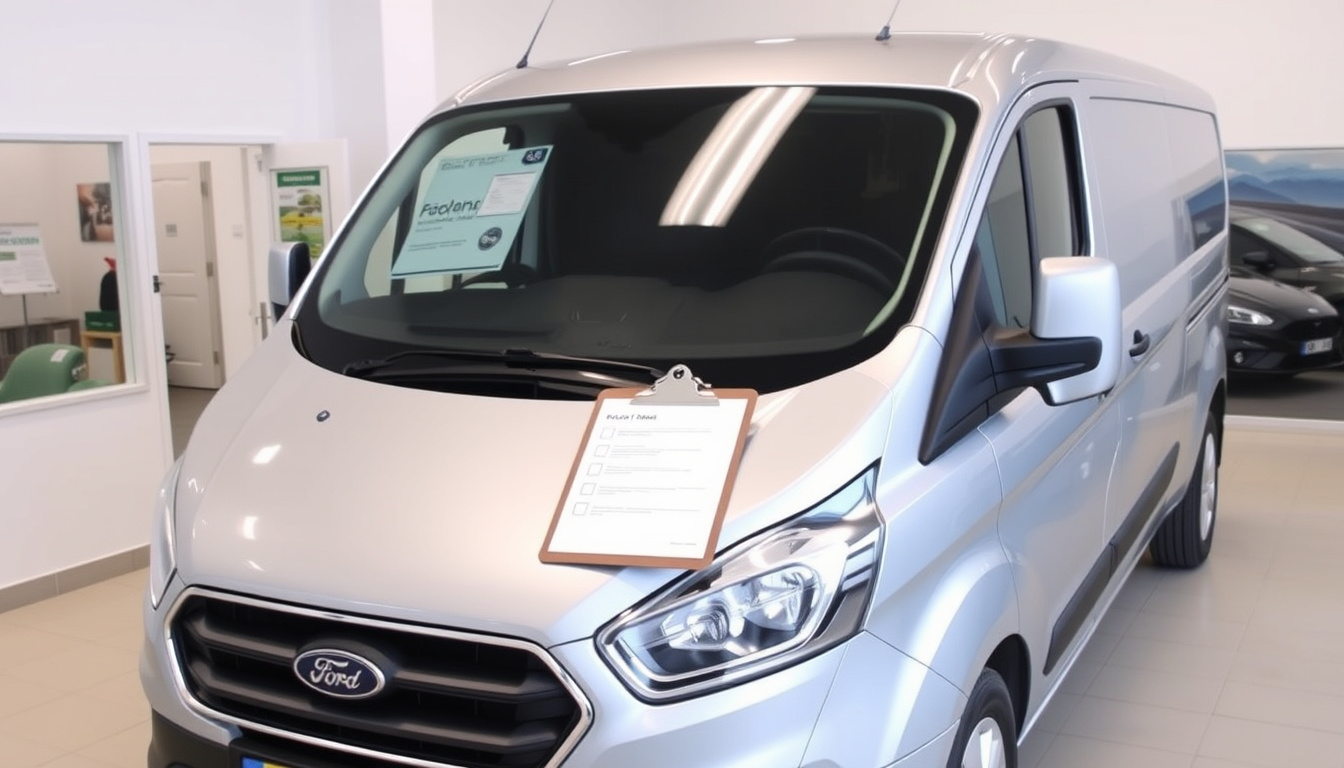
If your daily drive involves scaffolding, samples, or a muddy mountain bike, the Ford Transit Custom has probably crossed your mind — 5,121 used examples were listed on UK marketplace Autotrader when we checked. The 2026 picture is where the decision gets interesting: new prices, an April VED shake-up, and fault patterns that separate a keeper from a money pit — this guide lays out whether the Custom’s blend of load space and running costs beats the full-size Transit for your budget.
Production started: 2012 ·
Ford UK electric target range: 236 miles ·
PHEV official combined MPG: 176.6 mpg ·
PHEV electric-only range: 35 miles ·
Used Transit Custom listings on Autotrader: 5,121 ·
Drivetrain layout: Mid-sized front-wheel drive
Quick snapshot
- Produced since 2012 as a mid-sized, front-wheel-drive van (Wikipedia (reference entry))
- Ford UK targets 236 miles for the zero-emission version (Ford UK (official support))
- PHEV official figures: 176.6 mpg and 35 miles electric-only (Carwow (UK car-buying platform))
- 5,121 used Custom vans listed on Autotrader when we checked (Autotrader (UK marketplace))
- Exact 2026 on-the-road price for a new Custom — not confirmed in the materials we reviewed
- Exact VED bill from April 2026 — depends on the final GOV.UK rate tables
- Which model years to avoid — owner-reported patterns, not confirmed defect rates
- The “best van for van life” — depends on budget, layout, and seating needs
- — the Custom splits from the larger Transit as a mid-sized line (Wikipedia (reference entry))
- Current generation — the 2024-on model, identified by Ford UK as Transit Custom 2024 (Ford UK (official support))
- April 2026 — updated VED rates take effect (GOV.UK (official rate tables))
- 2026 model year — pricing should be verified with Ford UK before ordering (Wikipedia (reference entry))
- New buyers: match the powertrain to your mileage and tax band
- Used buyers: check the wet timing-belt and injector history first
- Van-life buyers: compare Kombi seating and load space against the full-size Transit
Six numbers frame the Custom’s story: a 2012 launch, a 236-mile electric target, official PHEV figures of 176.6 mpg and 35 miles electric-only (Carwow (UK car-buying platform)), and a used market 5,121 vans deep (Autotrader (UK used-vehicle marketplace)).
| Fact | Value |
|---|---|
| Production start | 2012 |
| Vehicle class | Mid-sized front-wheel-drive van |
| Electric range target | 236 miles |
| PHEV combined economy | 176.6 mpg |
| PHEV EV range | 35 miles |
| Used vans on Autotrader | 5,121 |
Is it worth buying a Ford Transit Custom?
The Custom’s appeal is a sensible middle: mid-sized, front-wheel drive, easier to thread through city streets than a full-size Transit, and available as diesel, plug-in hybrid, or zero-emission. The strongest evidence is market depth — Autotrader listed 5,121 used examples when we checked, so buyers get real choice without settling for the first van on the forecourt.
For a commercial buyer, the Custom makes sense when the mileage justifies the engine: diesel for long runs, PHEV for mixed fleets, zero-emission for clean-air zones. Choose the powertrain for tax reasons alone and the running costs will bite back.
The PHEV is the headliner for mixed use, with official combined economy of 176.6 mpg and a 35-mile electric-only range. The zero-emission version targets 236 miles, which covers regional routes but not a motorway-heavy week for a big fleet. In other words, the Custom is only “worth it” when the version matches the work.
Upsides
- Deep used supply — 5,121 Autotrader listings at research time meant real negotiating power
- Efficient PHEV option with 176.6 mpg official combined economy and 35 miles electric-only
- Zero-emission version with a 236-mile target range for clean-air zones
- Mid-sized, front-wheel-drive format is easier to park than the full-size Transit
Downsides
- Owner-reported fault patterns, especially 2.0 EcoBlue wet timing belts and injectors
- VED set to change in April 2026, so annual tax depends on which version you register
- Annual MOT applies from the third anniversary — factor it into the budget
- New-vehicle pricing needs checking against Ford UK’s current list, because 2026 prices aren’t confirmed
Which van is best for van life?
- Budget: the Custom’s used market is deep — 5,121 vans on Autotrader when we checked
- Powertrain: the PHEV’s 35-mile electric-only range gives quiet, fume-free campsite running
- Layout: Kombi versions add a second row, so a six-seat setup still leaves the back for gear
- Reality check: a van that sleeps two still needs a parking plan in most UK towns
There is no single “best” van-life vehicle; the right answer depends on budget, seating, and how much living space you need. The Custom’s mid-sized body is the practical middle ground: easier to park than a full-size Transit, more space than a car-derived van, and a strong base for a conversion. The durability logic is the same one we applied in our Yeti water bottle guide: spend once on the right version instead of twice on the wrong one.
The trade-off is payload versus agility: the Custom fits more places and costs less to run than the full-size Transit, but the moment your loads need Transit volume, the smaller van is the wrong tool.
What are the common faults on a Transit Custom?
Fault lists read like horror stories, so keep the frame straight: the patterns below come from owner-report databases and independent repair publishers, not from a factory confession. They cluster around the 2.0 EcoBlue engine, the 2.0 TDCi’s electronics, and a short list of recalls any buyer can check in minutes.
Eight recurring complaints, one pattern: engine ancillaries and service history cause more Custom failures than the base design itself. The catalogue is drawn from Haynes (independent repair publisher), Car Advert Check (used-van fault checker), and Car Checker (reliability database).
| Reported issue | Typical models | What owners describe | Source |
|---|---|---|---|
| Turbo-actuator fault, diagnostic code P2599 | 2.0 TDCi, 2013–2022 | Loss of boost, limp mode | Haynes |
| Accelerator-pedal wiring damage | 2.0 TDCi, 2013–2022 | Engine ignores the throttle | Haynes |
| Cooling-fan fuse incorrectly specified | Various | Overheating in traffic | Haynes |
| Transmission synchromesh wear | Various | Crunchy gearshifts | Haynes |
| Wet timing-belt degradation | 2.0 EcoBlue, circa 2016–2023 | Belt sheds material, blocks the oil strainer, risks engine damage | Car Advert Check |
| Diesel injector failure | 2.0 EcoBlue, 2016–2019 | Power loss, limp mode | Car Advert Check |
| Door-mirror vibration | 2018–2023 | Blurred rear view at speed | Haynes |
| DPF clogging and oil dilution | 2.0 EcoBlue with repeated short trips | Frequent regenerations, warning lights | Car Checker |
On the 2.0 EcoBlue, the two issues that matter most are the wet timing belt and the injectors. According to Car Advert Check (used-van fault checker), a deteriorated wet belt can shed material that blocks the oil strainer — a repair that can cost more than the van is worth on a cheap example. The same database points to a batch of 2016–2019 vans with injector trouble that reportedly shows up as power loss or limp mode. On the 2.0 TDCi, Find Service History (service-record specialist) adds a battery-venting concern: on some Transit and Transit Custom vans, an incorrectly vented 12-volt battery could direct gas into the cabin, so check the battery installation and recall history.
Recalls matter more than gossip. Haynes (2018–23 recall review) lists four that a used buyer should check before paying:
- 91,814 vans — run-on water pump that could overheat
- 2,675 vans — potentially faulty lower-control-arm welds
- 151 vans — incorrect battery-positive cable
- 4,773 vans — owner manuals with incorrect passenger-airbag information
Recall work is free at a Ford dealer, but only if you know it’s outstanding. Ask for the van’s registration number, check it against the DVSA recall database, and treat “no knowledge of recalls” as a research task, not an answer.
What year for Ford Transit should you stay away from buying?
- 2013–2022 2.0 TDCi: turbo-actuator (P2599), pedal-wiring, cooling-fan, and gearbox reports (Haynes (2013–22 fault guide))
- Circa 2016–2023 2.0 EcoBlue: wet timing-belt and injector reports (Car Advert Check)
- 2018–2023 models: mirror vibration and the four recalls above (Haynes)
- Any year with a missing service history: get a pre-purchase inspection before you pay
The honest answer is that no single model year is banned. The pattern points to 2.0 EcoBlue vans from about 2016 to 2019 needing the closest look at injectors and timing-belt condition, while 2.0 TDCi vans carry their own actuator and wiring quirks. A pre-purchase inspection focused on those two areas is worth more than any year-based rule of thumb.
The pattern: the Custom doesn’t hide its problems, it hides their cost. Every fault on this list is discoverable in a pre-purchase inspection — which is why the cheapest Custom on Autotrader is rarely the cheapest to own.
Is a Transit Custom smaller than a Transit?
Yes — by design. Ford launched the Custom in 2012 as the mid-sized, front-wheel-drive member of the Transit family, while the Transit itself is Ford’s full-size van line (Wikipedia (Ford Transit Custom reference entry)). Smaller doesn’t mean small: the Custom carries serious load space and a wide choice of bodies, but it’s built for urban and mixed work where a full-size Transit is overkill.
Three contrasts, one decision: the Custom trades raw volume for agility, while the Transit trades agility for sheer size.
| What to compare | Ford Transit Custom | Ford Transit (full-size) |
|---|---|---|
| Position in Ford UK’s van line-up | Mid-sized van | Full-size van range |
| Size relationship | The smaller Transit-family model | The larger Transit-family model |
| Launch point | 2012, as a separate line | Longer-established full-size range |
| Electric option | Zero-emission version with a 236-mile target range | Check Ford UK’s current Transit range separately |
| Typical buyer | Urban fleets, owner-operators, van-life builds | Volume and heavy-load operations |
If you’re comparing spec sheets, the headline figures are compact: one footprint, three powertrains, and a used market deep enough to shop around in.
| Specification | Value |
|---|---|
| Production start | 2012 |
| Generations | First generation 2012–2023; current generation 2024-on |
| Vehicle class | Mid-sized front-wheel-drive van |
| Diesel engines in the used market | 2.0 TDCi and 2.0 EcoBlue |
| PHEV combined economy | 176.6 mpg |
| PHEV electric-only range | 35 miles |
| Zero-emission range target | 236 miles |
| Used stock at research time | 5,121 vans on Autotrader UK |
The implication: the Custom’s smaller footprint is a feature for most buyers, not a compromise — the full-size Transit only earns its size when the load genuinely demands it.
How much is road tax on a Transit Custom?
Road tax for the Transit Custom is Vehicle Excise Duty — VED — collected through the vehicle tax system, not a separate van charge. GOV.UK sets the rates, and vans registered after 1 March 2001 pay a flat annual rate rather than a car-style CO2 band, which keeps the bill predictable across trims (GOV.UK (official VED rate tables)).
- First-year VED: set at the point of registration and normally reflected in the dealer’s on-the-road price
- Standard VED: the flat annual rate that applies from the second year onward
- Zero-emission van rate: a separate band for electric versions, updated alongside the rest from April 2026
How much will my road tax be from April 2026?
- From April 2026, GOV.UK’s updated VED tables apply to every van, including the Transit Custom
- Your exact bill depends on the van’s registration date, fuel type, and tax band
- Ford UK’s price list and dealer quotes should state the first-year VED for a new Custom
- For a used Custom, the next renewal is charged at whatever rate is in force that year
The April 2026 number isn’t one figure — it’s three, depending on whether you register a diesel, a PHEV, or the zero-emission version. The honest budget move is to check GOV.UK’s official rate tables before you sign and treat VED as an annual cost, not a one-off.
April 2026 resets the annual tax bill for every van owner in the UK. The Custom’s exact liability depends on which version you register — the badge is the same, the tax band is not.
The implication: VED rarely decides a deal on its own, but from April 2026 the difference between versions will be harder to ignore — so the powertrain decision becomes a tax decision too.
How much is an MOT for a Ford Transit Custom?
The MOT is where the Custom faces annual scrutiny once it turns three. GOV.UK sets the maximum fee a test station can charge, so the price is capped rather than negotiated.
- First MOT: due by the third anniversary of registration, then every year — there’s no extended interval for light use
- Fee cap: for vans up to 3,000 kg tested under the Class 4 scheme, the government-set maximum is £54.85 (GOV.UK (official MOT guidance))
- Some heavier variants are tested under a different goods-vehicle class, so confirm the fee with the test station before booking
How often do vans need MOT?
- Vans first need an MOT three years after registration, then every year after that
- Business use doesn’t change the rule: any van on the road needs a valid MOT, whatever it’s used for
GOV.UK’s rule is simple — an outright ban on driving a van without a valid MOT once it’s past the three-year point. A Custom used for work attracts the same test as a Custom used for weekends; there’s no “light usage” exemption.
How much does it cost to replace a timing belt on a Ford Transit Connect?
- A Transit Connect is a separate, smaller Ford van — its belt job is not a price guide for a Transit Custom
- We don’t have a verified UK average for Connect belt replacement in the materials we reviewed
- Quotes depend on the engine, the garage’s hourly rate, and whether the water pump is changed at the same time
- On a 2.0 EcoBlue Custom, the wet-belt condition is the more urgent question
The short version: don’t use a Transit Connect quote to budget for a Transit Custom. The Custom’s 2.0 EcoBlue belt runs in oil, and owner-report databases say a deteriorated belt can shed material through the engine — a bill that dwarfs the belt replacement itself. Ask for a fixed-price quote that includes the water pump, and check whether the garage has done EcoBlue belt work before.
How much does a brand new Ford Transit Custom cost?
Ford UK sets the list price through its dealer network, and the honest answer for the 2026 model year is: check the current price list. The 2026 Transit van pricing was not confirmed in the materials we reviewed, so current published pricing applies until Ford UK updates it. What is confirmed is the shape of the range — diesel, PHEV, and zero-emission — and the official efficiency figures above.
- New Custom: the price varies by body style, trim, engine, and battery option — build one on Ford UK’s configurator for the real number
- Used Custom: 5,121 examples were listed on Autotrader when we checked (Autotrader (UK used-vehicle marketplace)), spanning first-generation vans through 2024 models
- PHEV and zero-emission versions change the VED and fuel maths, so compare total cost, not sticker price
- First-year VED is normally folded into the on-the-road price; standard VED starts from year two
The used market is where the Custom gets interesting. A spread of 5,121 listings on Autotrader means enough choice to compare body styles, trims, and history without panic-buying the first van you see. The line-up reaches from 2012 first-generation vans to the current 2024-on generation, so your real decision is not “Custom or not” — it’s which generation and which powertrain.
An early first-generation Custom and a nearly-new 2024 model sit at opposite ends of the budget spectrum — so the decision should rest on payload and tax band, not just the lower monthly figure.
The pattern: Ford UK sets the new price, the used market sets the rest, and neither number reveals the full cost of ownership until VED, MOT, and inspection are in the same spreadsheet.
Transit Custom timeline: from 2012 to the 2026 tax shift
Four dates tell the Custom’s story: a launch, a generation change, a price question, and a tax reset.
- — Ford launches the Transit Custom as a mid-sized, front-wheel-drive split from the larger Transit (Wikipedia (reference entry))
- Current — Ford UK markets the Custom with zero-emission capability and a 236-mile target range (Ford UK (official support))
- 2026 model year — buyers are searching for 2026 Transit van prices; verify the latest list with Ford UK before ordering
- — updated VED rates take effect; the Custom’s liability depends on its tax band (GOV.UK (official rate tables))
The implication: the Custom’s second decade is defined less by the van itself and more by the tax and energy landscape around it.
Confirmed vs unclear: what the evidence supports
Here’s the editorial split: confirmed items come from Ford UK, GOV.UK, Wikipedia, and Haynes’ review of official recalls; owner-reported patterns stay in the “unclear” column until a manufacturer or regulator confirms them.
Confirmed facts
- The Transit Custom has been produced since 2012 (Wikipedia (reference entry))
- It is a mid-sized, front-wheel-drive van (Wikipedia (reference entry))
- The current generation is the 2024-on model (Ford UK (official support))
- Ford UK targets 236 miles for the zero-emission version (Ford UK (official support))
- The PHEV’s official figures are 176.6 mpg and 35 miles electric-only (Carwow (UK car-buying platform))
- Autotrader listed 5,121 used Custom vans at research time (Autotrader (UK marketplace))
What’s still unclear
- Exact 2026 on-the-road price — not confirmed in the materials we reviewed, so Ford UK’s current list applies
- Exact VED liability from April 2026 — set in the final GOV.UK tables
- Which model years to avoid — owner-reported patterns, not confirmed defect rates
- A specialist database lists a recall involving an electronic one-way clutch assembly that could cause sudden loss of forward or reverse drive — verify it against the official DVSA record (Car Advert Check (used-van fault checker))
- The same source reports that the DVSA lists 32 Transit Custom recalls between 2019 and 2026 — check the official DVSA database before relying on the count
- Whether wet-belt failures affect all 2.0 EcoBlue vans or a subset — reported, not yet quantified
- The 2026 Ford Transit full-size price — Ford UK’s current list applies until updated
The catch: the uncertain list is longer than the confirmed one — which is exactly why a pre-purchase inspection outranks any model-year rule of thumb.
What the sources say
Three sources, three lines of evidence — each useful only if you know who is speaking.
The Transit Custom is offered with zero-emission capability, targeting a 236-mile driving range.
Ford UK (official manufacturer support)
The plug-in hybrid Custom combines petrol and electric drive for a claimed 176.6 mpg and a 35-mile electric-only range.
Carwow (UK car-buying platform)
The Ford Transit Custom is a mid-sized, front-wheel-drive van introduced in 2012.
Wikipedia (Ford Transit Custom reference entry)
Why this matters: the strongest claims in this guide come from the manufacturer, a reference encyclopaedia, and a buying platform — which is why the owner-report data should be treated as a checklist, not a verdict.
The verdict
For a UK buyer weighing the Custom in 2026, the right call is a match: pick the van for your load, your mileage, and your tax band — diesel for long motorway runs, PHEV for mixed urban work, and zero-emission for clean-air zones with home charging. The used market’s depth means a solid, inspected Custom is affordable; the fault patterns mean an uninspected one is a gamble. For a buyer financing a Custom over five years, the choice is clear: spend on a pre-purchase inspection now, or a four-figure wet-belt repair becomes your problem.
Related reading
- Yeti Water Bottle: Safety, Durability, and Worth Guide — durability-versus-value logic for a very different buying decision.
- Bershka Jeans Review: Quality, Prices, and Zara/H&M Comparison — how quality-versus-price trade-offs play out in another market.
Frequently asked questions
Where can I find Ford Transit Custom vans for sale?
The strongest used supply in the UK is on Autotrader, which listed 5,121 Transit Custom vans at research time. Ford UK’s dealer network also sells approved used examples, usually with a warranty and a history check. With that much stock, compare at least three vans before you negotiate.
What is the Ford Transit Custom Sport version?
The Sport is a trim level with visual and equipment upgrades over the base van, but the exact specification changes across model years and generations. For the current model, check Ford UK’s official price list and the dealer spec sheet rather than relying on older reviews.
Is the Ford Transit Custom available as a 6-seater?
Ford UK’s Kombi versions add a second row of seats, and some layouts are configured for up to six occupants. The exact seat count depends on the body style and trim, so confirm it in the official spec sheet before ordering.
Are diesel Ford Transit Custom models still offered?
Yes. The 2.0 EcoBlue diesel remains a core part of the Custom story in the used market, and the current line-up still includes EcoBlue versions alongside the PHEV and zero-emission models. If you buy used, the diesel powertrain is the one with the most fault reports, so check the service history carefully.
Can I get finance on a Ford Transit Custom?
Yes — van finance is widely available through Ford UK dealers and independent lenders. The rate depends on the van’s age, mileage, and your credit profile, so compare at least two quotes before signing.
Is there an electric Ford Transit Custom?
Yes. Ford UK markets a zero-emission Transit Custom with a target range of 236 miles. If your use is urban or regional with regular charging, it avoids diesel running costs and changes the VED picture; if you need long cross-country range, the diesel or PHEV versions remain the practical choice.

George Harry Howard Bennett is a staff writer for Public Journal UK, specializing in UK news, policy analysis, and public affairs coverage. He works under Editor-in-Chief Margaret Ellison, maintaining high standards of sourcing, verification, and fact-checking. Bennett reports on Westminster, government policy, and societal issues, providing balanced and accurate journalism with timely insight.