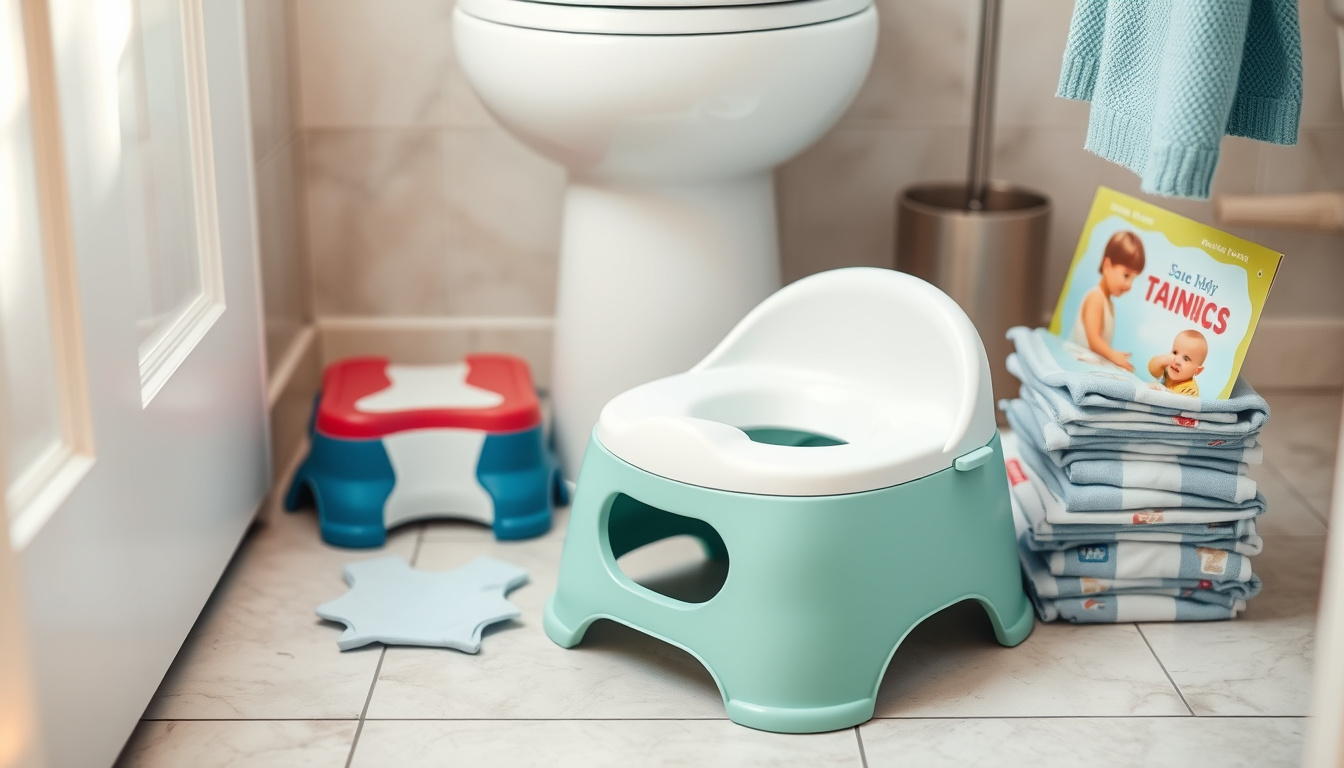
Few parenting milestones attract as much conflicting advice as potty training, with friends swearing by different methods and toddlers using the potty as a step stool. The medical guidance is more consistent: most children show readiness between 18 and 30 months, and knowing what those signals look like separates a smooth few weeks from a frustrating standoff.
Average age to begin potty training: 27 months ·
Children potty trained by age 3: 90% ·
Typical training duration: 3-6 months ·
Age range for readiness: 18-30 months
Quick snapshot
- Readiness signals usually appear between 18 and 30 months (Merck Manual Professional Edition (clinical reference))
- Staying dry for about two hours or after naps signals bladder readiness (Mayo Clinic (nonprofit medical center))
- Consistency matters more than any single method (NHS (UK health service))
- Whether intelligence makes training harder — no controlled evidence (Merck Manual Professional Edition) (Johns Hopkins Medicine (pediatric hospital))
- The best starting age for any one child — there is no single correct answer (Johns Hopkins Medicine (pediatric hospital))
- Whether strict rewards beat gentle encouragement (no direct comparison) (Johns Hopkins Medicine (pediatric hospital))
- 12-18 months: early signs can appear; start preparing (NHS (UK health service))
- 18-30 months: most children move into active training (Merck Manual Professional Edition) (NHS (UK health service))
- 3-4 years: daytime and nighttime independence for most (American Academy of Pediatrics HealthyChildren.org (U.S. pediatricians’ parent resource))
- UK guidance: start rather than wait for the child to ask (NHS)
- US guidance: follow readiness signs, not a fixed date (AAP)
- No interest by age 4? Book a pediatrician visit
Seven rows, one pattern: the timing window is wider than most parents think, and the fastest-sounding numbers come with caveats.
| Metric | Value |
|---|---|
| Average start age | 27 months (within the typical 2-3 year U.S. window) |
| Completion age | 36 months for boys, 32 months for girls |
| Success rate, 3-day method | 75-90% (anecdotal) |
| Nighttime dryness | Usually months to years after daytime training |
| Clinical readiness window | 18-30 months |
| UK guidance range | 18 months to 2.5 years |
| Max recommended sitting session | About 5-10 minutes |
What is the best age to potty train?
There is no single correct age to begin toilet training; readiness varies from child to child, according to Johns Hopkins Medicine (pediatric hospital). Many children begin showing signs between 18 and 24 months, notes Nemours KidsHealth (children’s health system), and clinical references place the wider readiness window at 18 to 30 months.
The averages give parents a practical frame:
- 18-24 months: when many children first show readiness signs (Nemours KidsHealth)
- 18-30 months: the clinical readiness window (Merck Manual)
- 2-3 years: average age U.S. families begin (American Academy of Pediatrics HealthyChildren.org (U.S. pediatricians’ parent resource))
- 18 months-2.5 years: the NHS’s typical range (NHS)
There is a transatlantic difference worth knowing. U.S. pediatric guidance from the American Academy of Pediatrics HealthyChildren.org (U.S. pediatricians’ parent resource) emphasizes following the child’s cues rather than applying a fixed start date. The NHS (UK health service), by contrast, advises beginning training rather than waiting for the child to ask to use the potty — its guidance does not require every readiness sign to be in place before you start.
The “best age” is really a set of signals, not a date on the calendar:
- Stays dry for about two hours or after naps (Mayo Clinic)
- Recognizes wetness or stool and signals a need to change (Johns Hopkins Medicine)
- Walks to the bathroom, sits safely, and pulls clothing down (AAP)
- Shows interest in the potty, underwear, or adults’ bathroom routines (Mayo Clinic)
- Follows simple instructions and communicates the need (Nemours KidsHealth)
Is age 3 too late to potty train?
- No — most U.S. children are bowel- and bladder-trained by age 4 (AAP)
- Starting at 3 is inside the normal U.S. average window of 2-3 years
Age 3 is not too late. The AAP’s parent resource puts the finish line at age 4 for most children, which makes a 3-year-old starter perfectly ordinary. The bigger risk at that age isn’t lateness but pressure: a 3-year-old has stronger opinions, and forcing the issue can turn the potty into a control battle.
Is it normal for a 2 year old not to be potty trained?
- Yes — the average U.S. start is 2 to 3 years (AAP)
- Early signs at 18-24 months are a cue to prepare, not a deadline to finish
Totally normal. The average U.S. family doesn’t begin until the child is between 2 and 3 years old, so an untrained 2-year-old is the rule, not the exception. Early signs at 18-24 months are a green light to get ready — put a potty in the bathroom, read a book about it, let the child watch the routine — not a deadline.
Is it normal for a 3.5 year old not to be potty trained?
- It happens — readiness varies widely (Merck Manual)
- By 3.5, a child is past the NHS’s typical range of 18 months to 2.5 years
A 3.5-year-old who isn’t trained is still within the normal curve but sitting at its outer edge. Most U.S. children finish by age 4, so if your child is closing in on 4 with no real progress, that’s the moment to check in with a pediatrician rather than push harder. The key question is whether any readiness signs have appeared; if none have, a medical conversation is more useful than a stricter schedule.
What age are most children potty trained at?
- U.S. baseline: most children are trained by age 4 (AAP)
- Snapshot averages: 36 months for boys, 32 months for girls (Merck Manual)
The finish line for most U.S. children is age 4, and the completion averages above — 36 months for boys, 32 months for girls — suggest a familiar pattern: girls often edge ahead by a few months, and boys aren’t behind if they lag. What matters is momentum, not the month on the calendar.
When to start potty training a boy?
- The same readiness signs apply to boys and girls (AAP)
- Boys’ completion averages run a few months later (36 vs. 32 months)
The checklist doesn’t change with gender: dry for a couple of hours, interest in the potty or adults’ routines, simple instructions understood, and a recognizable way to communicate the need. If boys finish a little later on average, the practical response is patience, not earlier pressure.
The pattern: readiness beats the calendar. Starting before a child is emotionally ready can turn training into a prolonged struggle — the risk the MSD Manual warns about — while waiting for clear signs avoids the fight entirely.
What is the 3 day rule for potty training?
The 3-day method is the best-known intensive approach in parenting circles. The plan: clear a long weekend, keep the child close to the potty, and monitor constantly while responding quickly to every sign and accident. Anecdotal parent reports put success rates at 75-90%, but that figure comes from word-of-mouth, not controlled studies.
Pediatric institutions don’t line up behind the 3-day method specifically. The mainstream guidance splits into two slower camps:
- A gradual timing method — introduce the potty, practice sitting, and schedule brief toilet visits (Merck Manual Professional Edition)
- A child-centered approach — follow the child’s cues and pace rather than imposing a rigid schedule (MSD Manual Consumer Version)
The Merck Manual’s timing method has a ground rule for parents drawn to speed: practice sits should last no more than about 5 to 10 minutes. The implication: long, forced sits teach dread, not success.
What is the 10, 10, 10 rule for potty training?
- The 10,10,10 rule spaces potty prompts about 10 minutes apart
- It’s an interval variant of the same timed-sitting logic used in gradual training
The 10,10,10 rule is a variant some families use to structure the waiting: prompt about every 10 minutes, keep sits short, and stay consistent through the day. It overlaps with the Merck Manual’s timed approach — brief, scheduled sits rather than waiting for the child to announce the need — and it works best once readiness signs are already showing.
The trade-off: intensive methods can compress the timeline, but their evidence is anecdotal. The approaches with institutional backing — the NHS’s start-when-ready guidance and the AAP’s readiness-based timeline — trade speed for durability.
What is the fastest way to potty train a toddler?
The fastest methods share one feature: intensive monitoring. That means staying close, reading the child’s signals, and responding instantly to signs and accidents alike, so the connection between sensation, potty, and relief becomes clear. The 3-day method and the 10,10,10 rule both operate this way.
Speed also comes from rewards. Reward-based methods can accelerate learning for some ready children, and a small, immediate reward keeps the routine positive. The catch: rewards should be phased out once the habit is solid, so the toilet doesn’t become a negotiation table.
- Intensive monitoring: constant proximity and fast response
- Rewards: useful for ready children, then faded out
- Readiness first: a child who isn’t ready will resist any fast method
Here is the uncomfortable part of “fastest”: the biggest speed factor is readiness. Pushing a child who is unwilling can create a prolonged struggle — the MSD Manual’s central warning — which is the opposite of fast. A child who is physically and emotionally ready moves through training quickly; one who isn’t will turn every shortcut into a fight.
Why this matters: speed methods don’t create readiness; they exploit it. The fastest route is almost always the one that starts with the child’s signals, not the parent’s schedule.
How to potty train a very stubborn toddler?
Stubbornness during potty training usually points in one of two directions: the child isn’t emotionally ready, or the toilet has become a control battle. The MSD Manual Consumer Version is blunt that emotional readiness matters as much as physical ability — forcing an unwilling child can turn a two-week process into a two-month standoff.
- Lack of readiness: the child understands the potty but resists because the body isn’t cooperating yet
- Control battle: the child senses the potty matters to you, and refusal becomes a form of power
The child-centered approach — following the child’s cues and pace rather than imposing a rigid schedule — is the standard medical answer to resistence. Practically, that means skipping the “today we train” announcement: put the potty in the room, let the child sit on it fully clothed, and wait for signs of interest. Interest in the potty or in adults’ bathroom routines tends to be the cue that stubborn children show last.
Are intelligent toddlers harder to potty train?
- No controlled evidence links intelligence to training difficulty (MSD Manual)
- What looks like intelligence-related resistence is usually temperament plus a control battle
This idea circulates in parenting forums, but the evidence doesn’t back it. There is limited evidence linking intelligence to training difficulty, and what parents describe as “too smart to be trained” is usually a toddler applying their full attention to who controls the potty. That brings the problem back to readiness and resistance, not brainpower.
If a previously willing child suddenly refuses to sit on the potty, treat it as a signal — a change at home, an illness, or a dip in readiness. The child-centered fix is the same: lower the pressure and let the child re-approach on their own terms.
What is a red flag for potty training?
Most potty-training problems are behavioral and temporary. A few signs, though, are medical or developmental flags worth a doctor’s conversation before you keep pushing.
- Extreme fear or distress at the sight of the potty
- Pain when passing urine or stool, or ongoing constipation
- Regression after weeks of success — especially if it comes with pain
- No interest at all past age 4
Pain deserves special attention. If a child starts avoiding the potty because it hurts, the priority is treating the underlying issue — constipation is common and fixable — before continuing training. The same logic applies to regression: stress or infection can both cause it, and neither responds to more pressure. And because most U.S. children finish by age 4, a child with no interest after that deserves a medical conversation, not a stricter schedule.
Pushing through pain or fear teaches a child that the potty is a source of distress. What looks like a discipline problem — sudden refusal, crying, holding it in — is often a physical problem that needs treatment first.
What is the hardest day of potty training?
For most families, day one is the hardest. The child hasn’t connected the sensation with the potty yet, accidents are frequent, and parents are exhausted from monitoring. Some parents report days two or three being worse, once the novelty of the little chair fades and the child realizs this is now an expectation.
The pattern, day by day:
- Day 1: chaotic, accident-heavy, emotionally intense
- Days 2-3: resistance often peaks as novelty fades
- Day 4 onward: routine settles in if parents stay calm and consistent
Preparation is the antidote. Keep the potty where the child spends time, keep sits short — about 5 to 10 minutes per the timed method — and encourage the child to use the potty when they sense the need, rather than waiting for a parent to ask.
The takeaway: the hardest day is survivable when the plan is already in place. Parents who decide in advance how they’ll handle accidents — calmly, quickly, without shame — get through the worst of it without turning the potty into a battlefield.
How to Potty Train: A Step-by-Step Plan
If you want a sequence that tracks the medical guidance, this is it. Every step maps to a documented readiness skill or method.
- Watch for readiness signs. Staying dry for about two hours or after naps is a strong bladder-control signal, and interest in the potty counts too.
- Confirm the communication skills. The child should follow simple instructions and use understandable words to signal the need — a checklist point from Nemours KidsHealth.
- Pick a method that fits the child. Gradual timing for children who like routine; child-centered for children who bristle at pressure.
- Set up the space. Put the potty where the child actually is, and make sure the child can reach it and sit on it safely.
- Prompt, don’t park. Schedule brief sits — about 5 to 10 minutes, per the Merck Manual timing method — and let the child get up when done.
- Handle accidents without punishment. The UK’s children’s bowel and bladder charity ERIC advises pressure-free training built on praise.
- Phase out rewards. Use small immediate rewards to reinforce the habit, then fad them once training is solid.
The whole daytime process typically takes 3-6 months from start to finish. Nighttime dryness is a separate milestone that often arrives months to years later.
The method matters less than the match. A slow method on a ready child works; a fast method on an unready child backfires. Consistency is the only ingredient every approach shares.
What’s confirmed vs. what’s still unclear
It helps to split what pediatric guidance treats as settled from what remains genuinely open. Here’s the honest divide.
Confirmed facts
- Staying dry for about two hours and showing interest in the potty are real readiness signals (Mayo Clinic)
- Most U.S. children complete training by age 4 (AAP)
- Nighttime dryness usually lags months to years behind daytime (Merck Manual)
- Consistency matters — the NHS advises starting and continuing rather than stopping
What’s unclear
- Whether intelligence or temperament makes training harder — no controlled evidence
- The optimal starting age for any individual child — Johns Hopkins Medicine notes there is no single correct age
- Whether strict reward systems outperform gentle encouragement — no direct comparison in the guidance
- The real-world success rate of the 3-day method — the 75-90% figure is anecdotal
- Whether a fixed start date or flexible cue-following works better — U.S. and UK guidance disagree
The split is worth noticing: the confirmed column is about readiness and consistency; the unclear column is about tactics. That contrast is the whole story of potty training in one glance.
What pediatric guidance actually says
Three institutions shape most of the public guidance on potty training. Their emphases differ; their fundamentals don’t.
“Potty training should start when the child shows signs of readiness, not because a certain age has arrived.”
— NHS (UK health service), potty training guidance
“Children should be physically and emotionally ready — the potty can’t be rushed.”
— Mayo Clinic (nonprofit medical center), infant and toddler health
“Avoid pressure and punishment; focus on praise.”
— ERIC, the UK’s children’s bowel and bladder charity
Notice what’s missing from all three: speed. None of them promise a three-day fix. They describe a process that starts with the child’s cues and continues with the parent’s consistency.
The takeaway
The evidence points one direction: readiness first, consistency second, pressure never. Methods that claim to be fastest only work when layered on a child who is already prepared, and red flags like pain or prolonged fear are medical questions, not discipline problems. For parents facing a stubborn toddler, the choice is clear: drop the battle, take a breather, and restart when the potty feels like the child’s own idea — because the longer the fight goes, the more the toilet becomes a prize to withhold.
Frequently asked questions
Should I use a potty chair or a toilet adapter?
Use whichever the child can reach and sit on safely. Sitting safely is a core readiness skill in most pediatric checklists, so the equipment needs to feel stable and accessible. A portable potty chair works well in the room the child actually spends time in.
How often should I prompt my child to use the potty?
Follow the child’s signals, and when you prompt, keep the sit short — about 5 to 10 minutes, per the Merck Manual’s timing method. Encourage the child to use the potty when they sense the need, rather than sitting and waiting for something to happen.
What if my child regresses after successful training?
Regression is common and usually traces to stress, illness, or a big change at home. Treat it as a signal to lower the pressure and look for the cause. If the regression comes with pain, check in with a doctor.
Is it okay to use pull-ups during training?
There’s no rule that says pull-ups are forbidden. What matters is consistency: keep the routine recognizable so the child can connect the sensation with the potty. Switching back and forth between diapers and pull-ups makes the signals harder to read.
How do I handle potty training at daycare or preschool?
Coordinate before you start: agree on the same words, the same schedule, and the same reward style. Children can use a different toilet in a different building, but only if the routine and expectations stay aligned between home and care.
What are the signs of a urinary tract infection during training?
Pain when passing urine is the red flag to watch for, alongside ongoing constipation. If the child avoids the potty or cries during urination, pain is a likely cause — stop the pressure and check with a doctor before continuing.
Can I start training if my child is not yet walking?
It’s usually better to wait. Most pediatric readiness checklists assume the child can get to the bathroom and sit without help, so training before the child is mobile tends to be frustrating for everyone.

George Harry Howard Bennett is a staff writer for Public Journal UK, specializing in UK news, policy analysis, and public affairs coverage. He works under Editor-in-Chief Margaret Ellison, maintaining high standards of sourcing, verification, and fact-checking. Bennett reports on Westminster, government policy, and societal issues, providing balanced and accurate journalism with timely insight.