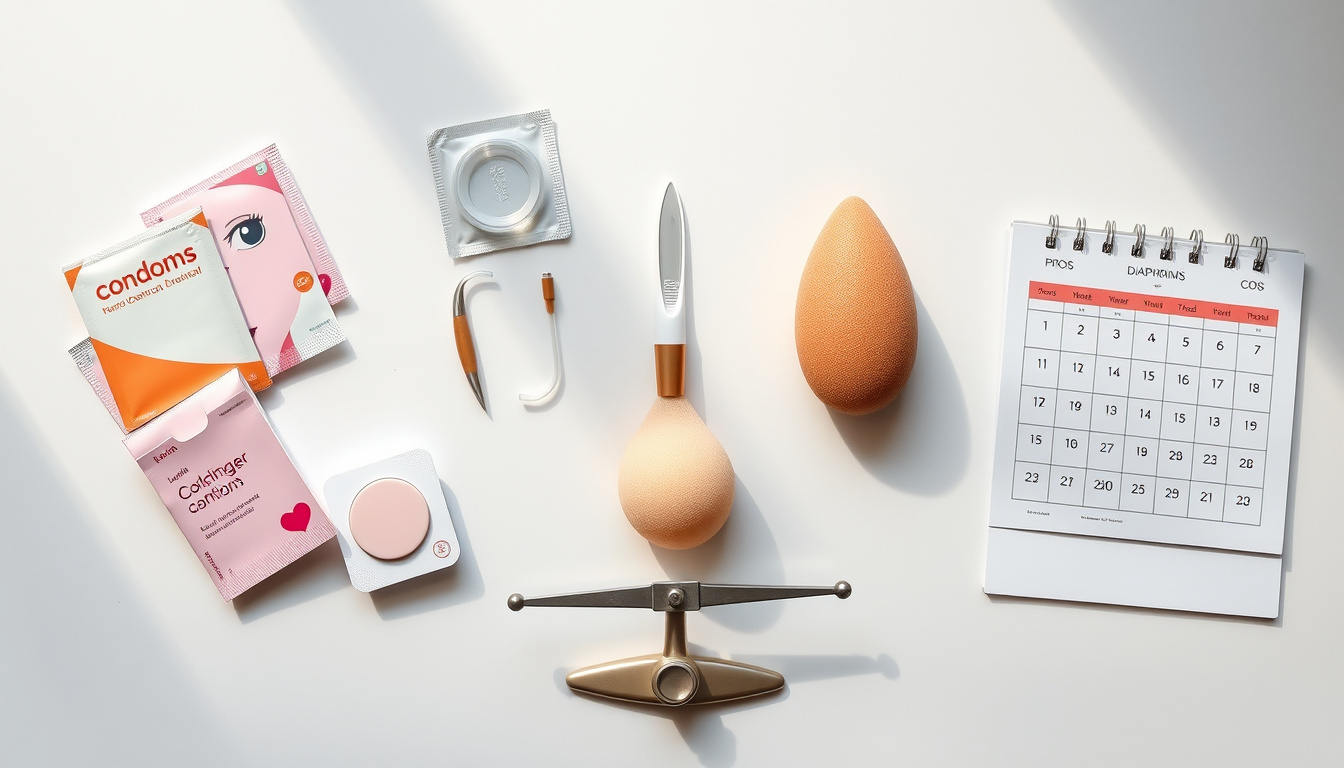

Hormonal birth control carries real trade-offs for many people — mood changes, weight shifts, headaches. Non-hormonal alternatives deliver comparable or superior pregnancy prevention without systemic hormone manipulation.
Most Effective Method: Copper IUD (>99%) · STI Protection: Male/Female Condoms · Common Barriers: Diaphragm, Cervical Cap · Long-Acting: Copper IUD (10 years) · No Hormonal Impact: All Listed Methods
Quick snapshot
- Exact side effect rates vary significantly by individual user
- Best method depends heavily on lifestyle, relationship status, and personal comfort
- ParaGard copper IUD entered US market in 1988 (Healthline)
- Newer options like Phexxi gel offer 86% typical-use effectiveness (PMC NIH)
- Copper IUD insertion requires a clinic visit; barriers are available OTC
- Sterilization procedures are permanent — reversal is complex and not guaranteed
| Category | Details |
|---|---|
| Primary Methods | Copper IUD, Condoms, Diaphragm |
| Effectiveness Range | 82-99% typical use |
| STI Prevention | Only condoms |
| Prescription Needed | IUD yes, barriers no |
| Reversible | All methods (except sterilization) |
What is the best non-hormonal birth control?
The answer depends on what “best” means for you: highest reliability, easiest use, STI protection, or longest duration without hormones. Each non-hormonal method occupies a different spot on that spectrum.
Copper IUD
The copper IUD (ParaGard) is the most effective non-hormonal option — more than 99% effective and lasting up to 10 years once inserted. The American College of Obstetricians and Gynecologists confirms its durability and efficacy. It works by creating a spermicidal environment in the uterus, requiring no daily effort after placement. However, it can cause heavier or more painful periods, particularly in the first few months after insertion, according to the NHS.
The copper IUD requires a clinic procedure to insert and remove. For people who already experience heavy periods or cramping, this trade-off may not be worth it.
Barrier Methods
Condoms, diaphragms, cervical caps, and the cervical sponge all work by physically blocking sperm. Male condoms achieve a typical-use failure rate of 15%, while diaphragms and cervical caps sit at 20%, according to the ReproductiveFacts.org (ASRM). Female condoms perform better with perfect use at 95%, though typical use drops to 79%, per Natural Cycles. Unlike hormonal methods, barriers require consistent use before each sexual encounter and may reduce spontaneity.
Only condoms — male or female — protect against sexually transmitted infections alongside pregnancy prevention. This makes them uniquely valuable regardless of which other method you choose.
Effectiveness Comparison
Perfect use versus typical use is where most methods diverge. Fertility awareness methods range from 95-98% effectiveness with perfect use down to 87-88% with typical use, according to Natural Cycles. The gap highlights how user consistency affects outcomes — something hormonal methods largely avoid.
The gap between perfect and typical use rates matters most for people who may struggle with daily adherence or pre-sex planning rituals.
The implication: choosing a method you can use consistently often matters more than chasing the highest perfect-use number.
Are there non-hormonal birth controls?
Yes — and the range is broader than many realize. Non-hormonal contraception includes barriers, copper IUDs, spermicides, fertility awareness methods, and permanent sterilization procedures, according to PMC NIH. Each category includes multiple options with different use cases, side effect profiles, and costs.
Barrier Methods
Male condoms (15% typical failure) and female condoms (79% typical effectiveness) provide immediate, on-demand protection. Diaphragms and cervical caps, when used with spermicide, can exceed 99% effectiveness with perfect use, though typical rates drop to around 80%, per Natural Cycles. The sponge, discontinued in some markets but available in others, carries a 32% typical-use failure rate — the highest of any reversible method, per ASRM.
Intrauterine Devices
The copper IUD (ParaGard, available in the US since 1988 per Healthline) is the gold standard for non-hormonal long-acting reversible contraception. It requires a healthcare provider for insertion but needs no maintenance afterward. The trade-off is potential heavier menstrual bleeding, particularly in the initial months.
Natural Methods
Fertility awareness-based methods track ovulation through temperature, cervical mucus, or calendar calculations. The Standard Days method achieves 95% effectiveness with perfect use, per Natural Cycles. These approaches require daily discipline and work best for people with regular cycles — they offer no protection against STIs and demand consistent tracking.
What this means: the method that survives real life is the one that fits your routine, not the one that scores highest in a clinical trial.
Is there a birth control pill that has no hormones?
No true non-hormonal birth control pill exists in most markets. The recently approved Opill contains progestin, making it a hormonal method despite being available over-the-counter. This distinction matters: progestin-only pills still affect the menstrual cycle and carry a different side effect profile than combined hormonal contraceptives, but they are not hormone-free.
Pills Overview
All FDA-approved birth control pills contain either estrogen, progestin, or both. The non-hormonal alternatives to pills include barriers, copper IUDs, fertility awareness methods, and Phexxi — a vaginal gel that works by lowering pH to create an inhospitable environment for sperm, achieving 86% typical-use effectiveness per PMC NIH.
Non-Hormonal Alternatives
If avoiding hormones is your priority, barriers or copper IUD offer the most reliable protection. Dr. Sridhar from UCLA Health notes that “the lack of hormones results in lesser long-term consequences for most people,” though the trade-off involves different side effects and potentially higher user failure rates. For those seeking pharmaceutical convenience without hormones, options like Phexxi or fertility awareness methods require more planning than swallowing a daily pill.
Non-hormonal methods generally require more effort and consistency than a daily pill. If you miss doses anyway, a barrier method with similar typical-use effectiveness may not be a worse choice.
The pattern: the absence of systemic hormones shifts rather than eliminates side effects — and the shift matters most for users with specific medical risk profiles.
What does non-hormonal birth control do to your body?
Non-hormonal methods do not suppress ovulation or alter hormone levels — they work locally. The copper IUD creates a spermicidal environment through copper ions, while barriers physically block sperm. Fertility awareness methods help you track — not change — your natural cycle.
Mechanism of Action
Copper ions released by the IUD impair sperm motility and viability, preventing fertilization. Barriers prevent sperm from entering the cervix entirely. Spermicides (often used alongside barriers) chemically neutralize sperm. None of these mechanisms interfere with the menstrual cycle, per Healthline.
No Hormone Changes
Users of non-hormonal methods typically avoid hormone-related side effects like nausea, headaches, spotting, breast tenderness, weight gain, mood changes, or ovarian cysts associated with hormonal contraceptives, per Healthline. However, non-hormonal methods carry their own risks: spermicide can cause vaginal irritation, diaphragms increase UTI risk, and the copper IUD may worsen menstrual cramping, per the NHS. Dr. Peters notes that “each non-hormonal option can be different — some people may find a diaphragm uncomfortable or difficult to insert.”
The cervical sponge has been associated with toxic shock syndrome if left in too long. Always follow product guidelines for insertion duration.
The catch: non-hormonal does not mean side-effect-free — the risks simply fall in different anatomical territory.
Is non-hormonal birth control better for you?
“Better” depends on your priorities. Non-hormonal methods eliminate hormone-related risks — blood clots, stroke, and heart attack risks that increase for smokers over 35 — but they introduce different trade-offs. Effectiveness varies more widely, side effects differ, and some methods require more daily attention.
Vs Hormonal Pros/Cons
Non-hormonal pros include no hormone side effects, on-demand usability, immediate effectiveness, and — for condoms — STI protection, per Katie Ostrom MD. Non-hormonal cons include lower efficacy for many options (70-86% for some methods), lifestyle adjustments for fertility awareness, and high upfront costs for sterilization, per the same source. Hormonal methods, by contrast, often suppress ovulation with higher typical-use effectiveness but carry systemic risks for certain users.
For younger users or those with no contraindications to hormones, the risk-benefit calculation may favor hormonal methods. For smokers over 35, people with certain medical conditions, or those who simply prefer to avoid hormone manipulation, non-hormonal options eliminate a category of risk entirely.
Side Effects Comparison
Non-hormonal side effects from Healthline include spermicide irritation, increased UTI risk with diaphragms, and heavier periods with copper IUD. Hormonal side effects include mood changes, weight fluctuations, nausea, and — in rare cases — blood clots or liver tumors, particularly for smokers over 35, per the same source. Neither category is side-effect-free; the choice involves which side effects you can manage or tolerate.
Upsides
- No hormone-related side effects (mood changes, weight gain, nausea)
- Some methods provide STI protection (condoms)
- Copper IUD lasts up to 10 years without maintenance
- Immediate effectiveness — no waiting for hormones to adjust
- Fully reversible (except sterilization)
Downsides
- Lower typical-use effectiveness than hormonal methods
- Barriers reduce spontaneity and require pre-sex preparation
- Copper IUD may worsen menstrual cramping and bleeding
- Diaphragms increase urinary tract infection risk
- Sterilization is permanent and expensive upfront
The implication: neither hormonal nor non-hormonal contraception is universally “better” — the decision hinges on individual risk tolerance and lifestyle fit.
Non-Hormonal vs Hormonal Birth Control Comparison
Five key methods across two broad categories show how the most common options stack up on effectiveness, side effects, and practical considerations.
| Method | Effectiveness (Typical Use) | STI Protection | Key Side Effects | Duration |
|---|---|---|---|---|
| Copper IUD | >99% | No | Heavier periods, cramping | Up to 10 years |
| Male Condom | 85% | Yes | Latex allergy possible | Per use |
| Diaphragm + Spermicide | 80% | No | UTI risk, irritation | Reusable (2 years) |
| Phexxi Gel | 86% | No | Vaginal irritation | Per use |
| Combined Pill (hormonal) | 91% | No | Nausea, mood changes, clot risk | Daily |
Expert Perspectives
“The lack of hormones results in lesser long-term consequences for most people.”
— Dr. Sridhar, UCLA Health
“Each non-hormonal option can be different. For example, some people may find a diaphragm uncomfortable or difficult to insert.”
— Dr. Peters, UnityPoint Health
Both experts highlight a common theme: non-hormonal methods work well when matched to the right user — but no single option suits everyone. Personal comfort, lifestyle consistency, and individual anatomy all play roles in determining which method will feel manageable long-term.
Related reading: blood pressure risks · circulation issues
uclahealth.org, webmd.com, robertsobgyn.com, phdfemininehealth.com
Unlike hormonal methods prone to bleeding on the pill, non-hormonal choices like copper IUDs and condoms avoid such disruptions while maintaining high effectiveness.
Frequently asked questions
How effective is the copper IUD?
The copper IUD is more than 99% effective, making it the most reliable non-hormonal reversible option available, according to ACOG. It lasts up to 10 years and requires no user action after insertion.
Do non-hormonal methods stop periods?
No — non-hormonal methods do not suppress ovulation or alter the menstrual cycle. Copper IUD users may experience heavier or more painful periods, while barriers and fertility awareness methods have no effect on cycle timing.
What are non hormonal birth control side effects?
Side effects vary by method: spermicide may cause vaginal irritation, diaphragms increase UTI risk, and copper IUD can cause heavier menstrual bleeding and cramping, per the NHS. Unlike hormonal methods, non-hormonal options do not typically cause mood changes, nausea, or weight gain.
Can non-hormonal birth control protect against STIs?
Only condoms — male or female — provide STI protection alongside pregnancy prevention. Other non-hormonal methods (IUD, diaphragm, fertility awareness) do not protect against sexually transmitted infections.
How is a copper IUD inserted?
A healthcare provider inserts the copper IUD through the cervix into the uterus during an office visit. The procedure takes a few minutes and may cause cramping afterward. Removal is performed similarly when the device is no longer needed or desired.
What are non hormonal birth control pill brands?
There are no approved non-hormonal birth control pills. All FDA-approved oral contraceptives contain hormones. Opill, a progestin-only pill, is available over-the-counter but is not hormone-free. Non-hormonal alternatives include barriers, copper IUD, Phexxi, and fertility awareness methods.
Is there new non hormonal birth control?
Phexxi, a non-hormonal vaginal gel, received FDA approval in 2020 and offers 86% typical-use effectiveness. It works by maintaining an acidic vaginal pH that impairs sperm motility. Other newer options focus on improved delivery systems for existing non-hormonal categories.
For people prioritizing hormone avoidance, the copper IUD offers the strongest combination of effectiveness and convenience — but it demands tolerance for potentially heavier periods. For those with active lifestyles and multiple partners, male or female condoms remain the only reversible option that guards against both pregnancy and STIs. The choice is not about finding the “best” method universally; it is about identifying which trade-off you can live with month after month.

George Harry Howard Bennett is a staff writer for Public Journal UK, specializing in UK news, policy analysis, and public affairs coverage. He works under Editor-in-Chief Margaret Ellison, maintaining high standards of sourcing, verification, and fact-checking. Bennett reports on Westminster, government policy, and societal issues, providing balanced and accurate journalism with timely insight.