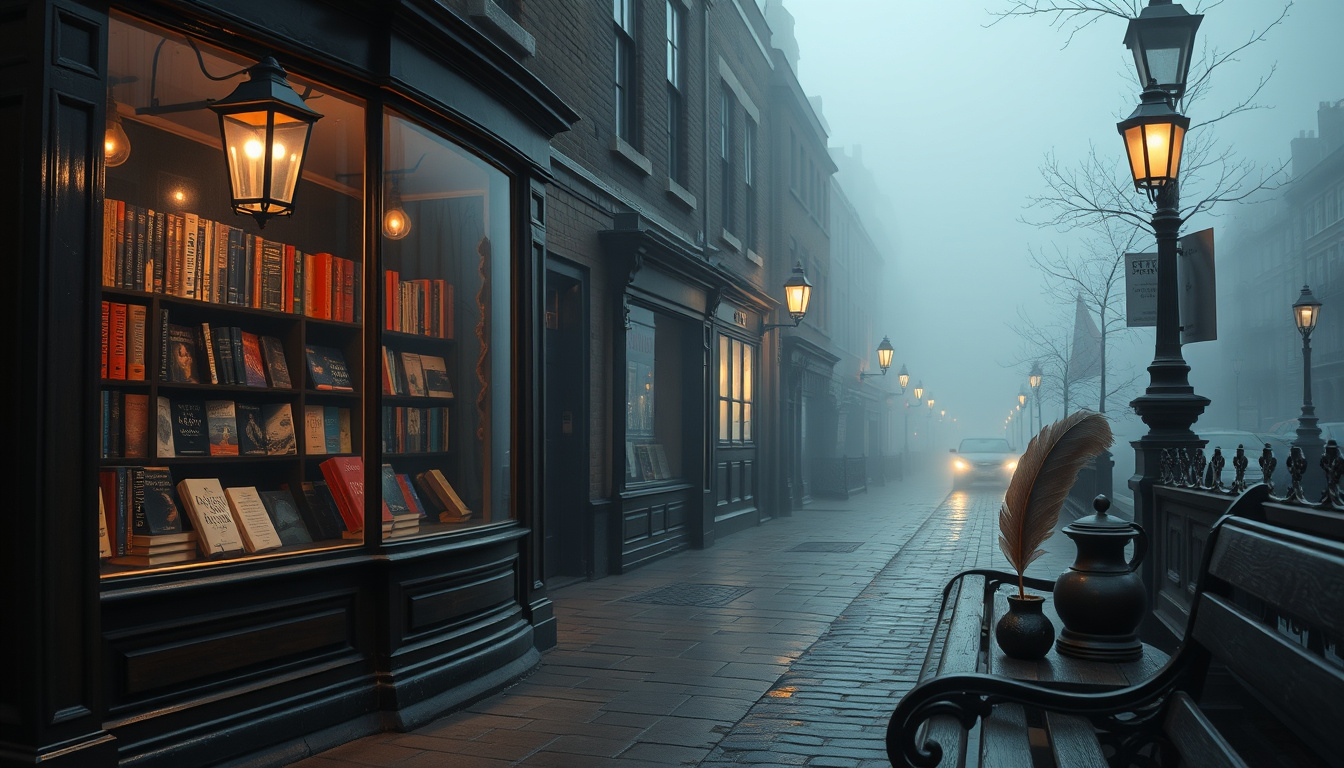
Anyone who has read even one Dickens novel knows the pull of his world — but the man behind the line was a walking contradiction. Britannica (authoritative encyclopedia) calls him the greatest novelist of the Victorian era, and he earned that title by turning childhood hardship into a literary empire — then he let his own marriage collapse in a scandal that shocked London, revealing the paradox of a man who attacked slavery and workhouses yet failed to fix the household he left behind.
Full Name: Charles John Huffam Dickens ·
Born: 7 February 1812, Portsmouth ·
Died: 9 June 1870, Gads Hill Place ·
Major Novels: 15 ·
Children: 10 ·
Spouse: Catherine Hogarth (m. 1836; sep. 1858)
Quick snapshot
- Full name: Charles John Huffam Dickens (University of Warwick (academic literary research))
- Married Catherine Hogarth in 1836; the couple had 10 children (Oprah Daily (book-club biography feature))
- The exact nature of his relationship with Ellen Ternan is still disputed (SparkNotes (literary study guide))
- The ending he planned for The Mystery of Edwin Drood died with him (The Dickens Fellowship (international Dickens society))
- 1824: father imprisoned for debt; Dickens sent to a blacking factory at 12 (SparkNotes (literary study guide))
- 1858: separates from Catherine; the Ellen Ternan chapter begins (SparkNotes (literary study guide))
- 9 June 1870: dies at Gads Hill Place (The Dickens Fellowship (international Dickens society))
- Dickens’s model — novelist as social commentator — set the template for politically engaged fiction (Biography.com (published biography resource))
- New readers should start with A Christmas Carol or Great Expectations before tackling Bleak House (Public Journal – book list (internal guide)).
Eight rows of biography, one pattern: the more celebrated the public man, the more tangled the private record.
| Attribute | Detail |
|---|---|
| Full Name | Charles John Huffam Dickens |
| Born | 7 February 1812, Portsmouth |
| Died | 9 June 1870, Gads Hill Place |
| Spouse | Catherine Hogarth (1836–1858) |
| Children | 10 (including Charles Dickens Jr., Kate, Walter, etc.) |
| Major Works | 15 novels, 5 Christmas books, numerous short stories |
| Net Worth at Death | £80,000 |
| Burial | Westminster Abbey, Poets’ Corner |
Who Was Charles Dickens?
Dickens’s origin story is the key to everything he wrote. Born in Portsmouth in 1812, he learned early what it meant to be powerless — his formal schooling ended at 15 and he went to work as a freelance reporter (University of Warwick (academic literary research)). That arc, from debt to desk job to literary stardom, became the spine of his fiction.
Early Childhood and Family
- The hinge year was 1824: Dickens’s father was imprisoned for debt, and Charles was sent to work in a blacking factory at age 12 (Britannica summary (authoritative encyclopedia)).
That experience — debt, shame, boot polish — left a scar he fictionalized again and again. He rarely spoke of it publicly, but it shaped his obsession with orphans, prisons, and sudden reversals of fortune.
How Did Dickens Start Writing?
- He published his first short story, “A Dinner at Poplar Walk”, in 1833 (University of Warwick (academic literary research)).
- He then joined The Morning Chronicle as a reporter.
The real breakthrough was serialization. Writing in monthly installments built him a mass audience, and The Pickwick Papers made him a household name — a publishing model he used for nearly every novel that followed.
Was Charles Dickens His Real Name?
The famous surname was real; the famous image was manufactured. “Boz” was a private nickname he used early, and he managed his own publicity with the same energy he gave his plots.
Yes — the name on his tombstone was the one he was born with. As the quick snapshot shows, his full name was Charles John Huffam Dickens. “Dickens” was a real English surname; “Boz” was only a brief early pen name for his sketches.
The pattern: Dickens turned his own worst memories into marketable sentiment. The blacking factory became a recurring metaphor, the debtors’ prison a stage for social critique, and the boy who felt invisible became the most watched novelist of his age.
Can You Provide Me with a Bibliography of Charles Dickens’ Works?
Major Novels
- 15 completed novels and five Christmas books, including Oliver Twist, A Christmas Carol, David Copperfield, Bleak House, and Great Expectations (Britannica (authoritative encyclopedia)).
- The Pickwick Papers was his first serial success (Oprah Daily book-club feature).
Dickens published almost everything in serial form before the book versions appeared. That rhythm — cliffhanger, installment, five weeks of reader suspense — shaped his storytelling more than any literary theory did.
Shorter Fiction and Christmas Books
Start with A Christmas Carol (one sitting), then Great Expectations. Save Bleak House for when you want Dickens at full stretch: two narrators, a lawsuit that never ends, and a fog that behaves like a character.
The five Christmas books were Dickens’s experiment with a shorter format, and A Christmas Carol remains the most adapted of them all. Beyond the novels, he produced hundreds of short stories, travel sketches, and essays for the magazines he edited.
What Is the Hardest Charles Dickens Book to Read?
- Bleak House is the title readers most often name as the hardest to finish.
- Its twin narratives and satirical legal plot demand patience — and repay it.
Why Bleak House? Dickens runs two storylines at once, one in third person and one in the first person of a young woman, and refuses to let either resolve quickly. The novel also satirizes the Court of Chancery, and the procedural fog can feel as dense as the famous London fog in its opening pages.
The implication: Dickens didn’t write easy books. He wrote arguments disguised as entertainment, and the denser the argument — the more institutions he attacked — the harder the read.
Was Dickens Against Slavery?
Dickens’ Views on Slavery and Race
- Dickens was firmly opposed to slavery and supported the abolitionist cause (Biography.com (published biography resource)).
His 1842 American tour cooled his enthusiasm for the United States. He attacked slavery in American Notes and continued the criticism in Martin Chuzzlewit, and he praised Harriet Beecher Stowe’s Uncle Tom’s Cabin — though with reservations about her style.
Slavery in His Novels
Dickens opposed slavery, but he was a reformer of his own era, with its limits firmly attached — his views on race were not modern by today’s standards.
Slavery is not the main subject of any Dickens novel, but it surfaces as a moral theme in American Notes and Martin Chuzzlewit. His critique of American society was sharp enough to make him unpopular with some American readers, though it never cost him his transatlantic fame.
Why this matters: Dickens’s anti-slavery position was the consistent extension of his politics. Whatever he saw as institutional cruelty — slavery, workhouses, debtors’ prisons, child labor — he attacked in print, usually at the peak of his powers.
Was Charles Dickens a Nice Guy?
Dickens’ Personality
- Contemporaries described him as tireless, witty, and electric; his public readings were theatrical events.
- At home, the record is cooler: he was demanding, restless, and, by the end of the marriage, openly cold to Catherine.
“Nice” is the wrong category. Dickens was a force of nature — generous with his time for charity, ferocious in his work habits, and incapable of domestic calm. He gave readings that made audiences weep, wrote until his hand cramped, and then walked for hours to burn off the excess energy.
Philanthropy and Public Image
- He funded and championed causes from ragged schools to housing reform; the philanthropy was real and well documented.
- He also sold his image aggressively: portraits, readings, and celebrity were part of the Dickens brand.
Dickens understood publicity before the word existed. His reading tours were commercial and critical successes, and he used them to reinforce his image as the people’s novelist. The gap between that public warmth and his private coldness is one of the biggest biographical puzzles he left.
Criticism and Controversies
The same energy that produced fifteen novels and a one-man reform campaign made Dickens impossible to live with. His family paid for his genius in attention that never arrived on time.
The harshest criticism centers on how he treated Catherine after the separation and how he sidelined the children who sided with her. Even admirers have to adjust their picture once they read his letters from 1858 — they are not kind.
The paradox: Dickens was a great-souled man in public and a cold-handed one in private. You don’t have to choose between the two; you have to hold both at once.
Why Did Charles Dickens’ Wife Leave Him?
The Breakdown of the Marriage
- Catherine Hogarth married Dickens in 1836 and bore 10 children in 22 years — the figures are in the quick snapshot above.
The marriage collapsed in 1858 after years of strain. Dickens had married Catherine when he was a rising journalist; by the 1850s he was the most famous novelist in the English-speaking world, and the domestic partnership they had started no longer fit the life he had built.
The Role of Ellen Ternan
- According to SparkNotes (literary study guide), Dickens fell in love with the young actress Ellen Ternan later in life.
Exactly how far the relationship went, and whether it was ever physically consummated, is still debated. Ternan is central to any account of the breakup; what remains unclear is the precise nature of the relationship.
Legal Separation and Public Scandal
- In 1858 Dickens published a public statement blaming “incompatibility” — a humiliation Catherine never publicly answered.
That statement made a private breach a public event. Dickens did not name Ternan, but London society already knew why the household had split. The scandal followed Dickens for years, and Catherine never offered her side in print.
The catch: Dickens controlled the story in 1858, and the story stuck for a century. Only in recent decades have biographers given Catherine a fair hearing and Ternan a fuller one.
What Were Dickens’ Last Words?
Dickens’ Final Days
- Dickens died on 9 June 1870 at Gads Hill Place, his Kentish home, after a stroke — as the timeline-signal snapshot above records.
He had spent the day working on The Mystery of Edwin Drood and collapsed at dinner. The novel was left half-finished, and the identity of its murderer remains one of literature’s lasting puzzles.
Last Words and Death
Dickens’s reported last words were “On the ground”, spoken as he suffered the stroke — but deathbed testimony is rarely precise, and the exact phrase is disputed.
Several accounts from the bedside survive, and they do not perfectly agree. Different versions give longer phrases, which is why the last-words entry in this article stays in the “unclear” column.
Who Inherited Charles Dickens’ Wealth?
- Dickens left an estate valued at £80,000 — the modern equivalent of about $10 million.
His will divided the estate among his surviving children, with smaller bequests to servants and charities. The sum was large enough to keep his descendants comfortable for generations.
What Happened to Ellen Ternan After Dickens Died?
- Ternan later married, ran a school, and died in 1914, maintaining her silence about Dickens.
After Dickens’s death, Ternan reinvented herself as a respectable Victorian widow. She married, changed her name, and told almost no one about her Dickens years — which is why her side of the story is so hard to recover.
Are Any of Charles Dickens’ Descendants Alive Today?
- Yes — descendants include actors Gerald Dickens and Harry Lloyd, and many other great-great-grandchildren.
The line has carried into the 21st century, and family members have become a small industry in Dickens performance. Gerald Dickens tours the world performing his great-great-grandfather’s works; Harry Lloyd played a Dickensian villain on television — an apt inheritance.
What this means: even in death, Dickens stayed unfinished. A half-completed novel, disputed last words, a hidden relationship, an estate that kept the family comfortable — the end of his life reads like one of his own plots, with the final chapter missing.
Charles Dickens: Timeline of Key Events
Nine dates, one through-line: Dickens kept converting personal crisis into publication triumph.
| Date | Event |
|---|---|
| 7 February 1812 | Born in Portsmouth |
| 1824 | Father imprisoned for debt; Dickens works at Warren’s blacking factory |
| 1836 | Marries Catherine Hogarth; publishes The Pickwick Papers |
| 1843 | Publishes A Christmas Carol |
| 1850 | Publishes David Copperfield |
| 1858 | Separates from Catherine; relationship with Ellen Ternan begins |
| 1859 | Publishes A Tale of Two Cities |
| 1861 | Publishes Great Expectations |
| 9 June 1870 | Dies of a stroke at Gads Hill Place; Edwin Drood unfinished |
The pattern: every crisis in Dickens’s life — debt, lost love, overwork — ended up in a novel, usually a bestseller; the dates above carry the same sources cited in the quick snapshot and the sections on his life and works.
What’s Confirmed, What’s Still Unclear
The dates and the works are solid; the marriage and the final years are contested.
Confirmed facts
- Birth and death dates are documented.
- The marriage to Catherine Hogarth produced 10 children.
- Dickens wrote 15 completed novels and five Christmas books.
- He was buried in Westminster Abbey.
What’s unclear
- The exact nature of the Ellen Ternan relationship.
- Whether “On the ground” was his precise final phrase.
- Whether Ternan caused the breakup or was a symptom of it.
- Whether the “nice guy” question has a fair answer at all.
The confirmed facts provide a solid foundation, but the gray areas keep biographers arguing.
In His Own Words: Three Quotes That Frame Dickens
“It was the best of times, it was the worst of times, it was the age of wisdom, it was the age of foolishness.”
— Charles Dickens, A Tale of Two Cities (1859), discussed in Oprah Daily (book-club biography feature)
“On the ground.”
— Reportedly Charles Dickens’s last words, as recorded by The Dickens Fellowship (international Dickens society)
“Dickens was a novelist, journalist, editor, illustrator, and social commentator.”
— Summary assessment in Biography.com (published biography resource)
Each quote captures a different Dickens: the novelist, the dying man, and the public figure.
The Verdict on Dickens
The trade-off is that Dickens never gives you a clean moral. He attacked slavery, workhouses, and debtors’ prisons in his fiction, then treated his own wife with a coldness that shocked their children. For anyone writing about Victorian England — students, teachers, or biographers — the honest version of Dickens has to include both the reformer and the man who locked his marriage away in a drawer. For students and teachers, the choice is clear: teach the contradictions, or hand them a sanitized Dickens he would never have written himself.
poetryfoundation.org, sites.udel.edu, newyorker.com, exhibits.lib.byu.edu, nybooks.com
Frequently Asked Questions
How many novels did Charles Dickens write?
He completed 15 novels, plus five Christmas books and numerous short stories.
Which Dickens novel is based on his own childhood?
David Copperfield is the novel most shaped by his early life, including the blacking-factory years.
Did Dickens ever visit America?
Yes. His 1842 tour produced American Notes, in which he criticized slavery and American society sharply.
What was Charles Dickens’ pen name?
His early sketches appeared under the pen name “Boz”; his novels were published under his own name.
Where is Charles Dickens buried?
In Westminster Abbey’s Poets’ Corner, where he was buried in 1870.
How did Charles Dickens die?
He died of a stroke on 9 June 1870 at Gads Hill Place, aged 58.
What is Charles Dickens’ most famous quote?
The opening of A Tale of Two Cities — “It was the best of times, it was the worst of times” — is the line most readers know by heart.
Related reading

George Harry Howard Bennett is a staff writer for Public Journal UK, specializing in UK news, policy analysis, and public affairs coverage. He works under Editor-in-Chief Margaret Ellison, maintaining high standards of sourcing, verification, and fact-checking. Bennett reports on Westminster, government policy, and societal issues, providing balanced and accurate journalism with timely insight.