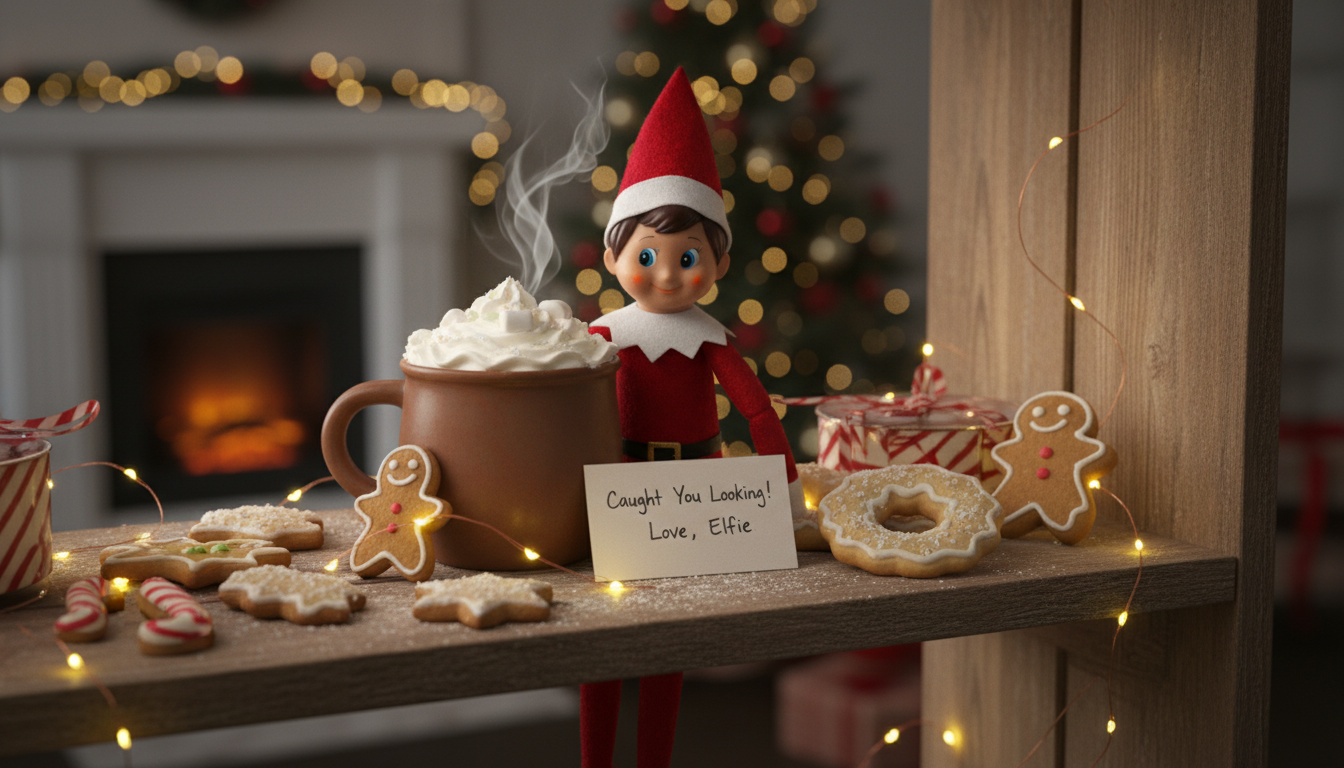

The Scout Elf arrives in homes each December 1st to watch over children and report back to Santa nightly. This Christmas tradition involves the elf hiding in new spots daily until Christmas Eve, creating morning surprises for kids using simple household items. Parents reposition the doll each night after bedtime, crafting scenes that range from silly poses to gentle activities suitable for toddlers.
Families across millions of households participate annually, with ideas evolving from basic shelf-perching to elaborate vignettes. The practice requires no special purchases—tape, paper, toys, and kitchen items suffice for setups that take under five minutes. For those managing busy schedules, the tradition offers flexibility through no-mess, no-prep options that maintain the magic without adding holiday stress.
What Are the Best Elf on the Shelf Ideas?
Scout Elf reports to Santa nightly
Starts December 1st, departs December 24th
No touching; parents move nightly
50+ hiding spots and activities available
- Mess-Free Trend: Parents increasingly prefer no-cleanup setups using dry materials over food or flour.
- Viral Social Poses: TikTok and Instagram drive rapid adoption of shareable scenes like sprinkle faucets and zip-lining.
- Household Hacks: Tape, toilet paper rolls, and refrigerator items replace craft supplies for last-minute positioning.
- Toddler Adaptation: Simple peek-a-boo spots work better than complex scenarios for children under age five.
- Consistency Helpers: Printable calendars and advent-style cards reduce nightly planning burden.
- Pet Integration: Scenes involving dog bowls or cat toys create additional household humor.
- Digital Twists: Elf “trapped” in screens or taking selfies with phones reflect modern family life.
| Attribute | Details |
|---|---|
| Official Name | Scout Elf |
| Origin | The Elf on the Shelf book, 2005 |
| Active Duration | December 1 through December 24 |
| Primary Rule | Children cannot touch the elf |
| Movement Schedule | Nightly after children sleep |
| Evidence Method | Optional magic dust or footprints |
| Target Age | Around 3 years and older |
| Annual Participation | Millions of families |
Funny and Creative Elf on the Shelf Poses
Creative positioning transforms the elf from observer to household mischief-maker. Thrifty and Chic documents scenarios where the doll zip-lines across rooms using string and candy canes, or hides inside refrigerators with orange juice cartons. These setups require no cleanup and utilize objects already present in the home.
Quick Hiding Spots
Strategic placement generates excitement without elaborate preparation. Effective locations include ceramic houses, glass vases, Christmas wreaths, behind toilet paper rolls, inside advent calendars, among Barbie toys, or nestled under tree lights. Life with Tiny Humans notes that refrigerator chilling and pantry hiding create particular delight for younger children.
Tape a sprinkles packet above the kitchen faucet for a “sprinkle faucet” scene, or position the elf among toilet paper rolls for hide-and-seek. Both require under 60 seconds to arrange.
Character-Driven Scenes
Poses suggesting the elf has independent agency prove most amusing to children. The doll might appear to take selfies using a phone camera, feed the family dog from its bowl, or host tea parties with doll cups and play food. The Pioneer Woman suggests placing the elf in a dry “bubble bath” with mermaid toys or wrapped in a slice of bread for “elf toast.”
Mischievous scenarios include the elf mislabeling toothbrushes, getting stuck inside the television screen with a remote control, or hiding in poo emoji toys—the latter known as “peek-a-poo” trending on social platforms. Underwear draped over tree branches or the elf hiding “from farts” behind furniture add bathroom humor that appeals to elementary-aged children.
Easy No-Prep Elf on the Shelf Ideas for Busy Parents
Sustaining the tradition throughout December requires sustainable strategies. Parents working full-time or managing multiple children benefit from activities that require no crafting, no food preparation, and no glitter cleanup.
Toddler-Safe Activities
Children around age three engage best with gentle, recognizable scenarios. The elf might read stories to stuffed animals, complete simple puzzles, play tic-tac-toe on paper, or conduct a toy orchestra. Good Housekeeping recommends dry setups like graham cracker tents (without eating) or toy car washes using dry sponges rather than water.
Interactive elements extend the experience beyond visual gags. Children can write letters to the elf and receive printed replies, search for hidden candy canes, or construct animals from playdough for the elf to “adopt.” Pajama parties with doll-sized treats, disco scenes using string lights, or the elf frozen in a plastic bag alongside an Elsa toy capitalize on existing toy collections.
Viral Trends for 2024/2025
Social media platforms drive rapid innovation in elf positioning. Recent viral concepts include the elf creating pet paw ornaments, arranging Scrabble tiles into humorous words, camping with tissue paper “fires,” or arriving via toy helicopter. Video tutorials demonstrate no-mess techniques like foil shoe shining, wrapping doors with removable tape, or filling toilet bowls with cereal protected by cling film.
The Traveling Red catalogs over 90 refreshed concepts for 2025, including clay ornament assistance and gingerbread house construction using kit components rather than from-scratch baking.
How to Do Elf on the Shelf: Rules and Basics
Establishing clear parameters prevents confusion and maintains the illusion for children. The tradition operates on specific guidelines regarding handling, movement, and timeline.
The Non-Negotiable Rules
Children must understand that touching the elf causes it to lose magic temporarily. This rule explains why parents, not children, find the doll in new locations each morning. The prohibition extends to rough handling, though accidental brushing requires only a sincere apology to restore the magic, according to family preference.
Parents secretly reposition the elf each night after children fall asleep. The elf cannot move during daylight hours or while observed.
Timeline and Departure
The official season spans December 1st through Christmas Eve. Some families welcome the elf with arrival letters or advent calendar coordination on November 30th evening. Departure occurs after December 24th, sometimes leaving behind small gifts or a farewell note. Family traditions vary regarding whether the elf leaves magic dust—glitter or flour footprints—as evidence of North Pole travel.
Start when children demonstrate understanding of cause and effect, typically around age three. Toddlers younger than this may not grasp the “no touch” rule or the narrative concept.
Optional Enhancements
Printable calendars provide daily prompts for parents struggling with creativity. These resources suggest specific poses or activities aligned with dates, reducing cognitive load during busy December schedules. Some families incorporate the elf into existing Christmas Markets 2025 UK visits, photographing the doll at holiday events to extend the narrative beyond the home.
When Does Elf on the Shelf Start and End?
- November 30: Optional arrival preparation; some families stage entrance scenes or deliver arrival letters with advent calendars.
- December 1: Official first day; elf appears in initial hiding spot for children to discover.
- December 2-23: Daily repositioning; parents move elf each night to new locations or poses.
- December 24: Final scene; elf departs for North Pole, sometimes leaving treats or farewell notes.
- December 25-31: Dormant period; elf remains at North Pole until next season.
What Parents Need to Know: Facts vs. Myths
Established Information
- Parents physically move the elf nightly
- Children cannot touch the elf per official rules
- Tradition lasts December 1-24
- Household items suffice for all scenes
- Magic dust is optional, not required
Common Misconceptions
- Elves move autonomously (they do not)
- Magic dust is mandatory (families choose)
- Expensive props are necessary (household items work)
- Scenes require hours of preparation (5-minute setups suffice)
- Tradition must start December 1st (some families adjust dates)
Why Elf on the Shelf Became a Modern Christmas Tradition
The phenomenon originated with a 2005 children’s book introducing the Scout Elf concept, subsequently adopted by millions of families worldwide. The tradition fills a specific narrative gap in the pre-Christmas period, providing daily micro-celebrations that build anticipation toward December 25th. Unlike single-day events, the elf creates 24 distinct moments of joy, effectively extending the holiday season’s emotional impact.
Psychologists note the tradition’s success stems from its blend of surveillance narrative (the elf reports behavior) with benevolent mischief (the elf creates chaos). This duality allows children to project personality onto the doll while maintaining awareness of parental oversight. The practice has generated significant social media engagement, with parents sharing increasingly creative setups that drive cultural participation beyond the original book’s audience.
For households concerned about UK Households Weather Warning conditions during December, indoor elf activities provide safe entertainment when outdoor excursions prove difficult. The tradition adapts to various family structures and economic situations, requiring no specific religious affiliation or financial investment beyond the initial doll purchase.
Expert Insights on Elf Traditions
“The most sustainable elf seasons involve parents preparing 5-7 backup ideas in advance, storing them in a phone note for nights when creativity fails. The best scenes use vertical space—hanging from light fixtures or curtain rods—because children rarely look up first.”
— Parenting resource analysis, Life with Tiny Humans
“No-mess mischief dominates 2024 trends. Parents use cling film barriers in toilets, removable tape for door wrapping, and dry materials exclusively. The sprinkle faucet technique—taping sprinkles above the tap—creates maximum delight with zero cleanup.”
— Holiday trend report, Thrifty and Chic
Getting Started with Your Scout Elf
Begin by establishing your family’s specific rules regarding touching and magic, then select three to five simple hiding spots using existing household items. Introduce the elf with a brief arrival note, and commit to nightly movement for the 24-day period. Remember that consistency matters more than complexity—a elf peeking from a cereal box generates equal excitement to elaborate constructed scenes, particularly for younger children experiencing the tradition for the first time.
Frequently Asked Questions
Are there elf on the shelf ideas without magic dust?
Yes. Magic dust—typically glitter or flour footprints—is entirely optional. Many families skip this element while maintaining the tradition, using only the elf’s position change as evidence of North Pole travel.
What are good elf ideas for toddlers?
Toddlers respond best to simple peek-a-boo spots like inside the fridge, behind toilet paper rolls, or among stuffed animals. Avoid small parts or complex scenarios; focus on recognition and surprise rather than narrative complexity.
What are elf on the shelf ideas for each day?
Printable calendars offer daily prompts, or rotate through categories: Monday hiding spots, Tuesday funny poses, Wednesday toy interactions, Thursday household item scenes, and Friday interactive activities like letter writing.
Do parents move the elf on the shelf?
Yes. Parents reposition the elf nightly after children sleep. The elf does not move independently; parental consistency creates the illusion of magical movement.
What household items work best for elf ideas?
Toilet paper rolls, tape, string, refrigerator items, phone cameras, toothbrushes, pet bowls, and children’s toys provide endless possibilities without purchasing special props.
When should we start elf on the shelf?
The official start is December 1st, though some families begin November 30th evening. Continue through December 24th, with the elf departing Christmas Eve after children sleep.
Is the elf suitable for very young children?
Most families begin around age three when children understand the “no touch” rule and narrative concept. Younger children may accidentally handle the doll, potentially disrupting the magic.

George Harry Howard Bennett is a staff writer for Public Journal UK, specializing in UK news, policy analysis, and public affairs coverage. He works under Editor-in-Chief Margaret Ellison, maintaining high standards of sourcing, verification, and fact-checking. Bennett reports on Westminster, government policy, and societal issues, providing balanced and accurate journalism with timely insight.