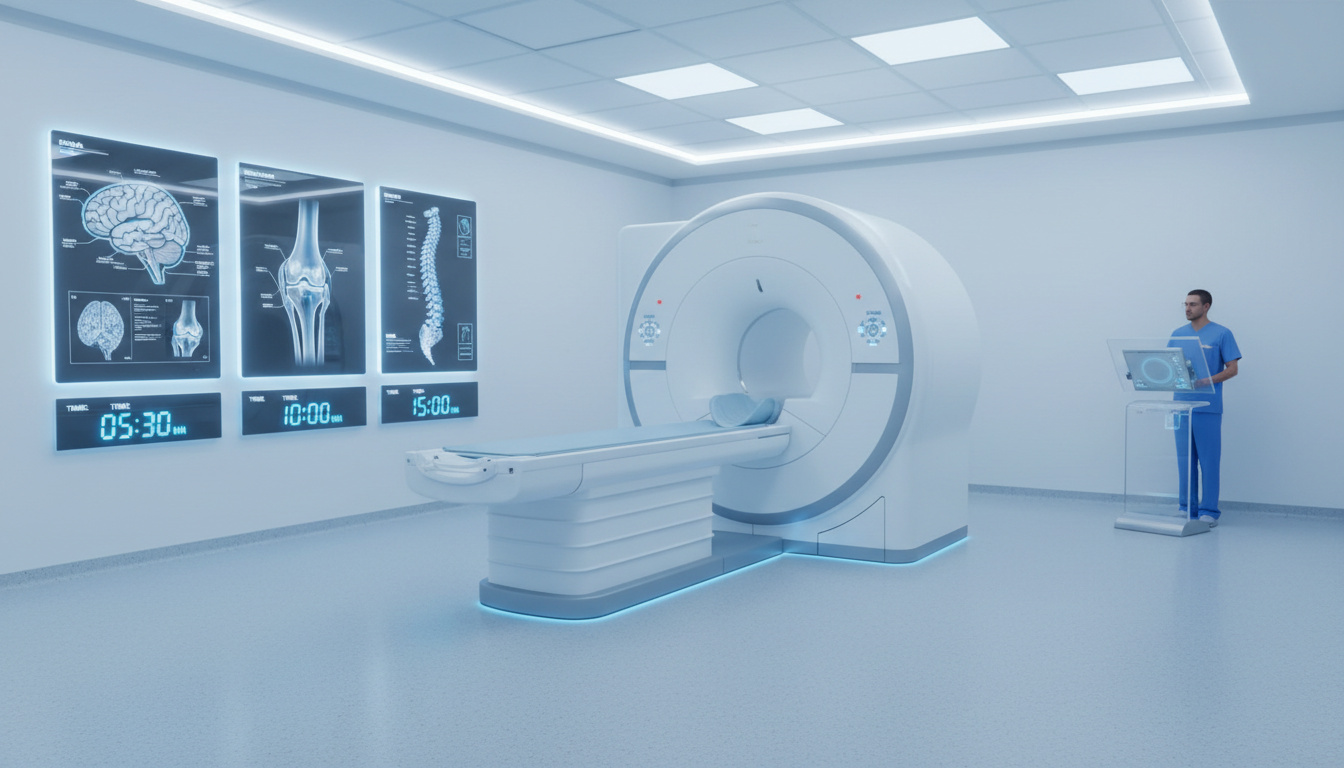
Magnetic Resonance Imaging scans typically require patients to lie motionless for periods ranging from 15 to 90 minutes, though the exact duration depends heavily on which body part requires examination and whether contrast dye is necessary. Understanding these timeframes helps patients manage expectations and reduce anxiety about the procedure.
Medical facilities emphasize that the actual scan represents only part of the total appointment duration. Preparation, safety screenings, and potential sedation for claustrophobia can extend the entire visit to between one and two hours, while complex abdominal examinations may require up to two hours of table time alone.
According to the Mayo Clinic, most routine scans last between 30 and 50 minutes, though radiology centers report significant variation based on anatomical complexity and diagnostic requirements.
How Long Does an MRI Take for Common Body Parts?
Brain & Head
15-60 minutes
Knee & Shoulder
15-45 minutes
Abdomen
30-90 minutes
Spine & Back
22-60 minutes
- Contrast dye administration typically adds 15 to 30 minutes to baseline scan times.
- Brain examinations without contrast average 20 to 45 minutes, according to PocketHealth.
- Knee imaging averages just 22 to 30 minutes, making it one of the shorter routine examinations.
- Abdominal scans with contrast can extend to 60-120 minutes, or up to two hours for complex cases.
- Patient movement during sequences may require repeating specific image acquisitions, extending total time.
- Sedation for claustrophobia adds 15-30 minutes to the total visit duration beyond the scan itself.
- Extremity scans for knee, foot, and shoulder often allow the patient’s head to remain outside the cylindrical machine.
| Body Part | Without Contrast | With Contrast |
|---|---|---|
| Brain/Head | 15-60 minutes | 30-60 minutes |
| Knee | 15-45 minutes | 30-60 minutes |
| Abdomen | 30-90 minutes | 60-120 minutes |
| Foot/Ankle | 15-45 minutes | Not specified |
| Back (Lumbar) | 22-60 minutes | 45-80 minutes |
| Shoulder | 15-45 minutes | 30-60 minutes |
How Long Does an MRI Take for Endometriosis?
Pelvic MRI examinations for endometriosis detection typically require 30 to 60 minutes, according to Cedars-Sinai Medical Center. These specialized scans evaluate deep infiltrating endometriosis sites involving the uterus, ovaries, bladder, and bowel.
Pelvic Imaging Sequences
Research published in the National Center for Biotechnology Information indicates that pelvic MRI protocols vary based on whether the examination targets superficial peritoneal lesions or deep infiltrating disease. Radiologists may employ specific sequences to enhance visualization of endometriomas and adhesions.
Preparation Considerations
Patients undergoing pelvic MRI for endometriosis may receive intravenous contrast to improve tissue differentiation. Facilities often recommend specific patient positioning and may use specialized coils placed near the pelvic region to capture high-resolution images of reproductive organs and surrounding structures.
While pelvic MRI effectively identifies deep infiltrating endometriosis, research indicates that very small superficial lesions may evade detection. Patients should discuss whether additional imaging or laparoscopic evaluation might be necessary for comprehensive diagnosis.
How Much Is an MRI?
The financial cost of magnetic resonance imaging varies substantially based on geographic location, facility type, insurance coverage, and whether the examination requires contrast enhancement. PocketHealth notes that full-body screening MRI examinations typically remain uncovered by standard insurance policies.
Cost Variables by Complexity
Complex scans involving multiple body areas or extended abdominal examinations incur higher costs due to increased magnet time and radiologist interpretation demands. Private facilities may charge premium rates for expedited scheduling or enhanced comfort options such as open MRI machines.
Insurance Coverage Differences
Medically necessary diagnostic MRIs ordered by physicians generally receive partial or full coverage under most health insurance plans, though copayments and deductibles apply. Elective full-body screening examinations, increasingly marketed by private companies, typically require out-of-pocket payment.
Patients should confirm pre-authorization requirements with their insurance providers before scheduling, as some plans require prior approval for non-emergency imaging. Failure to obtain authorization may result in unexpected bills exceeding several thousand dollars for complex examinations.
What Factors Can Extend MRI Scan Time?
Several variables beyond the basic anatomical target can significantly prolong the duration of an MRI appointment. Understanding these factors helps patients allocate sufficient time and reduce schedule conflicts.
Contrast Administration Protocols
When healthcare providers order contrast-enhanced imaging, technologists must establish intravenous access and inject gadolinium-based dye midway through the examination. According to South Jersey Radiology Associates, this process extends the procedure by 15 to 30 minutes while requiring additional safety screening for kidney function and allergy history.
Patient-Specific Complications
Claustrophobia affects approximately 10% of patients undergoing enclosed MRI procedures. Facilities offering sedation must monitor patients for 15 to 30 minutes following drug administration, while those experiencing anxiety may require scan restarts if movement artifacts appear in the images.
Arriving with completed paperwork, wearing metal-free clothing, and practicing breathing techniques beforehand can reduce the likelihood of scanning delays. Patients should disclose all implanted medical devices during pre-screening to avoid last-minute safety checks.
What Is the Complete Timeline for an MRI Appointment?
The total duration of an MRI visit extends beyond the actual imaging sequences to include preparation, safety protocols, and potential recovery periods.
- Arrival and Check-in (15 minutes): Registration, insurance verification, and consent form completion.
- Safety Screening (15-30 minutes): Metal detection, review of medical history, and removal of prohibited items. Healthline emphasizes that patients must remove all metallic objects.
- Positioning and Setup (10-15 minutes): Placement on the sliding table, installation of receiver coils, and hearing protection distribution for the loud magnetic resonances.
- The Scan (15-90 minutes): Actual image acquisition varying by body part and protocol complexity.
- Contrast Injection (if applicable) (15-20 minutes): Mid-scan dye administration and additional sequence acquisition.
- Sedation Recovery (if applicable) (15-30 minutes): Monitoring until alertness returns for patients receiving anxiolytic medications.
- Results Timeline (1-2 weeks): Board-certified radiologists analyze images and generate reports for referring physicians.
What Is Definite vs. Uncertain About MRI Timing?
While medical consensus exists regarding standard timeframes, certain variables remain institution-specific or patient-dependent.
Established Facts
- Brain scans without contrast require 15-60 minutes.
- Knee examinations average 22-30 minutes.
- Abdominal scans with contrast may extend to two hours.
- Contrast dye adds 15-30 minutes to baseline times.
- Movement during sequences necessitates repeating specific images.
Uncertain or Variable
- Exact cost figures vary by location and insurance status.
- NHS-specific wait times and availability were not detailed in current research.
- Open MRI time differences compared to closed systems remain unspecified in available literature.
- Exact sedation recovery duration varies by individual metabolism.
Why Do MRI Durations Vary by Body Part?
Magnetic resonance imaging constructs detailed anatomical maps by aligning hydrogen atoms within the body’s water molecules using powerful magnetic fields. Different tissues contain varying water densities, requiring radiologists to program specific pulse sequences that resonate at distinct frequencies.
Complex regions like the abdomen necessitate multiple sequence types to differentiate between solid organs, vascular structures, and potential lesions. Conversely, homogeneous structures like knee joints require fewer directional scans. According to Florida Joint Institute, extremity scans utilize localized coils that focus magnetic reception precisely on the anatomical area of interest, potentially shortening acquisition times.
Neurological symptoms such as Pins and Needles in Left Arm – Causes, Red Flags and When to Worry may prompt physicians to order upper extremity or cervical spine imaging, though symptom duration does not necessarily correlate with scan length.
What Do Medical Centers Report About Scan Durations?
Most MRI scans last 30 to 50 minutes. Complex exams may take longer. It’s important to stay still during the test to avoid blur in the images.
Mayo Clinic
A knee MRI typically takes between 15 and 45 minutes without contrast, averaging around 22 to 30 minutes depending on the specific protocol and equipment.
Florida Joint Institute
Foot and ankle MRI examinations average 21 to 22 minutes, similar to wrist protocols, utilizing specialized coils for joint clarity.
AOA Orthopedic Specialists
How Should Patients Prepare for MRI Timing?
Patients should anticipate total appointment durations of one to two hours, with the actual scan occupying 15 to 90 minutes depending on anatomical site and contrast requirements. Wearing metal-free clothing, disclosing all medical devices, and discussing anxiety management beforehand can prevent delays. Those requiring imaging services may find resources like the Princess of Wales Hospital – Bridgend Location Contacts and Services provide localized information regarding facility availability and specific imaging protocols.
Frequently Asked Questions
Does contrast dye always extend the scan duration?
Yes, contrast administration typically adds 15 to 30 minutes to the baseline scan time. Technologists must establish IV access, inject the gadolinium-based dye, and acquire additional imaging sequences. Patients should also arrive earlier to complete kidney function screenings and allergy assessments before receiving contrast agents.
Can claustrophobia significantly delay the procedure?
Severe claustrophobia may extend appointments by 15 to 30 minutes if sedation becomes necessary. Facilities require post-scan monitoring until patients regain full alertness. Additionally, anxiety-related movement during sequences can force technologists to restart specific image acquisitions, further prolonging the examination.
What happens if a patient moves during image acquisition?
Movement creates motion artifacts that blur images and render them diagnostically unusable. Technologists must repeat the affected sequences, potentially adding several minutes per incident. Patients receive breathing instructions and positioning aids to minimize involuntary motion during the 15-90 minute procedure.
Are open MRI machines faster than traditional closed machines?
Available research does not specify timing differences between open and closed MRI configurations. Standard cylindrical machines currently dominate hospital settings, while open designs accommodate larger patients or those with severe claustrophobia. Patients should consult specific facilities regarding machine capabilities and average scan durations.
Is there any way to reduce the time spent in the MRI scanner?
Remaining completely still and following breathing instructions precisely represent the primary methods for avoiding repeat sequences. Arriving prepared with metal-free clothing and completed paperwork prevents pre-scan delays. Some facilities offer music or communication headsets to help patients relax and maintain position throughout the procedure.

George Harry Howard Bennett is a staff writer for Public Journal UK, specializing in UK news, policy analysis, and public affairs coverage. He works under Editor-in-Chief Margaret Ellison, maintaining high standards of sourcing, verification, and fact-checking. Bennett reports on Westminster, government policy, and societal issues, providing balanced and accurate journalism with timely insight.