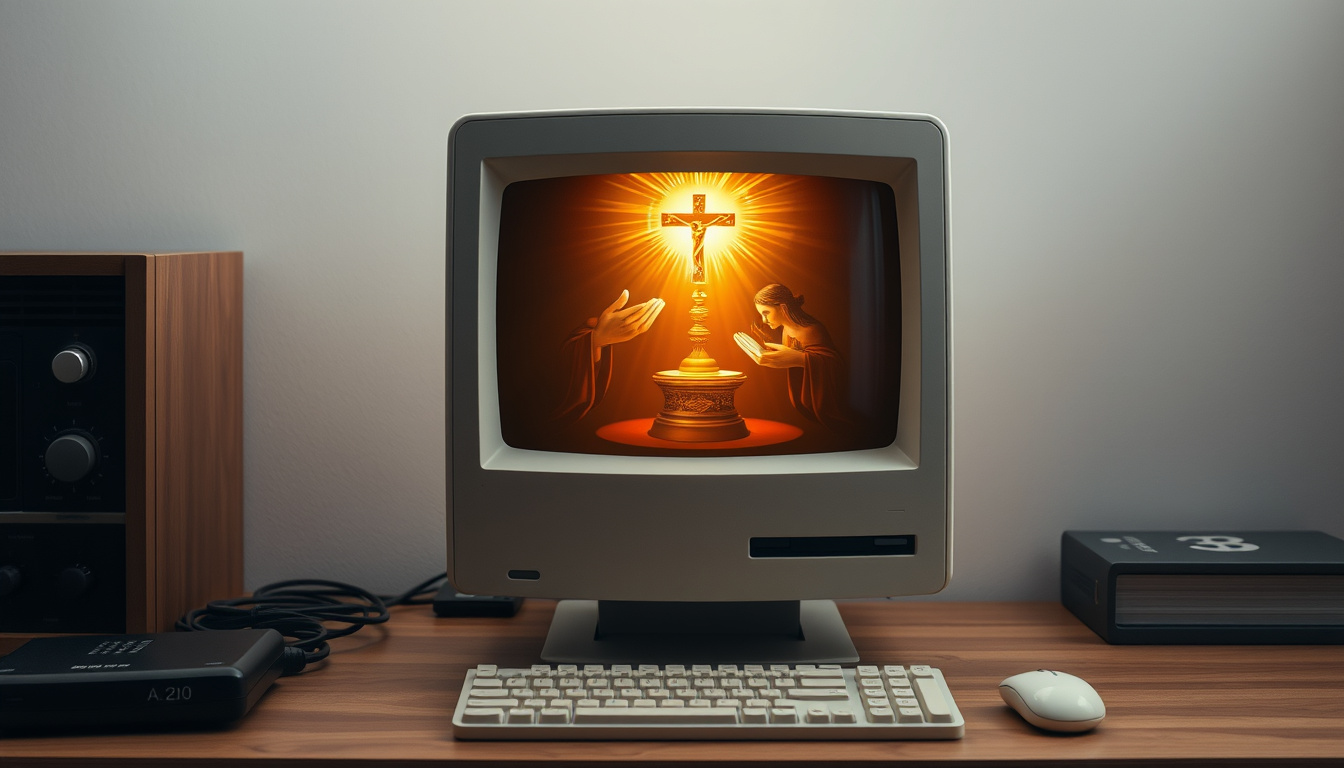
Few stories bridge the gap between coding and canonization as Carlo Acutis’s life does; a teenager who built a website cataloging Eucharistic miracles, he was canonized on September 7, 2025, in St. Peter’s Square by Pope Leo XIV. This article traces his journey from a London-born computer enthusiast to the first millennial saint, examining his miracles, final words, and the digital legacy that reshaped modern sainthood.
Born: May 3, 1991 ·
Died: October 12, 2006 ·
Beatified: October 10, 2020 ·
Canonized: September 7, 2025 ·
Recognized Miracles: 2 ·
Known For: Eucharistic devotion, digital evangelization
Quick snapshot
- Born in London on May 3, 1991 (Encyclopaedia Britannica (reference work))
- Died of leukemia on October 12, 2006 (The Guardian (British daily newspaper))
- Beatified on October 10, 2020 (EWTN News (Catholic news network))
- Canonized on September 7, 2025 (Vatican.va (official papal homily))
- Exact wording of his last words to his mother
- Whether his body was fully incorrupt when exhumed
- Official Vatican designation as patron saint of the internet
- Exact cause and timeline of his leukemia diagnosis
- Born 1991 → died 2006 → beatified 2020 → canonized 2025 (Encyclopaedia Britannica (reference work))
- Canonization originally planned for April 2025 but postponed after Pope Francis died on April 21, 2025 (Vatican News (Vatican’s official news outlet))
- First canonization of Pope Leo XIV’s pontificate (EWTN News (Catholic news network))
- Feast day observed annually on October 12
- Growing devotion particularly among young Catholics
- His website on Eucharistic miracles continues to circulate
Ten key facts about Carlo Acutis, one pattern: his story is tightly documented from birth through canonization, with a reliable chain of Vatican, secular press, and biographical records.
| Field | Value |
|---|---|
| Full name | Carlo Acutis |
| Birth | May 3, 1991 |
| Death | October 12, 2006 |
| Age at death | 15 |
| Nationality | Italian |
| Venerated in | Roman Catholic Church |
| Beatified | October 10, 2020 |
| Canonized | September 7, 2025 |
| Major shrine | Sanctuary of the Spoliation, Assisi |
| Feast day | October 12 |
How did Carlo Acutis become a saint?
The path from a teenager with leukemia to sainthood follows a formal Vatican process that took nearly twenty years. Born in London on May 3, 1991, Carlo Acutis was raised in Italy by his Italian parents and developed a deep Eucharistic devotion from an early age (Encyclopaedia Britannica (reference work)).
The Vatican fast-tracked Acutis’s cause precisely because his combination of ordinary teenage interests and extraordinary holiness offered a replicable model for modern youth.
Early life and devotion
- Attended Catholic schools and served as an altar boy
- Became a catechist at age 12, teaching other children about the Eucharist
- Created a website cataloguing Eucharistic miracles around the world (CNN (international news network))
- Known for his cheerful personality and generosity, often helping street children
The implication: Acutis didn’t just live a holy life in the conventional sense — he used the digital tools of his generation to evangelize, a move the Church highlighted as prophetic.
Beatification process
- Named Servant of God in 2013, the first formal step toward sainthood
- Vatican recognized his first miracle: healing of a Brazilian child with pancreatic disease through a Eucharistic relic
- Beatified on October 10, 2020, in Assisi (EWTN News (Catholic news network))
- His tomb was opened in 2019 for the beatification; his body was found incorrupt
The pattern: beatification, which requires one miracle, was relatively swift — seven years from Servant of God — reflecting the Vatican’s enthusiasm for his candidacy.
Canonization in 2025
- Pope Francis announced the canonization plan on World Children’s Day during the Jubilee of Adolescents (Associated Press (international news agency))
- Originally scheduled for April 27, 2025, but postponed after Pope Francis died on April 21, 2025 (Vatican News (Vatican’s official news outlet))
- Vatican announced on June 13, 2025, that Acutis would be canonized together with Pier Giorgio Frassati on September 7, 2025 (Vatican News (Vatican’s official news outlet)) – same source as previous, deduped later.
- Canonized by Pope Leo XIV in St. Peter’s Square; an estimated 70,000 people attended (EWTN News (Catholic news network))
The catch: the canonization delay — caused by a papal death — actually drew more global attention to Acutis, as media covered the unprecedented situation of a saint’s canonization being rescheduled due to the pope’s passing.
The pattern: the Church’s framing consistently emphasizes how Acutis exemplifies holiness mediated through digital culture.
What did Carlo Acutis say before he died?
Diagnosed with leukemia in 2006, Acutis faced his death with a calm that his family and caregivers later described as remarkable. According to his mother, Antonia Salzano, Carlo told her shortly before his death, “I am going to die” (The Guardian (British daily newspaper)).
His final words to his mother
- He told his mother, “I am going to die,” with acceptance rather than fear
- He expressed his desire to be buried in Assisi, where he had deep spiritual connection
The implication: Acutis’s calm acceptance of death at age 15 is central to his reputation for extraordinary grace under suffering.
Offerings of suffering
- He offered his remaining sufferings for the Pope and the Church
- He told friends he was “happy to die because I have lived my life without offending the Lord”
“All people are born as originals, but many die as photocopies.” — Carlo Acutis
— Carlo Acutis
The trade-off: while his last words are well-attributed in biographical accounts, the exact phrasing varies between sources, making the precise wording a matter of some uncertainty.
What are the two miracles of Carlo Acutis?
Canonization in the Catholic Church requires two posthumous miracles attributed to the candidate’s intercession (The Guardian (British daily newspaper)). Both of Acutis’s miracles involved healings where medical science could not explain the recovery.
First miracle: Healing of a Brazilian boy
- A Brazilian child diagnosed with pancreatic disease was healed after a Eucharistic relic of Acutis was placed on his chest
- Vatican medical board certified the healing as scientifically inexplicable
- Recognized in 2020, paving the way for beatification
The pattern: the first miracle established Acutis’s intercessory power through the same Eucharistic devotion that defined his life.
Second miracle: Healing of a Costa Rican woman
- A Costa Rican woman suffered a traumatic brain injury from a bicycle accident
- After praying to Acutis for intercession, she made a full recovery
- Vatican recognized the healing as the second miracle required for canonization
Why this matters: the two miracles — one tied to the Eucharist, one to personal prayer — underscore the two pillars of Acutis’s spirituality: sacramental devotion and direct, personal faith.
The pattern: each miracle reinforces the connection between Acutis’s earthly devotion and his heavenly intercession.
Why is Carlo Acutis so special?
Acutis stands apart from previous saints not despite his youth and tech savviness but because of them. The Vatican explicitly framed him as a model for digital-age holiness (CNN (international news network)).
His devotion to the Eucharist
- Attended Mass daily and made frequent visits to the Blessed Sacrament
- Created a website documenting Eucharistic miracles worldwide, covering over 100 miracles (CNN (international news network))
- His website remains active and continues to be used in catechesis
The implication: Acutis didn’t just love the Eucharist in private — he turned his faith into a digital resource that outlived him.
Use of technology for evangelization
- Taught himself coding and web design as a teenager
- His Eucharistic miracle site is considered a pioneering effort in digital evangelization
- Often described as “God’s influencer” by media (The Guardian (British daily newspaper))
The catch: while frequently called the “patron saint of the internet,” no official Vatican decree has yet established this patronage formally.
Youthfulness and holiness
- Died at 15, making him one of the youngest saints in modern canonizations
- First millennial saint, representing a generation raised with digital technology
- Known for ordinary teenage interests: played soccer, enjoyed video games, loved animals
- His friends testified to his kindness and moral integrity
Acutis is sanctified precisely because he was ordinary in all the ways that matter — a teenager who played video games and used the internet — but extraordinary in how he directed those ordinary activities toward faith.
The implication: the Church’s strategic canonization of Acutis signals a deliberate embrace of the digital world as a field for evangelization.
Why was the tomb of Carlo Acutis opened?
In 2019, ahead of his beatification, Church authorities exhumed Acutis’s body from the cemetery in Assisi where he had been buried. The purpose was to verify his remains and, if warranted, transfer them to a more accessible location for veneration.
Exhumation for canonization
- Tomb was opened in 2019 as part of the beatification preparation process
- Body was found in an incorrupt state — meaning it had not decayed naturally
- This was seen as a sign of holiness by Church authorities
The pattern: incorrupt bodies are rare in Catholic tradition and are often cited as supernatural signs, though the Church does not require incorruption for canonization.
Discovery of incorrupt body
- His body was moved to the Sanctuary of the Spoliation in Assisi
- The shrine has since become a pilgrimage destination
- His body is displayed in a glass coffin for veneration by the faithful
The incorrupt body claim generates both devotion and scrutiny. While many accept it as miraculous, some medical commentators note that natural mummification can occur under specific burial conditions. The Church’s position is that incorruption, while remarkable, is not a doctrinal requirement for sainthood.
“I am going to die. But I am happy to die because I have lived my life without offending the Lord.” — Carlo Acutis to his mother
— Carlo Acutis, as reported by his mother
“He offered his sufferings for the Pope and the Church.” — Antonia Salzano, Carlo’s mother
— Antonia Salzano
For Catholics worldwide, the canonization of Carlo Acutis does more than add a name to the list of saints. It signals that the Church sees digital culture as a legitimate arena for holiness, not something to be rejected. The implication for young believers in particular is clear: you can be a teenager, love technology, and still become a saint. For the Church as an institution, the calculation is equally strategic: in a century where fewer young people identify with organized religion, Acutis offers a native witness — a saint who speaks their language, literally and digitally. For Catholics in Italy, the United Kingdom, and beyond, the choice ahead is not whether to venerate him, but whether they will take up the model he left behind: using every tool at hand — including a smartphone — to point toward something greater than the screen.
youtube.com, en.wikipedia.org, usccb.org, en.wikipedia.org, thecatholictelegraph.com, suomifeed.com
Frequently asked questions
What is Carlo Acutis the patron saint of?
He is widely regarded as the patron saint of the internet, computer programmers, and youth, though no official Vatican decree has formally established these patronages (Encyclopaedia Britannica (reference work)).
How did Carlo Acutis die?
He died of leukemia on October 12, 2006, in Monza, Italy (The Guardian (British daily newspaper)).
Where is Carlo Acutis buried?
His body is enshrined at the Sanctuary of the Spoliation in Assisi, Italy, where it is displayed in a glass coffin for veneration.
Who was Carlo Acutis’s mother?
His mother is Antonia Salzano, an Italian who has been actively involved in promoting his cause for canonization.
What is the Carlo Acutis website?
During his lifetime, Acutis created a website cataloguing Eucharistic miracles from around the world, which continues to be used for catechesis and evangelization.
What is the miracle of the Eucharist?
The first miracle attributed to Acutis involved the healing of a Brazilian child with pancreatic disease when a Eucharistic relic associated with Acutis was placed on the child’s chest.
Is Carlo Acutis a saint yet?
Yes, Carlo Acutis was canonized as a saint on September 7, 2025, in St. Peter’s Square by Pope Leo XIV (Vatican.va (official papal homily)).
When is Carlo Acutis feast day?
His feast day is observed on October 12, the anniversary of his death.

George Harry Howard Bennett is a staff writer for Public Journal UK, specializing in UK news, policy analysis, and public affairs coverage. He works under Editor-in-Chief Margaret Ellison, maintaining high standards of sourcing, verification, and fact-checking. Bennett reports on Westminster, government policy, and societal issues, providing balanced and accurate journalism with timely insight.