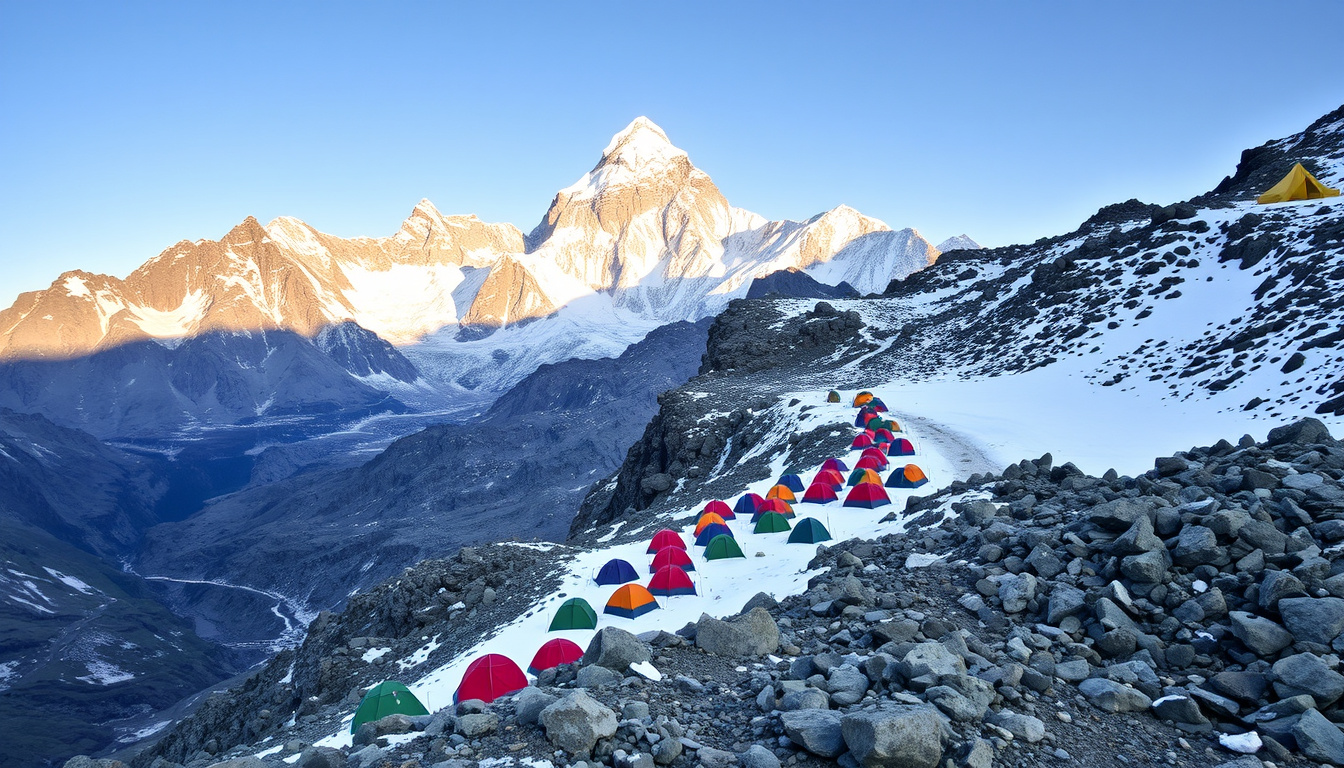
If you’ve ever searched for a trek that combines jaw-dropping Himalayan scenery with a genuine sense of achievement, the Everest Base Camp trek is probably on your list. But beyond the postcard photos, there’s a lot of practical planning — fitness, budget, time, and safety — that makes or breaks the experience. This guide cuts through the hype with confirmed data and real trekkers’ insights so you know exactly what you’re signing up for.
South Base Camp Elevation: 5,364 meters (17,598 feet) ·
Annual Trekkers: ~40,000 ·
Typical Trek Duration: 12–16 days ·
Estimated Cost Range: $1,200 – $2,500
Quick snapshot
- South Base Camp: 5,364 m · Kala Patthar viewpoint: 5,645 m (Moneycontrol)
- 12–16 days typical, includes acclimatization stops (Moneycontrol)
- $1,200 – $2,500 per person; permits, guides, flights extra (Moneycontrol)
- Moderate fitness required; no technical climbing; altitude is main challenge (Moneycontrol)
The pattern across these numbers: this trek is not about technical skill — it’s a long endurance walk at altitude where time and patience matter more than strength.
| Fact | Value |
|---|---|
| South Base Camp Elevation | 5,364 meters (17,598 feet) |
| North Base Camp Elevation | 5,150 meters (16,896 feet) |
| Annual Trekkers | ~40,000 |
| Typical Duration | 12–16 days |
| Cost Range | $1,200 – $2,500 |
| Fatalities (trekkers vs climbers) | Trekkers < 5/yr; Climbers ~5/yr (2000-2020 data) |
The implication: the danger profile is dramatically different for trekkers versus summit climbers, so treat them as two separate activities entirely.
How Hard Is the Everest Base Camp Trek?
Fitness requirements
- The trek demands moderate fitness and no technical climbing skills. It’s a long walk on well-trodden trails, not a climb. (Moneycontrol (Travel Guide))
- Beginners can complete the trek with proper preparation. Many first-time trekkers succeed by training for 2–3 months beforehand. (Moneycontrol)
Altitude acclimatization
- Altitude sickness is the main risk. Standard itineraries build in rest days at Namche Bazaar and Dingboche to help the body adjust. (Moneycontrol)
- Trekking “high, sleeping low” is the method used to reduce acute mountain sickness. (Adventure Great Himalaya (Trek Operator))
Risk factors
- Cold conditions, long walking days, and altitude are the main challenges, not technical terrain. (Moneycontrol)
- Weather can change rapidly at high elevation; afternoon winds are common above 4,000 m. (Moneycontrol)
How Much Does the Everest Base Camp Trek Cost?
Trek permit fees
- Two permits are mandatory: the Sagarmatha National Park entry permit (NPR 3,000 for foreigners) and the Khumbu Pasang Lhamu Rural Municipality permit (NPR 3,000 as of September 2024). (Nepal Hiking Team (Permit Guide); NepTrek (Permit Update))
- Combined permit cost is roughly NPR 6,000 (about USD 45) under one fee structure, or NPR 5,000 (USD 37) under another. Pay in Nepalese rupees only. (Travel Himalaya Nepal; In Trekking)
Guide and porter costs
- Guide fees range from USD 25 to USD 50 per day; porter fees from USD 15 to USD 30 per day. (View Nepal Treks (Budget Guide))
- Daily lodging and food in the corridor cost about USD 25 to USD 40 per person. (View Nepal Treks)
Flights and accommodation
- The flight from Kathmandu to Lukla is a major cost driver, often priced separately from trek packages. (Moneycontrol)
- Package prices advertised by operators start around USD 1,330 per person for a 12-day trip, including permits, meals, accommodation, and guides. (Adventure Great Himalaya (Trek Operator))
Cheaper packages often exclude the Lukla flight or tipping, so a budget trekker who books a $1,200 deal can find themselves paying $400 more before the walk even begins.
How Many Days Does the Everest Base Camp Trek Take?
Standard 12-16 day itinerary
- Most treks follow a 12-day route: fly to Lukla, then hike through Phakding, Namche Bazaar, Tengboche, Dingboche, Lobuche, Gorakshep, and finally Base Camp. (Moneycontrol; Adventure Great Himalaya)
- Day 8 in a 12-day plan typically reaches Gorakshep and Base Camp; Day 9 is the early morning climb to Kala Patthar. (Adventure Great Himalaya)
Factors affecting duration
- Acclimatization days are mandatory — most itineraries include rest days at Namche Bazaar and Dingboche. (Moneycontrol)
- Direct flights to Lukla save time, but delays due to weather can add days. (Moneycontrol)
Is the Everest Base Camp Trek Dangerous?
Altitude sickness risks
- Altitude sickness is common but manageable with proper acclimatization. Symptoms include headache, nausea, and fatigue. (Moneycontrol)
- The trekker mortality rate is very low — fewer than 5 deaths per year among ~40,000 trekkers, compared to about 5 per year among climbers. (Fatalities data from 2000-2020, Moneycontrol)
Weather and terrain hazards
- Weather can turn severe, especially above 4,000 m. Snow, wind, and cold are the main terrain hazards. (Moneycontrol)
- Planes avoid flying over Everest itself because of the jet stream and extreme altitude, but the Lukla flight is a short, scenic route. (Moneycontrol)
Mortality statistics for trekkers vs climbers
- Trekkers face far fewer risks than summit climbers. The trekking route is on established trails, and serious incidents are rare. (Moneycontrol)
Altitude sickness is the real danger — not the trail itself. Anyone who ignores early symptoms or rushes the ascent is taking a significant risk that can be avoided by simply slowing down.
How Does Everest Base Camp Compare to Kilimanjaro?
Six key differences, one pattern: Kilimanjaro is a shorter, more intense summit push; Everest Base Camp is a longer trek with lower overall altitude gain per day — and the risk profiles reflect that split.
| Factor | Everest Base Camp | Kilimanjaro |
|---|---|---|
| Highest point | 5,364 m (Base Camp) | 5,895 m (Uhuru Peak) |
| Duration | 12–16 days | 5–9 days |
| Technical difficulty | Non-technical (walking only) | Non-technical (walking only) |
| Altitude gain per day | ~300–500 m, with rest days | ~700–1,200 m on summit night |
| Acclimatization strategy | Multiple rest days, “high sleep low” | “Climb high, sleep low” on most routes |
| Summit night intensity | Not applicable (no summit) | Extreme — 1,200 m gain in 6–8 hours |
| Cost range | $1,200 – $2,500 | $2,000 – $4,000 |
The implication: Everest Base Camp is a longer, gentler altitude challenge. Kilimanjaro’s summit night is the most physically demanding single day of either trek, and that single-day intensity is what drives its higher cost and higher failure rate.
How to Prepare for the Everest Base Camp Trek
Step 1: Get fit with targeted training
- Focus on cardiovascular endurance (hiking, cycling, running) and leg strength (squats, lunges). Begin training 2–3 months before the trek. (Moneycontrol)
Step 2: Secure permits and book flights
- Get the Sagarmatha National Park permit and the Khumbu Pasang Lhamu Rural Municipality permit in advance. Book the Kathmandu–Lukla flight early, as it fills up in peak season. (Trek Me Nepal (Permit Guide))
Step 3: Plan your budget
- Allocate USD 1,200–$2,500 per person. Include permit fees, guide/porter, teahouse accommodation, meals, and the Lukla flight. (Moneycontrol)
Step 4: Pack the right gear
- Bring layers (base, mid, shell), a warm sleeping bag, trekking poles, and a water purification system. Good boots are essential. (Moneycontrol)
Step 5: Acclimatize properly
- Follow the “climb high, sleep low” rule. Take rest days in Namche Bazaar and Dingboche. Drink plenty of water and avoid alcohol. (Moneycontrol)
The pattern: preparation is not about being an athlete — it’s about being patient and disciplined, which is why the plan above is built around delaying gratification rather than pushing limits.
Confirmed facts
- South Base Camp altitude is 5,364 m (Moneycontrol)
- ~40,000 trekkers per year (Moneycontrol)
- Standard trek duration is 12–16 days (Moneycontrol)
What’s unclear
- Exact cost depends on season, group size, and choices
- Individual difficulty is subjective
- Current permit fees may change
“The Everest Base Camp trek is generally moderate to strenuous because of altitude, long walking days, and cold conditions rather than technical climbing.”
Moneycontrol (Travel Guide)
“Our 12-day itinerary includes proper acclimatization stops at Namche Bazaar and Dingboche to reduce altitude risk.”
Adventure Great Himalaya (Trek Operator)
The Everest Base Camp trek is a demanding but achievable goal for anyone who respects the altitude, prepares their body, and packs a realistic budget. For the average 2025 trekker, the choice is clear: train for 2–3 months, book a 12–14 day itinerary with a reliable operator, and expect to spend around $1,500–$2,000. Cut corners on acclimatization or gear, and you’ll face a miserable experience; do it right, and you’ll earn one of the most iconic views on Earth — a trekker who skips the rest days is making a decision that could cost them the entire trip.
reddit.com, mountfacenepal.com, himalayanhero.com, nepaleverestbasecamp.com, mediebrief.se
For more details on these factors, the Base Camp Mt Everest guide provides a comprehensive overview of cost, distance, and safety considerations.
Frequently asked questions
Do I need a guide for the Everest Base Camp trek?
While not legally required, most trekkers hire a guide for safety, navigation, and logistics. Many operators include a guide in their package. (Moneycontrol)
What is the best time of year to trek to Everest Base Camp?
Spring (March–May) and autumn (September–November) offer the best weather and visibility. Winter is cold and summer brings monsoon rains. (Moneycontrol)
Can I trek to Everest Base Camp solo?
Yes, but it requires self‑navigation, carrying your own gear, and arranging permits alone. Most solo trekkers still join a group or hire a guide for safety. (Moneycontrol)
What gear do I need for the Everest Base Camp trek?
Essentials include layered clothing, a warm sleeping bag (rated to -10°C), trekking poles, waterproof boots, and a water purification system. (Moneycontrol)
Do I need travel insurance for the Everest Base Camp trek?
Yes, mandatory. Look for a policy that covers high‑altitude trekking (up to 5,500 m), helicopter evacuation, and trip cancellation. (Moneycontrol)
Is altitude sickness guaranteed on the Everest Base Camp trek?
No, but it’s common. With proper acclimatization, most trekkers experience only mild symptoms. Severe AMS is rare but must be taken seriously. (Moneycontrol)
How fit do I need to be for the Everest Base Camp trek?
You need moderate cardiovascular fitness and the ability to walk 5–7 hours daily on uneven terrain. A few months of training is sufficient for most people. (Moneycontrol)
Related reading: Mont Blanc climbing guide · Everest Base Camp trek planning

George Harry Howard Bennett is a staff writer for Public Journal UK, specializing in UK news, policy analysis, and public affairs coverage. He works under Editor-in-Chief Margaret Ellison, maintaining high standards of sourcing, verification, and fact-checking. Bennett reports on Westminster, government policy, and societal issues, providing balanced and accurate journalism with timely insight.