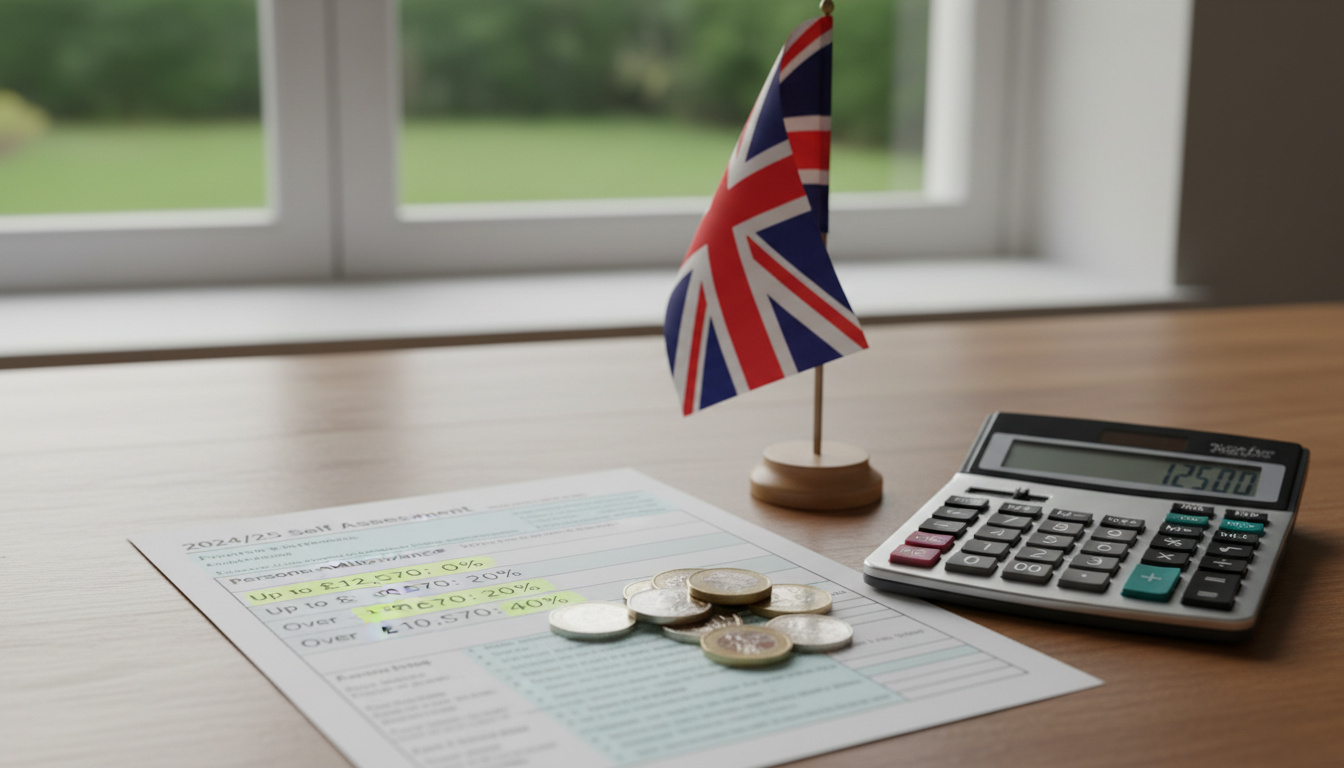
The standard Personal Allowance for the 2024/25 UK tax year stands at £12,570, meaning most individuals pay no income tax on earnings up to this threshold. This amount has remained frozen since the 2021/22 tax year and applies across England, Wales, Northern Ireland, and Scotland for the tax period running 6 April 2024 to 5 April 2025.
For the majority of workers, this translates to £242 per week or £1,048 per month of tax-free income. However, high earners face a tapering mechanism that gradually reduces this allowance once adjusted net income exceeds £100,000, eliminating it entirely at £125,140. Calculate Take Home Pay – 2024 Guide with Tax Rates provides tools to estimate net income after these allowances apply.
What is the personal tax allowance for 2024/25?
- The allowance remains fixed at £12,570 for the fifth consecutive year
- Monthly equivalent equals £1,048; weekly equivalent equals £242
- Taper reduces allowance by £1 for every £2 earned above £100,000
- Full allowance elimination occurs at £125,140 income threshold
- Applies to employment income, self-employment profits, and most pensions
- Scotland shares the same allowance despite different income tax bands
- HMRC automatically applies the allowance through PAYE coding notices
| Allowance/Band | Amount/Rate | Threshold Notes |
|---|---|---|
| Personal Allowance | £12,570 | Tax-free up to this amount |
| Basic Rate Band | £12,571 to £50,270 | 20% tax on this slice |
| Higher Rate Band | £50,271 to £125,140 | 40% tax (42% Scotland) |
| Additional Rate | Over £125,140 | 45% tax (47% Scotland) |
| Taper Start | £100,000 | Allowance reduction begins |
| Nil Allowance | £125,140+ | No personal allowance remains |
What are the UK income tax rates and bands for 2024/25?
Tax applies only to income exceeding the Personal Allowance. The UK operates different rate structures for England, Wales, and Northern Ireland compared to Scotland, though all regions share the identical £12,570 tax-free threshold.
England, Wales and Northern Ireland rates
The basic rate of 20% applies to taxable income between £12,571 and £50,270. Earnings between £50,271 and £125,140 attract the higher rate of 40%, while income above £125,140 falls into the additional rate band at 45%. GOV.UK income tax rates confirm these thresholds remain static for 2024/25.
Scotland income tax bands
Scotland maintains five tax bands above the shared allowance. The starter rate of 19% applies to income between £12,571 and £14,732. The basic rate covers £14,733 to £25,688 at 20%, followed by an intermediate rate of 21% up to £43,662. Higher earners pay 42% between £43,663 and £125,140, with the top rate of 47% applying above that threshold. RIFT Refunds details these Scottish variations.
While the Personal Allowance itself does not vary by region, Scottish taxpayers face different marginal rates. A Scottish worker earning £30,000 pays slightly more tax than counterparts in England due to the 21% intermediate band, despite starting with the same £12,570 tax-free amount.
What is the personal tax allowance for 2025/26?
The Personal Allowance for 2025/26 remains frozen at £12,570. This extension of the freeze, originally implemented in 2021/22, now stretches through to April 2026 at minimum, with some sources indicating no change until April 2028.
2025/26 tax year outlook
Parliamentary Library briefings confirm the main allowance stays at £12,570 for 2025/26 with unchanged taper rules. The £100,000 threshold for allowance reduction and the £125,140 elimination point remain identical to 2024/25. PwC Tax Summaries notes no deviation in these figures for the upcoming year.
2026/27 and beyond
No confirmed increases exist for 2026/27. Policy documents suggest the freeze will likely continue through 2027/28, meaning the allowance loses real value against inflation each year. This phenomenon, known as fiscal drag, pushes more taxpayers into higher rate bands as wages rise nominally but thresholds stay static.
Will Labour increase the personal tax allowance?
The Labour government elected in 2024 has made no announcements regarding Personal Allowance increases. The freeze remains in place, continuing the policy trajectory established under previous administrations. Your Company Formations tracks these policy developments.
With inflation outpacing frozen thresholds, taxpayers earning nominal pay increases may find themselves pushed into higher tax bands despite no real income growth. A worker earning £50,000 in 2021 who receives inflation-matching raises now faces 40% tax on portions of income previously taxed at 20%.
Individuals earning between £100,000 and £125,140 face effective tax rates of 60% due to the taper. Pension contributions or charitable donations can reduce adjusted net income below the taper threshold, restoring full allowance entitlement. MoneySavingExpert outlines these mitigation approaches.
When will the personal tax allowance increase?
- – Personal Allowance frozen at £12,570
- – Freeze extended, no increase applied
- – Threshold remains at £12,570
- – Current tax year begins at £12,570
- – 2025/26 year starts, freeze continues
- – Potential review point, unconfirmed
- – Earliest expected increase per current projections
What do we know for certain about personal tax allowances?
Established Facts
- 2024/25 allowance fixed at £12,570 by HMRC statutory guidance
- Taper mechanics: £1 reduction per £2 over £100,000
- 2025/26 freeze confirmed in parliamentary briefings
- Scotland applies same allowance with different bands
Remaining Uncertainties
- Labour government plans for post-2026 increases
- Exact timing of first increase since 2021
- Potential inflation-linking restoration date
- Whether taper thresholds will adjust with allowance
Why does the frozen personal allowance matter?
The sustained freeze creates a stealth tax increase affecting millions. As nominal wages rise to match inflation, more income falls into taxable territory and higher rate bands. A worker earning £13,000 in 2021 paid no tax; today they pay 20% on £430 of income. This fiscal drag mechanism generates significant Treasury revenue without explicit rate hikes.
The policy particularly impacts middle-income professionals approaching the £50,270 basic rate limit. Each year of frozen thresholds pulls more earners into the 40% band. Simultaneously, the £100,000 taper trap affects senior public sector workers and managers who face disproportionate marginal rates just above six figures.
Just Eat Delivery Driver – How to Apply, Requirements and Pay illustrates how gig economy workers must track these thresholds carefully when combining multiple income streams.
Which authorities set the personal tax allowance?
The standard Personal Allowance is £12,570. You do not pay tax on any amount up to this threshold.
GOV.UK income tax guidance
Personal allowance has been fixed at £12,570 since 2021/22, with current legislation maintaining this level through 2025/26.
Parliamentary Library Research Briefing, April 2025
What should UK taxpayers know about the 2024/25 personal tax allowance?
The £12,570 Personal Allowance remains the foundational tax-free threshold for UK earners, but its frozen status combined with inflation means an increasing tax burden for workers at all levels. High earners must navigate the £100,000 taper carefully, while basic rate taxpayers should anticipate potential bracket creep. Monitoring Budget statements remains essential for any future thaw in allowance policy.
Common questions about personal tax allowances
How do I calculate my reduced personal allowance if I earn over £100,000?
Subtract £100,000 from your adjusted net income, divide by two, then subtract this figure from £12,570. For example, earning £110,000 gives a £5,000 reduction, leaving £7,570 allowance. This calculation applies to 2024/25.
Does the personal allowance apply to dividend income?
Dividends carry a separate £500 tax-free allowance for 2024/25. Your standard £12,570 Personal Allowance applies first to non-dividend income. Once exhausted, dividends face their own rates: 8.75% basic, 33.75% higher, and 39.35% additional.
Can married couples share their personal allowance?
The Marriage Allowance permits transferring £1,260 of unused Personal Allowance to a spouse or civil partner, provided the transferrer earns below £12,570 and the recipient is a basic rate taxpayer. This generates £252 tax relief annually.
Is the personal allowance different for pensioners?
No distinction exists for age. Pensioners receive the same £12,570 allowance as workers. However, state pension counts toward taxable income, potentially using part of the allowance, while private pension drawdown follows standard income tax rules.
How do blind person’s allowance and marriage allowance interact?
Blind Person’s Allowance provides an additional £2,970 on top of the standard £12,570. Marriage Allowance can still transfer £1,260, but the recipient cannot exceed basic rate bands after receiving the transfer.
Does self-employment income use the same allowance?
Self-employed individuals receive the identical £12,570 Personal Allowance. Trading income profits count toward this threshold after allowable expenses. Self-assessment tax returns automatically apply the allowance, though payments on account may require advance planning.

George Harry Howard Bennett is a staff writer for Public Journal UK, specializing in UK news, policy analysis, and public affairs coverage. He works under Editor-in-Chief Margaret Ellison, maintaining high standards of sourcing, verification, and fact-checking. Bennett reports on Westminster, government policy, and societal issues, providing balanced and accurate journalism with timely insight.