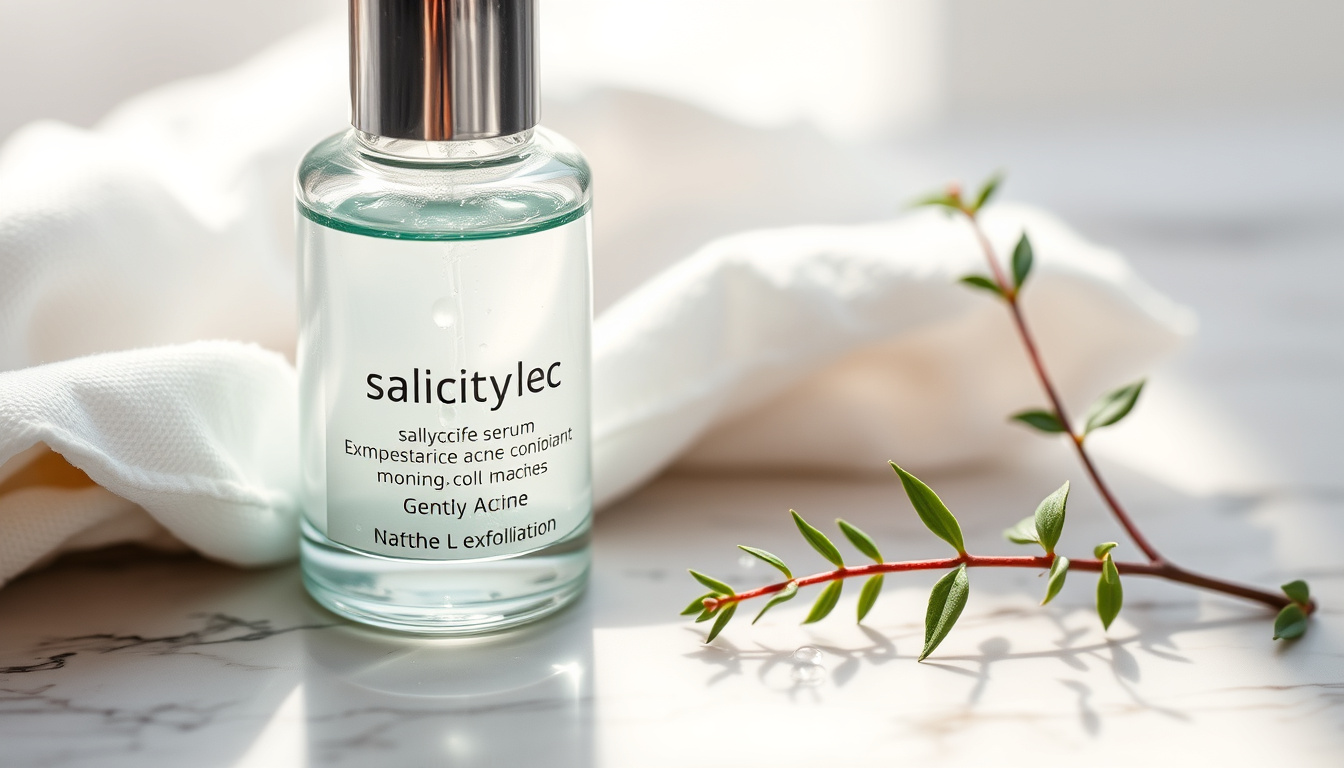

Few skincare ingredients spark as many questions as salicylic acid. Chemically it’s a beta hydroxy acid (BHA) that works inside pores to clear dead skin and excess oil—and knowing how to use it can mean the difference between clear skin and irritation.
Common concentration: 0.5% to 2% · pH for exfoliation: 3 to 4 · Time to visible improvement: 2 to 4 weeks · Maximum recommended daily use: 1 to 2 times · Solubility: Oil-soluble
Quick snapshot
- Penetrates pores and exfoliates inside and on the surface (CeraVe Australia, dermatologist-backed skincare brand)
- Oil-soluble exfoliant that mixes with sebum (SkinCeuticals Australia, professional skincare brand)
- Reduces blackheads and whiteheads by clearing congestion (Oliva Clinic, dermatology clinic)
- Optimal frequency for all skin types without irritation
- Effectiveness for cystic or hormonal acne (limited evidence)
- Long-term effects of daily use beyond 12 weeks
- Visible improvement typically within 2 to 4 weeks of consistent use
- Maintenance needed: once pores clear, continued use prevents new blockages
- Start with 2–3 times per week, then increase to daily if tolerated (Oliva Clinic, dermatology clinic)
- Combine with niacinamide for barrier support (SkinCeuticals Australia, professional skincare brand)
Six key facts, one pattern: salicylic acid’s power lies in its oil solubility and ability to work deep inside the pore—something water-based exfoliants can’t do.
| Label | Value |
|---|---|
| Type | Beta hydroxy acid (BHA) |
| Solubility | Oil-soluble |
| Common concentration | 0.5% to 2% |
| pH range for exfoliation | 3 to 4 |
| Derived from | Willow bark, wintergreen leaves, sweet birch |
| Time to see results | 2 to 4 weeks |
What does salicylic acid do for your skin and acne?
How does salicylic acid unclog pores?
Salicylic acid penetrates deep into the follicle because it’s oil-soluble. Once inside, it dissolves the bonds holding dead skin cells together and mixes with sebum, allowing the pore to shed its contents rather than trap them (CeraVe Australia, dermatologist-backed skincare brand). This process reduces blackheads, whiteheads, and the congestion that leads to inflammatory acne. The effect is not just surface-level—the ingredient works where breakouts start.
For anyone with oily or combination skin, salicylic acid tackles the root of clogged pores better than most water-based exfoliants because it follows the oil.
The pattern: salicylic acid’s oil solubility is what makes it effective deep inside the follicle where water-based acids cannot reach.
Does salicylic acid help with acne scars?
Salicylic acid does not directly erase scars, but by keeping pores clear and reducing inflammation it can prevent new breakouts that cause scarring. Its anti-inflammatory properties may calm red, swollen pimples, which in turn limits the tissue damage that turns into marks. For existing scars, deeper treatments like retinoids or laser therapy are usually needed.
Salicylic acid is a preventive tool, not a scar eraser. Consistent use stops new damage, but it won’t remodel old collagen.
Can you use salicylic acid every day?
What happens if you use salicylic acid everyday?
For most skin types, daily use of 0.5–2% salicylic acid is safe and effective when the product is formulated for leave-on or rinse-off applications. Overuse, however, can strip the skin barrier, leading to dryness, peeling, and irritation. Skin that feels tight or looks shiny after cleansing is a sign you’ve gone too far.
How often should you apply salicylic acid for best results?
Start with 2–3 times per week, especially if you have sensitive or dry skin. Once your skin tolerates that frequency, you can gradually increase to once daily. Many experts recommend using salicylic acid in the evening rather than morning. Pay attention to how your skin responds: redness or stinging means cut back.
More is not better. Over-exfoliation weakens the barrier and increases sensitivity to sun and other actives. Moisturise after every application.
What this means: frequency is the lever that determines whether salicylic acid helps or harms your skin barrier.
Which is better, salicylic acid or niacinamide?
Can you use salicylic acid and niacinamide together?
Yes—they complement each other well. Salicylic acid exfoliates inside the pore, while niacinamide strengthens the skin barrier and reduces surface oil (CeraVe Australia, dermatologist-backed skincare brand). SkinCeuticals Australia (professional skincare brand) notes that niacinamide can also soothe the dryness or irritation that salicylic acid sometimes causes. The trick is timing: apply salicylic acid first, then wait 30–45 minutes before applying niacinamide.
What does niacinamide do that salicylic acid doesn’t?
Niacinamide doesn’t exfoliate—it hydrates, supports ceramide production, and evens skin tone. It’s a better option for very sensitive or dry skin types because it strengthens the barrier rather than exfoliating it (SkinCeuticals Australia, professional skincare brand). Salicylic acid is the workhorse for breakouts; niacinamide is the peacekeeper.
One table, the contrast:
| Attribute | Salicylic acid | Niacinamide |
|---|---|---|
| Primary function | Chemical exfoliant inside pores | Barrier support and oil regulation |
| Best for | Oily, acne-prone skin with blackheads | All skin types, especially sensitive |
| How to use together | Apply first (evening), wait 30–45 min | Apply after salicylic acid or in AM |
Why this matters: you don’t need to choose—most routines benefit from both. Just layer them with patience.
Upsides
- Unclogs pores and reduces acne long-term
- Anti-inflammatory—calms redness
- Controls excess oil on oily/combination skin
Downsides
- Can cause dryness and peeling if overused
- May sting on compromised or sensitive skin
- Not recommended for dry or severely irritated skin
The implication: salicylic acid is potent but requires paired barrier support for safe long-term use.
What should you never mix with salicylic acid?
Can you use retinol with salicylic acid?
Avoid using retinol and salicylic acid in the same routine—both exfoliate, and together they can overwhelm the skin. Use retinol on alternate nights, or apply retinol in your evening routine and salicylic acid in the morning. This way you get the benefits of both without the irritation.
What about benzoyl peroxide and salicylic acid?
They can be used together, but the combination may increase dryness and sensitivity for some people. If you want to layer both, apply salicylic acid first, let it dry, then follow with benzoyl peroxide. Start with every other day to see how your skin reacts.
The trade-off: mixing strong actives can speed up results, but it also speeds up irritation. One step, one active, per routine is the safer path.
How should you apply salicylic acid for best results?
Can I put salicylic acid directly on my face?
Yes, but always on clean, dry skin. Wash your face first, pat dry, then apply a thin layer of the product. Avoid the eye area and any broken skin. Leave-on products (serums, toners) stay on; wash-off products (cleansers) should be left on for about 30–60 seconds before rinsing.
Does salicylic acid draw out blackheads?
It doesn’t “pull” them out like a strip, but it dissolves the plug inside the pore over time. Consistent use (2–4 weeks) loosens the buildup so blackheads naturally clear. For stubborn blackheads, a leave-on serum or toner works better than a cleanser because contact time matters.
Steps to apply correctly:
- Wash face with a gentle cleanser and pat dry.
- Apply a thin, even layer of salicylic acid product.
- Wait 1–2 minutes for absorption.
- Follow with a moisturiser (to prevent dryness).
- Start with 2–3 times per week, increase as tolerated.
The catch for beginners: patience with frequency matters more than product strength for long-term results.
Clarity: what we know and what we don’t
Confirmed facts
- Salicylic acid exfoliates dead skin cells inside pores (CeraVe Australia)
- It reduces inflammation and kills acne-causing bacteria
- Regular use prevents blackheads and whiteheads (Oliva Clinic)
- Concentrations up to 2% are safe for cosmetic use
What’s unclear
- Whether salicylic acid is effective for cystic or hormonal acne—limited evidence
- Optimal frequency for all skin types without irritation
- Long-term effects of daily use beyond 12 weeks
- Efficacy for different ethnic skin types (limited research on melanin-rich skin)
Quotes from dermatologists and editors
“Salicylic acid works both as an exfoliant and an anti-inflammatory, making it unique among acne treatments.”
Dr. Sam Bunting, dermatologist
“Salicylic acid dissolves debris and speeds up the healing of pimples—it’s one of the most effective over-the-counter acne ingredients when used correctly.”
Allure, beauty editorial
These perspectives underline the same point: salicylic acid’s dual action (exfoliate + calm) is what sets it apart from harsher acids.
Final verdict
Salicylic acid is the most reliable non-prescription tool for managing clogged pores and mild acne—provided you respect its limits. For anyone with oily or combination skin, the choice is clear: use it consistently at 0.5–2%, pair with niacinamide for barrier support, and never layer it with another exfoliant in the same routine. That approach delivers the pore-clearing benefits without the irritation. For those with dry or very sensitive skin, salicylic acid may be too aggressive; niacinamide or lactic acid might be a better fit.
Frequently asked questions
What is the best concentration of salicylic acid for beginners?
Start with 0.5% to 1% in a leave-on product. If your skin tolerates it after a few weeks, you can move to 2% for deeper pore work.
Can salicylic acid be used with vitamin C?
Yes, but not at the same time. Use vitamin C in the morning and salicylic acid in the evening to avoid pH conflicts.
Does salicylic acid expire?
Yes—most products last 12–24 months. Check the bottle for a PAO (period after opening) symbol. Expired acid loses efficacy and may harbour bacteria.
Can salicylic acid be used on the body for keratosis pilaris?
Yes. A 2% salicylic acid lotion or body wash can help smooth the rough bumps of keratosis pilaris by exfoliating the keratin plugs.
How long should I leave salicylic acid on my face?
For leave-on products, a few minutes is enough—then follow with moisturiser. For cleansers, lather and leave for 30–60 seconds before rinsing.
Is salicylic acid safe during pregnancy?
Many doctors recommend avoiding high concentrations (above 2%) during pregnancy. Spot treatments and low-concentration cleansers are generally considered safe, but check with your OB-GYN.
What’s the difference between salicylic acid and glycolic acid?
Salicylic acid is oil-soluble and works inside pores; glycolic acid is water-soluble and works on the surface. Salicylic acid is better for acne; glycolic acid is better for surface texture and brightening.

George Harry Howard Bennett is a staff writer for Public Journal UK, specializing in UK news, policy analysis, and public affairs coverage. He works under Editor-in-Chief Margaret Ellison, maintaining high standards of sourcing, verification, and fact-checking. Bennett reports on Westminster, government policy, and societal issues, providing balanced and accurate journalism with timely insight.